
European Central Banks Propose New Liquidity Rules for Stablecoin Reserves
Why it matters
This proposal could significantly alter the landscape for stablecoin issuers and their interactions with traditional banking systems.
What happened (in 30 seconds)
- On September 22, 2026, the European System of Central Banks recommended changes to MiCA stablecoin reserve rules.
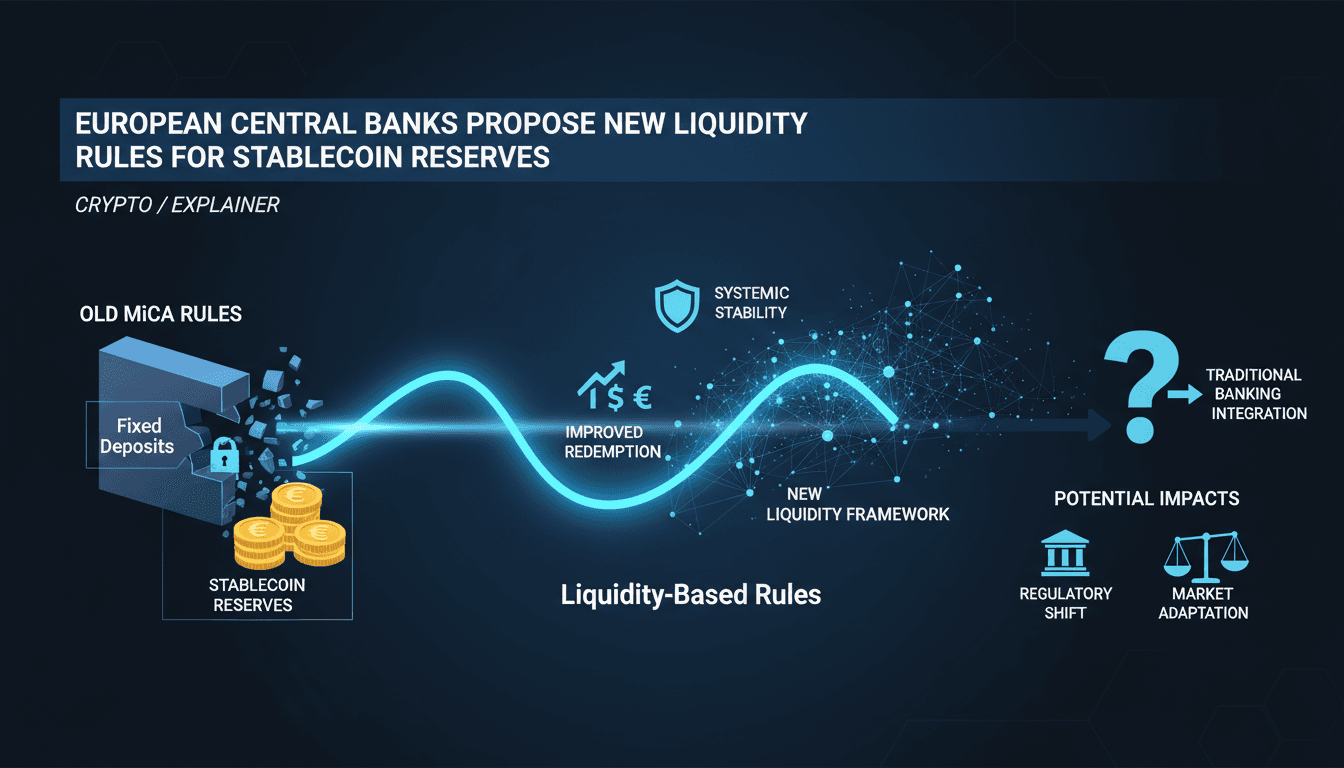
- The proposal suggests replacing fixed deposit requirements with liquidity-based rules focused on asset maturity.
- This change aims to mitigate risks of redemption stress on commercial banks while enhancing reserve liquidity.
The context you actually need
- MiCA, the EU’s Markets in Crypto-Assets Regulation, mandates stablecoin issuers to hold a percentage of reserves in commercial bank deposits.
- Tether CEO Paolo Ardoino criticized these deposit floors in 2024, citing risks of systemic stress during large redemptions.
- The ESCB's proposal follows a MiCA review consultation initiated in May 2026, reflecting ongoing concerns about the stability of both crypto and banking sectors.
What's really happening
The European Central Bank (ECB) and the 27 national central banks of the EU are advocating for a significant shift in how stablecoins are regulated under the Markets in Crypto-Assets Regulation (MiCA). The current framework requires stablecoin issuers to maintain a minimum of 30% of their reserves in commercial bank deposits, increasing to 60% for significant tokens. This structure was initially designed to provide a reliable liquidity buffer, but it has come under scrutiny.
In 2024, Tether CEO Paolo Ardoino raised alarms about the potential risks associated with these deposit requirements, particularly during periods of high redemption. He pointed to the 2023 collapse of Silicon Valley Bank as a cautionary tale, highlighting how simultaneous failures in both stablecoin issuers and banks could lead to systemic crises. As a result, Tether opted not to pursue MiCA authorization for its USDT stablecoin, leading to its delisting from several EU platforms.
The ESCB's recent proposal aims to replace the fixed deposit percentages with liquidity-based requirements that focus on the maturity of assets. Specifically, they suggest that reserves should consist of assets that can be converted within one working day (20-40% minimum) and within five working days (30-60% minimum). This shift is intended to enhance liquidity while reducing the concentration of counterparty risk within the banking sector.
The proposal is currently under review by the European Commission, which may lead to legislative amendments. If adopted, these changes could alter the funding structures of banks and mitigate the transmission of stress from the crypto market to traditional financial institutions. The implications of this proposal extend beyond regulatory compliance; they could redefine how stablecoins operate and interact with the banking system, potentially leading to a more resilient financial ecosystem.
Who feels it first (and how)
- Stablecoin issuers: They will need to adapt their reserve management strategies to comply with new liquidity requirements.
- Commercial banks: Changes in reserve rules could affect their funding structures and risk exposure.
- Crypto investors and users: They may experience shifts in the stability and availability of stablecoins in the market.
What to watch next
- European Commission's response: The timeline for legislative amendments will indicate how quickly these changes could be implemented.
- Market reactions: Watch for any shifts in stablecoin liquidity and trading volumes as issuers adapt to new regulations.
- Tether's strategy: Monitor how Tether and other stablecoin issuers respond to these proposed changes, particularly regarding their reserve management.
The ECB and national central banks have submitted a proposal to amend MiCA stablecoin reserve rules.
The European Commission will consider these recommendations and may implement changes to the regulatory framework.
The exact timeline for any legislative amendments and their impact on the market remains uncertain.
Frequently Asked Questions
- Why it matters?
- This proposal could significantly alter the landscape for stablecoin issuers and their interactions with traditional banking systems.
- What happened (in 30 seconds)?
- On September 22, 2026, the European System of Central Banks recommended changes to MiCA stablecoin reserve rules. The proposal suggests replacing fixed deposit requirements with liquidity-based rules focused on asset maturity. This change aims to mitigate risks of redemption stress on commercial banks while enhancing reserve liquidity.
- What's really happening?
- The European Central Bank (ECB) and the 27 national central banks of the EU are advocating for a significant shift in how stablecoins are regulated under the Markets in Crypto-Assets Regulation (MiCA). The current framework requires stablecoin issuers to maintain a minimum of 30% of their reserves in commercial bank deposits, increasing to 60% for significant tokens. This structure was initially designed to provide a reliable liquidity buffer, but it has come under scrutiny. In 2024, Tether CEO
- Who feels it first (and how)?
- Stablecoin issuers: They will need to adapt their reserve management strategies to comply with new liquidity requirements. Commercial banks: Changes in reserve rules could affect their funding structures and risk exposure. Crypto investors and users: They may experience shifts in the stability and availability of stablecoins in the market.
- What to watch next?
- European Commission's response: The timeline for legislative amendments will indicate how quickly these changes could be implemented. Market reactions: Watch for any shifts in stablecoin liquidity and trading volumes as issuers adapt to new regulations. Tether's strategy: Monitor how Tether and other stablecoin issuers respond to these proposed changes, particularly regarding their reserve management.
Real-time updates, analysis, and reports on the blockchain and cryptocurrency sectors.
"Crypto News delivers real-time updates, analysis, and reports on the blockchain and cryptocurrency sectors."
— A47 Editor
ECB seeks MiCA reserve change flagged by Tether in 2024
The European Central Bank (ECB) and the EU’s 27 national central banks have proposed replacing the current 30% and 60% bank-deposit floors for stablecoin reserves under the Markets in Crypto-Assets (MiCA) framework with maturity-based liquidity requi...
Covers blockchain, cryptocurrency news, project analysis, and market insights.
"Cointelegraph is a leading crypto-focused media outlet known for timely news, analysis, and educational content related to blockchain and digital assets."
— A47 Editor
ECB, EU cenbanks seek changes in MiCA’s minimum bank deposit for stablecoins
The European Central Bank (ECB) and EU central banks are advocating for changes to the Markets in Crypto-Assets (MiCA) regulation, specifically seeking to replace the minimum bank deposit requirements for stablecoins with liquidity thresholds. This s...
Covers blockchain, cryptocurrency news, project analysis, and market insights.
"CoinDesk is a well-established cryptocurrency and blockchain news provider, offering comprehensive insights, market data, and industry research."
— A47 Editor
ECB plans to buy tokenized bonds with its own funds
The European Central Bank (ECB) has initiated a new system aimed at integrating its payment infrastructure with blockchain-based financial markets, planning to purchase tokenized bonds using its own funds. This move signifies a strategic shift toward...