
European Banking Authority Proposes MiCA Expansion for Crypto Lending Regulation
Why it matters
The European Banking Authority's recommendations could significantly alter the landscape of crypto lending and DeFi, impacting users and service providers across the EU.
What happened (in 30 seconds)
- On September 24, 2026, the European Banking Authority recommended expanding the Markets in Crypto-Assets Regulation (MiCA) to include crypto borrowing and lending.
- The proposal targets crypto asset service providers that connect EU customers to DeFi lending services, suggesting measures like suitability assessments and leverage restrictions.
- The consultation period for feedback on these recommendations is open until September 30, 2026, with potential legislative changes to follow.
The context you actually need
- MiCA was implemented on December 30, 2024, establishing a regulatory framework for crypto-asset issuers and service providers, but excluded lending and borrowing activities pending further assessment.
- The European Commission initiated a review of MiCA in May 2026, focusing on the regulation's effectiveness and the need for expansion to cover decentralized activities.
- The EBA's recommendations build on previous analyses and highlight the growing crypto lending activity across at least 16 EU member states, indicating a need for regulatory clarity.
What's really happening
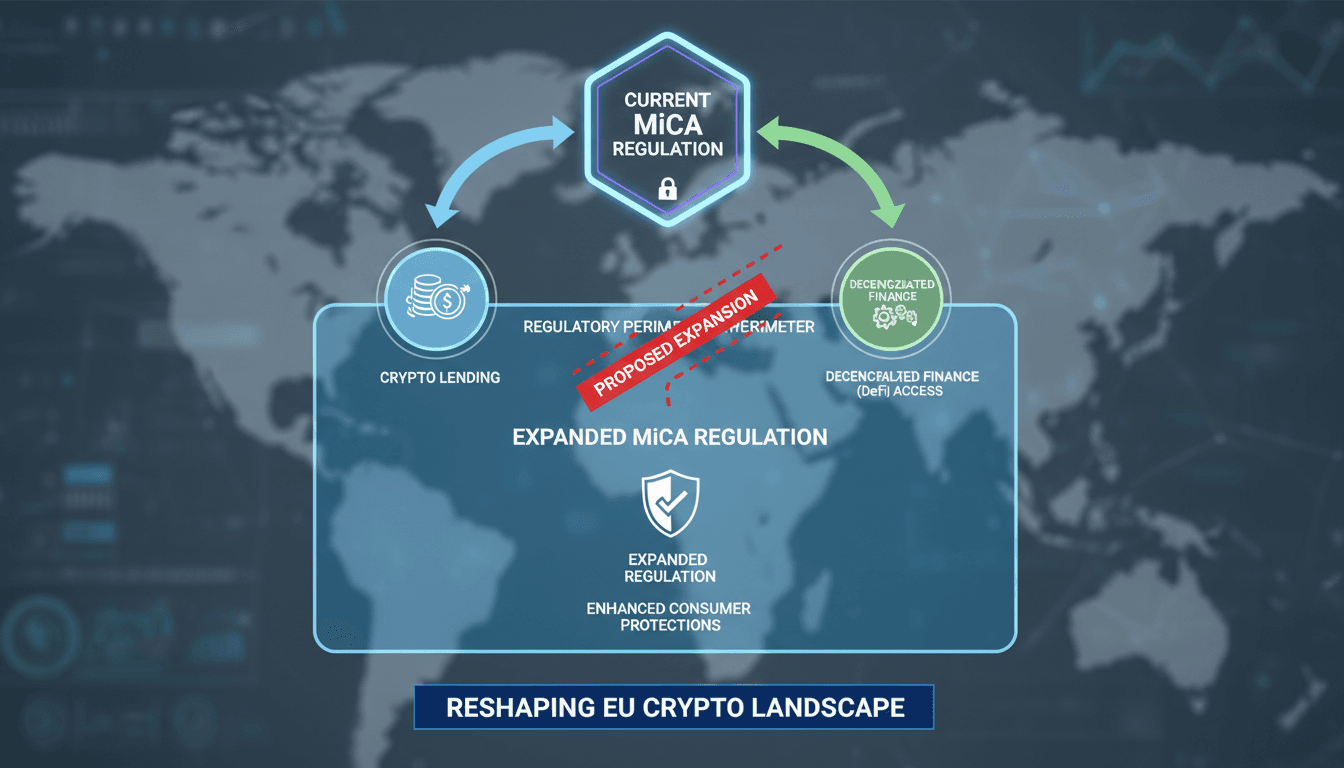
The European Banking Authority (EBA) has taken a significant step by recommending the expansion of the Markets in Crypto-Assets Regulation (MiCA) to encompass crypto lending and borrowing activities. This move comes in response to the rapid growth of decentralized finance (DeFi) and the increasing complexity of crypto asset services that blur the lines between centralized and decentralized platforms.
Currently, MiCA provides a regulatory framework for crypto-asset issuers and service providers, but it explicitly excludes lending and borrowing activities. This gap has left many users exposed to risks associated with unregulated lending platforms. The EBA's proposal aims to address these concerns by introducing measures such as suitability assessments for users, leverage restrictions, and enhanced disclosures for crypto lending services.
The EBA's recommendations are part of a broader consultation process initiated by the European Commission, which seeks to evaluate the effectiveness of MiCA and consider potential expansions to cover decentralized activities. The consultation, which is open until September 30, 2026, invites feedback from regulators, industry stakeholders, and the public. This feedback will inform a Commission report and potential legislative proposals, which could lead to significant changes in how crypto lending and DeFi are regulated in the EU.
The EBA has noted that crypto lending activities are already prevalent in at least 16 EU member states, indicating a pressing need for regulatory oversight. By proposing to regulate the intermediation of crypto borrowing and lending, the EBA aims to create a safer environment for users engaging with DeFi protocols. This includes the possibility of implementing a certification regime for protocols and restrictions on stablecoin-linked lending, which could further enhance consumer protection.
As the consultation progresses, existing crypto firms will continue to operate under transitional or MiCA authorizations while closely monitoring developments related to lending services. The outcome of this regulatory push could have far-reaching implications for the crypto landscape in Europe, potentially setting a precedent for other jurisdictions to follow.
Who feels it first (and how)
- Crypto Asset Service Providers: They will need to adapt to new compliance measures, affecting their operational models.
- DeFi Users: Individuals engaging in crypto lending may face new restrictions and requirements, impacting their access to services.
- Regulatory Bodies: National regulators will need to implement and enforce the new rules, affecting their resources and focus.
What to watch next
- Feedback from the Consultation: The responses collected by September 30, 2026, will shape the future of crypto lending regulations in the EU.
- Legislative Proposals: Watch for any proposed changes to MiCA that emerge from the consultation, which could redefine the regulatory landscape.
- Market Reactions: Monitor how crypto firms and DeFi platforms adjust their services in response to potential new regulations.
The EBA has recommended expanding MiCA to include crypto lending and borrowing.
Legislative changes will follow the consultation period, impacting how crypto lending operates in the EU.
The specific details of the new regulations and their implementation timeline remain uncertain.
Frequently Asked Questions
- Why it matters?
- The European Banking Authority's recommendations could significantly alter the landscape of crypto lending and DeFi, impacting users and service providers across the EU.
- What happened (in 30 seconds)?
- On September 24, 2026, the European Banking Authority recommended expanding the Markets in Crypto-Assets Regulation (MiCA) to include crypto borrowing and lending. The proposal targets crypto asset service providers that connect EU customers to DeFi lending services, suggesting measures like suitability assessments and leverage restrictions. The consultation period for feedback on these recommendations is open until September 30, 2026, with potential legislative changes to follow.
- What's really happening?
- The European Banking Authority (EBA) has taken a significant step by recommending the expansion of the Markets in Crypto-Assets Regulation (MiCA) to encompass crypto lending and borrowing activities. This move comes in response to the rapid growth of decentralized finance (DeFi) and the increasing complexity of crypto asset services that blur the lines between centralized and decentralized platforms. Currently, MiCA provides a regulatory framework for crypto-asset issuers and service providers
- Who feels it first (and how)?
- Crypto Asset Service Providers: They will need to adapt to new compliance measures, affecting their operational models. DeFi Users: Individuals engaging in crypto lending may face new restrictions and requirements, impacting their access to services. Regulatory Bodies: National regulators will need to implement and enforce the new rules, affecting their resources and focus.
- What to watch next?
- Feedback from the Consultation: The responses collected by September 30, 2026, will shape the future of crypto lending regulations in the EU. Legislative Proposals: Watch for any proposed changes to MiCA that emerge from the consultation, which could redefine the regulatory landscape. Market Reactions: Monitor how crypto firms and DeFi platforms adjust their services in response to potential new regulations.
Real-time updates, analysis, and reports on the blockchain and cryptocurrency sectors.
"Crypto News delivers real-time updates, analysis, and reports on the blockchain and cryptocurrency sectors."
— A47 Editor
EU could tighten access to DeFi lending as EBA pushes new MiCA rules
The European Union is moving towards stricter oversight of decentralized finance (DeFi) lending, as the European Banking Authority (EBA) has proposed that crypto borrowing and lending services be included in the Markets in Crypto Assets (MiCA) framew...
Covers blockchain, cryptocurrency news, project analysis, and market insights.
"Cointelegraph is a leading crypto-focused media outlet known for timely news, analysis, and educational content related to blockchain and digital assets."
— A47 Editor
EU banking watchdog calls for crypto lending rules under MiCA
The European Banking Authority (EBA) has proposed new regulations for crypto lending and firms providing access to decentralized finance (DeFi) protocols as part of the European Commission's review of the Markets in Crypto-Assets (MiCA) framework. Th...
Real-time updates, analysis, and reports on the blockchain and cryptocurrency sectors.
"Crypto News delivers real-time updates, analysis, and reports on the blockchain and cryptocurrency sectors."
— A47 Editor
ECB seeks MiCA reserve change flagged by Tether in 2024
The European Central Bank (ECB) and the EU’s 27 national central banks have proposed replacing the current 30% and 60% bank-deposit floors for stablecoin reserves under the Markets in Crypto-Assets (MiCA) framework with maturity-based liquidity requi...
Real-time updates, analysis, and reports on the blockchain and cryptocurrency sectors.
"Crypto News delivers real-time updates, analysis, and reports on the blockchain and cryptocurrency sectors."
— A47 Editor
ECB wants stablecoin yield ban expanded across crypto lending and staking
The European Central Bank (ECB) and national central banks within the European Union have advocated for an expansion of the stablecoin remuneration ban under the Markets in Crypto-Assets (MiCA) framework to include lending, borrowing, and staking act...