
Anchorage Digital Partners with LayerZero for Cross-Chain Stablecoin Integration
Why it matters
This partnership addresses the critical issue of liquidity fragmentation in the stablecoin market, enhancing operational efficiency for users.
What happened (in 30 seconds)
- Anchorage Digital selected LayerZero as its interoperability partner on September 21, 2026.
- Tether’s USAT became the first stablecoin to implement LayerZero’s Omnichain Fungible Token (OFT) standard.
- Additional tokens from Western Union, OSL Group, and Falcon Finance are set to follow in a phased rollout.
The context you actually need
- Stablecoin fragmentation has created operational and regulatory challenges for issuers across different blockchain networks.
- Anchorage Digital, a federally chartered U.S. digital-asset bank, aims to provide compliant solutions for institutional use cases.
- LayerZero’s infrastructure supports over 170 blockchain networks, enhancing the potential for seamless cross-chain transactions.
What's really happening
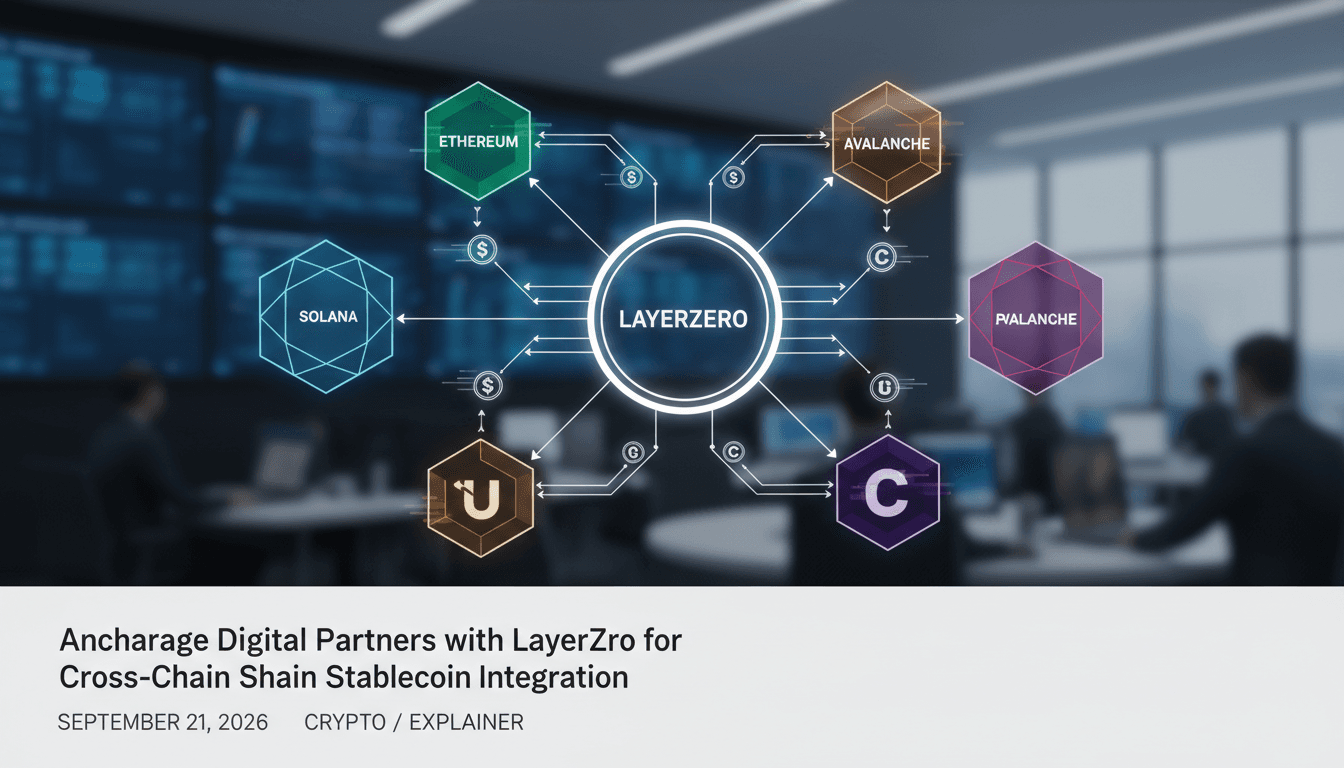
On September 21, 2026, Anchorage Digital announced a strategic partnership with LayerZero to enhance the interoperability of stablecoins issued through its platform. This integration utilizes LayerZero’s Omnichain Fungible Token (OFT) standard, which allows for unified supply management and transfers across various blockchain networks. The first stablecoin to leverage this technology is Tether’s USAT, marking a significant step toward addressing the liquidity fragmentation that has plagued the stablecoin market.
Stablecoins have become increasingly popular as a means of facilitating transactions in the digital asset space. However, the proliferation of different blockchain networks has led to a fragmented liquidity landscape, where users often face challenges in transferring assets across chains. Traditional methods, such as wrapped tokens or external bridges, introduce additional operational, security, and regulatory risks. By embedding interoperability at the issuance layer, Anchorage Digital and LayerZero aim to mitigate these risks and streamline the process for users.
The partnership is particularly relevant for regulated entities like Anchorage Digital, which operates under the oversight of the U.S. Office of the Comptroller of the Currency. This regulatory framework necessitates a focus on compliance and security, making the integration of LayerZero’s technology a strategic move to support institutional use cases in payments, trading, and treasury management.
The phased rollout of additional stablecoins, including those from Western Union, OSL Group, and Falcon Finance, indicates a broader trend toward enhanced interoperability in the stablecoin market. This integration not only facilitates easier transactions but also positions Anchorage Digital as a leader in the regulated stablecoin space. The ability to connect with over 170 blockchain networks through LayerZero’s infrastructure opens up new avenues for liquidity and operational efficiency, which could significantly impact how stablecoins are utilized in various sectors.
As the market evolves, the implications of this partnership extend beyond just Anchorage Digital and LayerZero. Other stablecoin issuers may feel pressure to adopt similar interoperability solutions to remain competitive. The integration could also influence regulatory discussions surrounding stablecoins, as regulators may view enhanced interoperability as a positive step toward mitigating risks associated with fragmented liquidity.
Who feels it first (and how)
- Institutional investors: They will benefit from improved liquidity and reduced operational risks in stablecoin transactions.
- Stablecoin issuers: Companies like Tether, Western Union, and OSL Group will gain a competitive edge through enhanced interoperability.
- Blockchain developers: They may need to adapt their platforms to support the new standards set by LayerZero.
What to watch next
- Adoption rates of additional stablecoins: Monitoring how quickly other tokens integrate with LayerZero will indicate market momentum.
- Regulatory responses: Keep an eye on how regulators react to this partnership and its implications for compliance in the stablecoin space.
- Market liquidity trends: Changes in liquidity across blockchain networks could signal the effectiveness of this interoperability solution.
Anchorage Digital and LayerZero have officially partnered for stablecoin interoperability.
Other stablecoin issuers will follow suit to enhance their operational capabilities.
The long-term regulatory implications of this partnership remain to be seen.
Frequently Asked Questions
- Why it matters?
- This partnership addresses the critical issue of liquidity fragmentation in the stablecoin market, enhancing operational efficiency for users.
- What happened (in 30 seconds)?
- Anchorage Digital selected LayerZero as its interoperability partner on September 21, 2026. Tether’s USAT became the first stablecoin to implement LayerZero’s Omnichain Fungible Token (OFT) standard. Additional tokens from Western Union, OSL Group, and Falcon Finance are set to follow in a phased rollout.
- What's really happening?
- On September 21, 2026, Anchorage Digital announced a strategic partnership with LayerZero to enhance the interoperability of stablecoins issued through its platform. This integration utilizes LayerZero’s Omnichain Fungible Token (OFT) standard, which allows for unified supply management and transfers across various blockchain networks. The first stablecoin to leverage this technology is Tether’s USAT, marking a significant step toward addressing the liquidity fragmentation that has plagued the s
- Who feels it first (and how)?
- Institutional investors: They will benefit from improved liquidity and reduced operational risks in stablecoin transactions. Stablecoin issuers: Companies like Tether, Western Union, and OSL Group will gain a competitive edge through enhanced interoperability. Blockchain developers: They may need to adapt their platforms to support the new standards set by LayerZero.
- What to watch next?
- Adoption rates of additional stablecoins: Monitoring how quickly other tokens integrate with LayerZero will indicate market momentum. Regulatory responses: Keep an eye on how regulators react to this partnership and its implications for compliance in the stablecoin space. Market liquidity trends: Changes in liquidity across blockchain networks could signal the effectiveness of this interoperability solution.
Bitcoin news, technical analysis, and forecasts across crypto markets.
"NewsBTC covers Bitcoin news, technical analysis, and forecasts across crypto markets and major blockchain projects."
— A47 Editor
Anchorage Digital Taps LayerZero To Take USAT Stablecoin Cross-Chain
Anchorage Digital has partnered with LayerZero to enhance the interoperability of regulated stablecoins, starting with Tether's USAT, which will utilize LayerZero's Omnichain Fungible Token standard for cross-chain transactions. This integration aims...
Real-time updates, analysis, and reports on the blockchain and cryptocurrency sectors.
"Crypto News delivers real-time updates, analysis, and reports on the blockchain and cryptocurrency sectors."
— A47 Editor
LayerZero backs regulated stablecoins for bank adoption
LayerZero has announced its support for regulated stablecoins, emphasizing their importance for institutional adoption, particularly after Anchorage selected its Omnichain Fungible Token (OFT) standard for cross-chain issuance. This collaboration aim...
Real-time updates, analysis, and reports on the blockchain and cryptocurrency sectors.
"Crypto News delivers real-time updates, analysis, and reports on the blockchain and cryptocurrency sectors."
— A47 Editor
Anchorage Digital taps LayerZero for stablecoin rails
Anchorage Digital has selected LayerZero to enhance stablecoin interoperability, beginning with Tether's USAT and expanding to other bank-issued tokens. This collaboration aims to streamline the integration of various stablecoins across different pla...