
Federal Reserve Proposes New Regulations for Stablecoin Issuers
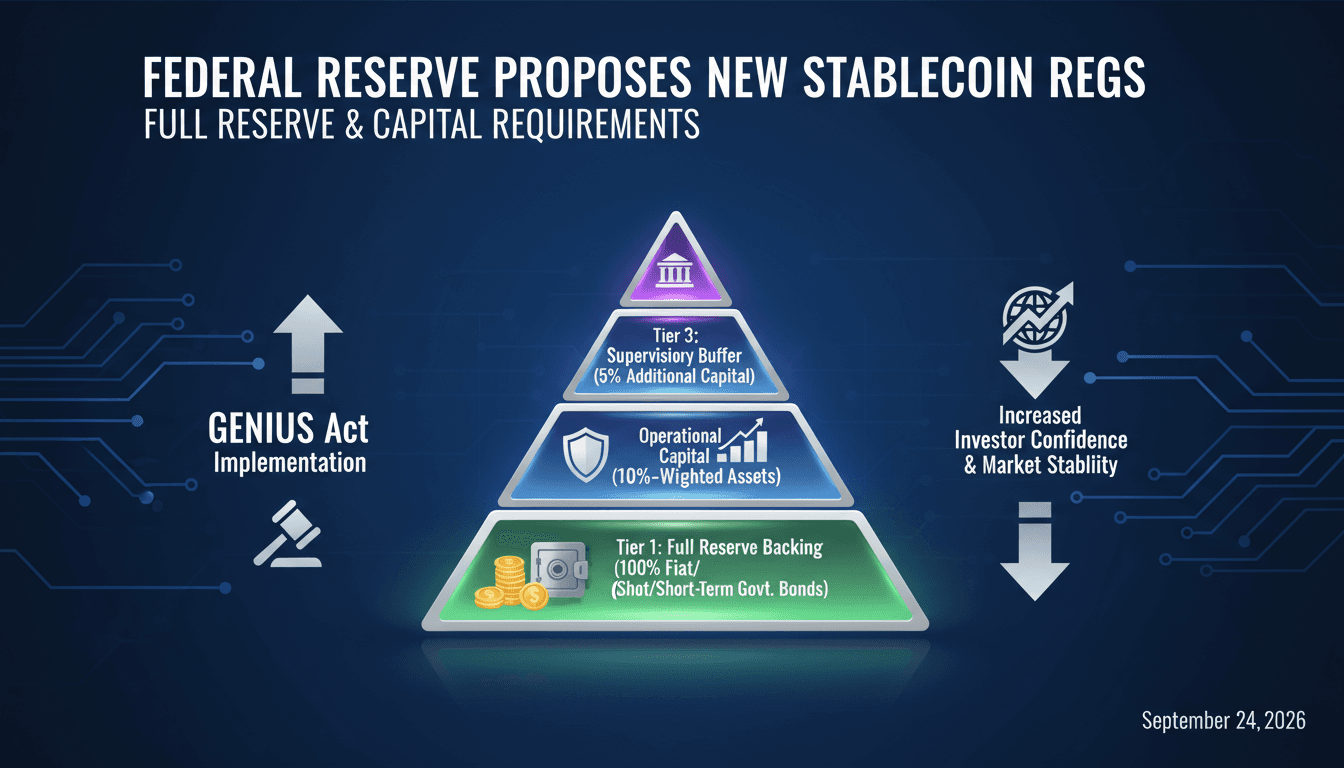
Why it matters
The Federal Reserve's proposals aim to stabilize the rapidly evolving stablecoin market, impacting how these digital assets are issued and managed.
What happened (in 30 seconds)
- On September 24, 2026, the Federal Reserve Board proposed two rulemaking packages for payment stablecoin issuers.
- The proposals require full one-to-one reserve backing with high-quality liquid assets and standardized capital charges.
- A 60-day public comment period has begun, allowing stakeholders to weigh in on the proposed regulations.
The context you actually need
- The GENIUS Act, signed into law in July 2025, established a framework for regulated stablecoin issuance, setting the stage for these proposals.
- Previous regulatory actions included measures from the OCC and Treasury, indicating a multi-agency approach to stablecoin oversight.
- Governor Michael Barr emphasized the importance of reliable redemption rights and operational safeguards in the new proposals.
What's really happening
The Federal Reserve's recent proposals represent a significant regulatory shift for payment stablecoin issuers (PPSIs) under its supervision. By mandating full one-to-one reserve backing, the Fed aims to ensure that every stablecoin issued is fully supported by high-quality liquid assets, such as short-term U.S. Treasuries and insured deposits. This requirement is designed to mitigate the risk of runs on stablecoins, where holders rush to redeem their assets, potentially destabilizing the market.
The proposals also introduce tiered capital requirements, which impose a 2% capital charge on the first $20 billion in outstanding stablecoins, decreasing to 1% for amounts above $50 billion. This structure incentivizes stablecoin issuers to maintain a robust capital buffer, enhancing their resilience against operational and credit risks. Additionally, the requirement for monthly disclosures and a two-business-day redemption window aims to increase transparency and consumer confidence.
The second proposal establishes a formal application process for banks wishing to issue stablecoins, requiring detailed business plans and appeal procedures. This move is intended to create a more structured environment for stablecoin issuance, ensuring that only qualified entities can participate in this space. Governor Barr's support for these measures underscores the Fed's commitment to safeguarding the financial system while fostering innovation in digital currencies.
As these proposals are open for public comment, stakeholders—including financial institutions, technology companies, and consumer advocacy groups—will have the opportunity to voice their opinions. The outcome of this comment period could lead to adjustments in the final regulations, reflecting the diverse interests of the market.
Overall, these proposals signal a proactive approach by the Federal Reserve to address the complexities and risks associated with stablecoins, aiming to create a safer and more reliable digital currency ecosystem.
Who feels it first (and how)
- Payment Stablecoin Issuers (PPSIs): They will need to adapt their operations to comply with new reserve and capital requirements.
- Banks and Financial Institutions: Those interested in issuing stablecoins will face a more rigorous application process.
- Consumers and Investors: They may benefit from increased stability and transparency in the stablecoin market, enhancing trust in these digital assets.
- Regulatory Bodies: Other agencies will need to coordinate with the Federal Reserve to implement the GENIUS Act effectively.
What to watch next
- Public Comment Outcomes: The feedback received during the 60-day comment period could lead to significant changes in the proposals, impacting the final regulations.
- Market Reactions: Watch for how stablecoin issuers and the broader cryptocurrency market respond to these proposals, particularly regarding compliance strategies.
- Implementation Timeline: Keep an eye on the timeline for final rule adoption and implementation, as this will affect the operational landscape for stablecoins.
The Federal Reserve's proposals require full reserve backing and capital charges for stablecoin issuers.
The proposals will undergo revisions based on public feedback before finalization.
The long-term impact on the stablecoin market and consumer behavior remains to be seen.
Frequently Asked Questions
- Why it matters?
- The Federal Reserve's proposals aim to stabilize the rapidly evolving stablecoin market, impacting how these digital assets are issued and managed.
- What happened (in 30 seconds)?
- On September 24, 2026, the Federal Reserve Board proposed two rulemaking packages for payment stablecoin issuers. The proposals require full one-to-one reserve backing with high-quality liquid assets and standardized capital charges. A 60-day public comment period has begun, allowing stakeholders to weigh in on the proposed regulations.
- What's really happening?
- The Federal Reserve's recent proposals represent a significant regulatory shift for payment stablecoin issuers (PPSIs) under its supervision. By mandating full one-to-one reserve backing, the Fed aims to ensure that every stablecoin issued is fully supported by high-quality liquid assets, such as short-term U.S. Treasuries and insured deposits. This requirement is designed to mitigate the risk of runs on stablecoins, where holders rush to redeem their assets, potentially destabilizing the market
- Who feels it first (and how)?
- Payment Stablecoin Issuers (PPSIs): They will need to adapt their operations to comply with new reserve and capital requirements. Banks and Financial Institutions: Those interested in issuing stablecoins will face a more rigorous application process. Consumers and Investors: They may benefit from increased stability and transparency in the stablecoin market, enhancing trust in these digital assets. Regulatory Bodies: Other agencies will need to coordinate with the Federal Reserve to implem
- What to watch next?
- Public Comment Outcomes: The feedback received during the 60-day comment period could lead to significant changes in the proposals, impacting the final regulations. Market Reactions: Watch for how stablecoin issuers and the broader cryptocurrency market respond to these proposals, particularly regarding compliance strategies. Implementation Timeline: Keep an eye on the timeline for final rule adoption and implementation, as this will affect the operational landscape for stablecoins.
Bitcoin news, technical analysis, and forecasts across crypto markets.
"NewsBTC covers Bitcoin news, technical analysis, and forecasts across crypto markets and major blockchain projects."
— A47 Editor
Fed Proposes Full Reserve And Capital Rules For US Stablecoin Issuers
The Federal Reserve has proposed two new rulemaking packages for payment stablecoin issuers under the GENIUS Act, requiring Board-supervised issuers to fully back tokens with permitted reserve assets and adhere to standardized capital and risk-manage...
Real-time updates, analysis, and reports on the blockchain and cryptocurrency sectors.
"Crypto News delivers real-time updates, analysis, and reports on the blockchain and cryptocurrency sectors."
— A47 Editor
The Fed has drafted stablecoin rules. Who can qualify to issue one?
The Federal Reserve has proposed two new rules regarding stablecoins, detailing the requirements for banks to issue stablecoin subsidiaries and the assets needed to back these tokens. This initiative, announced on September 24, 2026, is part of the b...
Covers blockchain, cryptocurrency news, project analysis, and market insights.
"CoinDesk is a well-established cryptocurrency and blockchain news provider, offering comprehensive insights, market data, and industry research."
— A47 Editor
U.S. Federal Reserve moves on proposals to implement GENIUS Act for stablecoins
The U.S. Federal Reserve has proposed new rules to implement the GENIUS Act, focusing on regulations for stablecoins, including yield programs. This move follows the act's introduction last year, aiming to create a structured framework for stablecoin...
Covers blockchain, cryptocurrency news, project analysis, and market insights.
"Cointelegraph is a leading crypto-focused media outlet known for timely news, analysis, and educational content related to blockchain and digital assets."
— A47 Editor
Fed proposes new capital, redemption rules for stablecoin issuers
The Federal Reserve has proposed new capital requirements and a two-day redemption window for stablecoin issuers, as part of the implementation of the GENIUS Act. This proposal also includes new reserve disclosures aimed at enhancing transparency in ...
Real-time updates, analysis, and reports on the blockchain and cryptocurrency sectors.
"Crypto News delivers real-time updates, analysis, and reports on the blockchain and cryptocurrency sectors."
— A47 Editor
Fed proposes GENIUS Act rules for stablecoin reserves and bank issuers
The Federal Reserve has proposed two new rules under the GENIUS Act, focusing on the assets required to back payment stablecoins and the approval process for banks wishing to issue them through subsidiaries. This announcement was made on September 24...
Covers Bitcoin plus altcoin news, market updates, and educational resources.
"Bitcoin.com provides news, market data, and guides focused on Bitcoin and the wider crypto industry."
— A47 Editor
Fed’s Proposed Stablecoin Rules Put GENIUS Act’s Dollar Test to Work
The U.S. Federal Reserve has proposed new rules to implement the GENIUS Act, focusing on the regulation of stablecoins, including capital requirements and redemption processes. This initiative aims to clarify the operational framework for stablecoin ...
Curated tech headlines including AI stories.
"Influential aggregator surfacing the day’s top tech/AI links."
— A47 Editor
The Fed unveils stablecoin proposals, including requiring some issuers to fully back tokens with permissible reserve assets, such as short-term Treasury bills (Megan Howard/Bloomberg)
The Federal Reserve has introduced new proposals for stablecoin issuers, mandating that certain issuers must fully back their tokens with permissible reserve assets, such as short-term Treasury bills. This initiative marks a significant step in the r...