
CFTC Updates Guidance on Tokenized Assets Following CLARITY Act Vote Failure
Why it matters
The CFTC's guidance signals a shift towards regulatory clarity in the rapidly evolving digital asset landscape.
What happened (in 30 seconds)
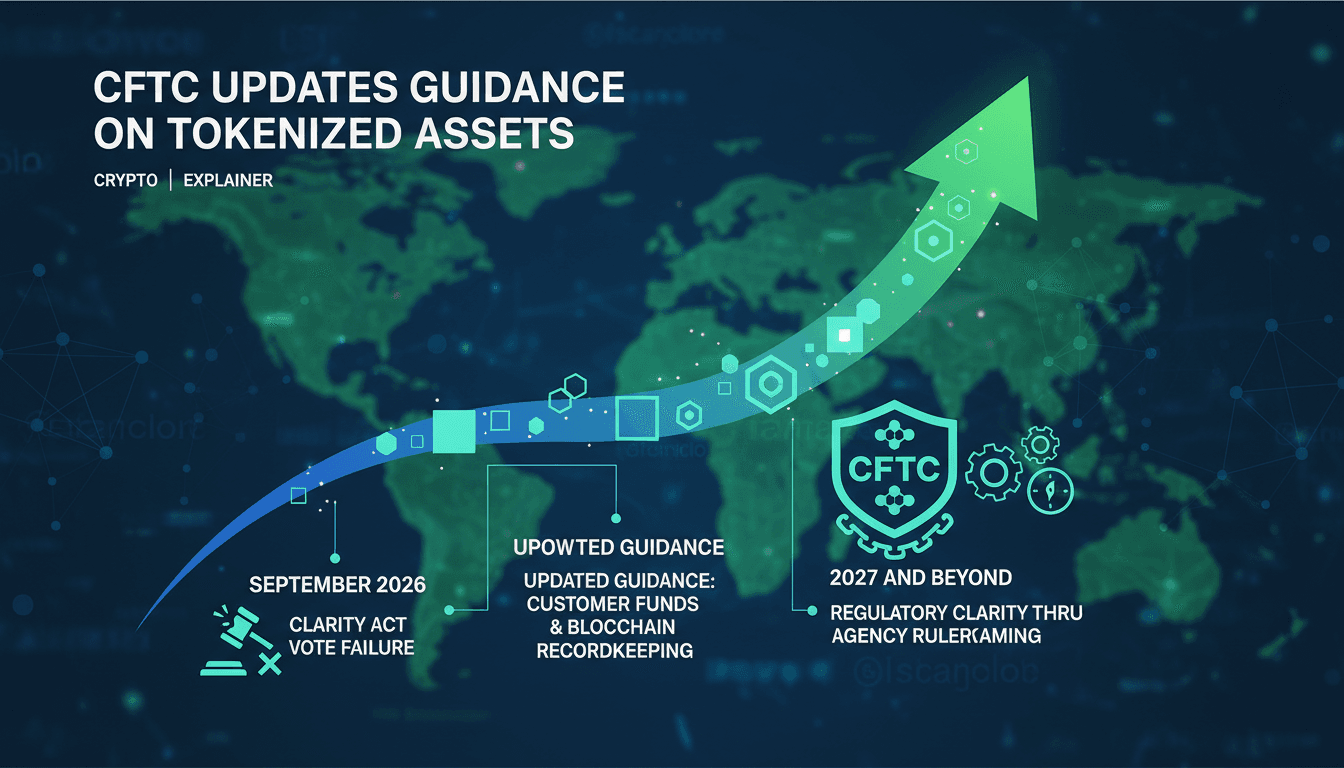
- On September 24, 2026, the CFTC updated its FAQs on tokenized assets and blockchain recordkeeping.
- Registered entities can now invest customer funds in tokenized forms of permitted investments under specific conditions.
- Blockchain technologies are now recognized for satisfying recordkeeping obligations, enhancing operational efficiency.
The context you actually need
- Previous guidance: The CFTC initially released related FAQs in March 2026, focusing on tokenized collateral and digital assets as margin.
- Legislative backdrop: The update followed the Senate's failure to advance the CLARITY Act, which aimed to clarify regulatory authority over digital assets.
- Market growth: Tokenized real-world assets reached a market capitalization of approximately $46 billion at the time of the update, indicating significant industry momentum.
What's really happening
The CFTC's recent guidance reflects a proactive approach to regulation in the face of stalled legislative efforts. With the Senate's failure to pass the CLARITY Act, which sought to delineate the regulatory roles of the CFTC and SEC, the CFTC has opted for independent rulemaking to address the needs of a rapidly evolving market. This guidance allows registered entities, such as futures commission merchants and derivatives clearing organizations, to invest customer funds in tokenized assets, provided these assets confer equivalent legal and economic rights as traditional forms of investment.
The CFTC's Chair, Michael S. Selig, emphasized that these changes are designed to advance regulatory clarity for the crypto industry, which has been grappling with uncertainty due to inconsistent regulations across jurisdictions. By permitting the use of blockchain technologies for recordkeeping, the CFTC is acknowledging the reliability and efficiency that these technologies can bring to the financial sector. This move not only aligns with the growing trend of digital asset adoption but also positions the CFTC as a forward-thinking regulator willing to adapt to market innovations.
The implications of this guidance are significant. It opens the door for more financial institutions to explore tokenized assets, potentially leading to increased investment in this space. As the market for tokenized real-world assets continues to grow, the CFTC's guidance may encourage more entities to participate, further driving innovation and competition. However, the guidance also comes with regulatory conditions that must be met, ensuring that the integrity of customer funds is maintained.
In summary, the CFTC's update is a strategic response to the current regulatory landscape, aiming to provide clarity and foster growth in the digital asset market while ensuring compliance with existing regulations.
Who feels it first (and how)
- Financial institutions: Banks and investment firms can now explore tokenized investments, potentially enhancing their portfolios.
- Regulatory bodies: The CFTC and SEC will need to navigate their roles in this evolving landscape, impacting their regulatory frameworks.
- Investors: Retail and institutional investors may gain access to new investment opportunities, influencing market dynamics.
What to watch next
- Regulatory developments: Keep an eye on further updates from the CFTC and SEC regarding crypto regulations, as they may introduce new rules or clarifications.
- Market response: Monitor how financial institutions adapt to the new guidance and whether it leads to increased investment in tokenized assets.
- Legislative actions: Watch for any future attempts by Congress to address digital asset regulations, which could reshape the regulatory landscape.
The CFTC has updated its guidance on tokenized assets and blockchain recordkeeping.
Financial institutions will begin to invest more in tokenized assets as a result of this guidance.
The long-term impact of this guidance on the overall regulatory landscape for digital assets remains to be seen.
Frequently Asked Questions
- Why it matters?
- The CFTC's guidance signals a shift towards regulatory clarity in the rapidly evolving digital asset landscape.
- What happened (in 30 seconds)?
- On September 24, 2026, the CFTC updated its FAQs on tokenized assets and blockchain recordkeeping. Registered entities can now invest customer funds in tokenized forms of permitted investments under specific conditions. Blockchain technologies are now recognized for satisfying recordkeeping obligations, enhancing operational efficiency.
- What's really happening?
- The CFTC's recent guidance reflects a proactive approach to regulation in the face of stalled legislative efforts. With the Senate's failure to pass the CLARITY Act, which sought to delineate the regulatory roles of the CFTC and SEC, the CFTC has opted for independent rulemaking to address the needs of a rapidly evolving market. This guidance allows registered entities, such as futures commission merchants and derivatives clearing organizations, to invest customer funds in tokenized assets, prov
- Who feels it first (and how)?
- Financial institutions: Banks and investment firms can now explore tokenized investments, potentially enhancing their portfolios. Regulatory bodies: The CFTC and SEC will need to navigate their roles in this evolving landscape, impacting their regulatory frameworks. Investors: Retail and institutional investors may gain access to new investment opportunities, influencing market dynamics.
- What to watch next?
- Regulatory developments: Keep an eye on further updates from the CFTC and SEC regarding crypto regulations, as they may introduce new rules or clarifications. Market response: Monitor how financial institutions adapt to the new guidance and whether it leads to increased investment in tokenized assets. Legislative actions: Watch for any future attempts by Congress to address digital asset regulations, which could reshape the regulatory landscape.
Covers blockchain, cryptocurrency news, project analysis, and market insights.
"Cointelegraph is a leading crypto-focused media outlet known for timely news, analysis, and educational content related to blockchain and digital assets."
— A47 Editor
CFTC updates guidance on tokenized assets, blockchain records after failed vote
The Commodity Futures Trading Commission (CFTC) has updated its guidance on tokenized assets and blockchain records following the Senate's failure to advance the CLARITY Act, which aimed to clarify cryptocurrency regulations. Although the CFTC chair ...
Global business headlines with AI angles.
"General business outlet that frequently covers AI."
— A47 Editor
Tokenized Markets Still Need Money
Following the failure of Congress to advance the CLARITY Act in September, the SEC has implemented an 'Innovation Exemption' that permits certain tokenized U.S. stocks to trade onchain while it deliberates on more permanent regulations.
Real-time updates, analysis, and reports on the blockchain and cryptocurrency sectors.
"Crypto News delivers real-time updates, analysis, and reports on the blockchain and cryptocurrency sectors."
— A47 Editor
CLARITY Act stalls as US crypto regulators write rules without Congress
The U.S. Senate has halted discussions on the CLARITY Act, a proposed federal bill aimed at establishing a comprehensive regulatory framework for the cryptocurrency market. Following this setback, the Commodity Futures Trading Commission (CFTC) is mo...