
SoFi Launches Stablecoin Settlement for $25 Billion Card Program
Why it matters
This integration signals a significant shift in how traditional banking and blockchain technology can coexist, enhancing transaction efficiency.
What happened (in 30 seconds)
- SoFi Technologies launched live stablecoin settlement for its debit and credit card program on September 22, 2026.
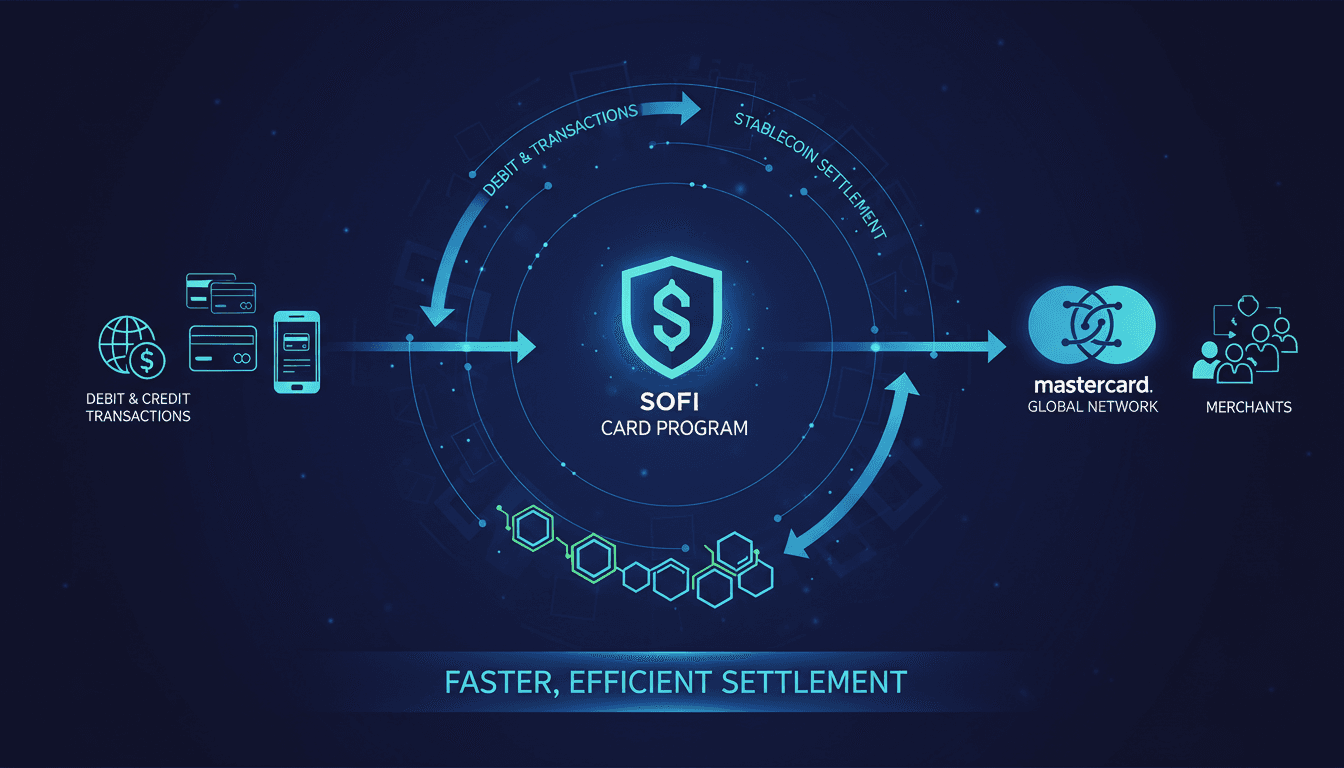
- Mastercard partnered with SoFi Bank to enable SoFiUSD stablecoin transactions across its global payments network.
- Projected annualized volume for the card program is expected to exceed $25 billion, enhancing transaction speed and liquidity.
The context you actually need
- Stablecoin adoption is accelerating as financial institutions explore blockchain for improved settlement efficiency.
- SoFiUSD, launched in December 2025, is a bank-issued stablecoin backed 1:1 by cash reserves, enhancing trust and stability.
- Visa is also piloting stablecoin settlements, indicating a broader industry trend towards integrating blockchain technology into traditional payment systems.
What's really happening
SoFi's integration of stablecoin settlement represents a pivotal moment in the evolution of payment systems. By utilizing its SoFiUSD stablecoin, SoFi Bank, N.A. has become the first nationally chartered bank in the U.S. to settle card transactions via blockchain on the Mastercard network. This move is not merely a technological upgrade; it reflects a strategic alignment with the growing trend of digital currencies in mainstream finance.
The partnership with Mastercard allows SoFi to leverage existing infrastructure while introducing blockchain efficiencies. Transactions now settle on-chain through Mastercard's Multi-Token Network, which means that funds are transferred almost instantaneously, 24/7. Merchants benefit from receiving payments directly into their SoFi Bank accounts without needing to hold or manage stablecoins themselves. This preserves the existing card infrastructure while enhancing the speed of transactions, which is crucial for businesses that rely on cash flow.
The implications extend beyond just faster payments. By integrating stablecoin settlements, SoFi positions itself as a leader in the fintech space, potentially attracting more users who value speed and efficiency in their financial transactions. Moreover, this move could pave the way for broader adoption of stablecoins in various payment scenarios, including cross-border remittances and business-to-business (B2B) transactions.
Experts note that while the integration showcases the viability of stablecoins as a complement to traditional banking rails, the end-to-end cost reductions associated with this technology still require validation at scale. As SoFi and Mastercard continue to explore merchant settlement and remittance expansions, the financial landscape may see a gradual shift towards more blockchain-based solutions.
In summary, SoFi's stablecoin settlement integration is a significant step towards merging traditional banking with innovative blockchain technology, potentially reshaping how transactions are processed in the future.
Who feels it first (and how)
- Consumers using SoFi cards will experience faster transaction settlements.
- Merchants accepting SoFi card payments will benefit from quicker access to funds.
- Fintech companies observing this integration may consider similar blockchain solutions for their services.
What to watch next
- Expansion of stablecoin use cases: Monitor how SoFi and Mastercard develop additional applications for stablecoin settlements, particularly in cross-border transactions.
- Regulatory responses: Keep an eye on any governmental or regulatory feedback regarding stablecoin integrations in traditional banking systems.
- Market adoption rates: Watch for metrics on how quickly merchants and consumers adopt this new settlement method and its impact on transaction volumes.
SoFi has successfully integrated stablecoin settlement for its card program.
Other financial institutions may follow suit, exploring stablecoin settlements to enhance transaction efficiency.
The long-term regulatory landscape for stablecoins and their integration into traditional banking remains uncertain.
Frequently Asked Questions
- Why it matters?
- This integration signals a significant shift in how traditional banking and blockchain technology can coexist, enhancing transaction efficiency.
- What happened (in 30 seconds)?
- SoFi Technologies launched live stablecoin settlement for its debit and credit card program on September 22, 2026. Mastercard partnered with SoFi Bank to enable SoFiUSD stablecoin transactions across its global payments network. Projected annualized volume for the card program is expected to exceed $25 billion, enhancing transaction speed and liquidity.
- What's really happening?
- SoFi's integration of stablecoin settlement represents a pivotal moment in the evolution of payment systems. By utilizing its SoFiUSD stablecoin, SoFi Bank, N.A. has become the first nationally chartered bank in the U.S. to settle card transactions via blockchain on the Mastercard network. This move is not merely a technological upgrade; it reflects a strategic alignment with the growing trend of digital currencies in mainstream finance. The partnership with Mastercard allows SoFi to leverage e
- Who feels it first (and how)?
- Consumers using SoFi cards will experience faster transaction settlements. Merchants accepting SoFi card payments will benefit from quicker access to funds. Fintech companies observing this integration may consider similar blockchain solutions for their services.
- What to watch next?
- Expansion of stablecoin use cases: Monitor how SoFi and Mastercard develop additional applications for stablecoin settlements, particularly in cross-border transactions. Regulatory responses: Keep an eye on any governmental or regulatory feedback regarding stablecoin integrations in traditional banking systems. Market adoption rates: Watch for metrics on how quickly merchants and consumers adopt this new settlement method and its impact on transaction volumes.
Covers blockchain, cryptocurrency news, project analysis, and market insights.
"Cointelegraph is a leading crypto-focused media outlet known for timely news, analysis, and educational content related to blockchain and digital assets."
— A47 Editor
SoFi tie-up shows stablecoins can provide alternative blockchain settlement rail
SoFi has transitioned its entire card program, valued at over $25 billion, to a blockchain-based settlement system utilizing its newly launched stablecoin, SoFiUSD. This strategic move marks a significant advancement as SoFi becomes the first nationa...
Covers Bitcoin plus altcoin news, market updates, and educational resources.
"Bitcoin.com provides news, market data, and guides focused on Bitcoin and the wider crypto industry."
— A47 Editor
SoFi Moves $25 Billion Mastercard Program Onto Stablecoin Rails
SoFi has transitioned its $25 billion Mastercard program to utilize stablecoin technology, marking a significant step as it becomes the first nationally chartered bank to settle card transactions in this manner. This move aligns with the growing tren...
Real-time updates, analysis, and reports on the blockchain and cryptocurrency sectors.
"Crypto News delivers real-time updates, analysis, and reports on the blockchain and cryptocurrency sectors."
— A47 Editor
SoFi moves $25 billion card program to SoFiUSD settlement on Mastercard
SoFi Technologies has transitioned its $25 billion card program to a blockchain-based settlement system using SoFiUSD, its newly launched stablecoin, which is now operational within Mastercard's global payments network. This move was announced on Sep...