
EU Supervisory Authorities Warn of Quantum Computing Threat to Blockchain Cryptography
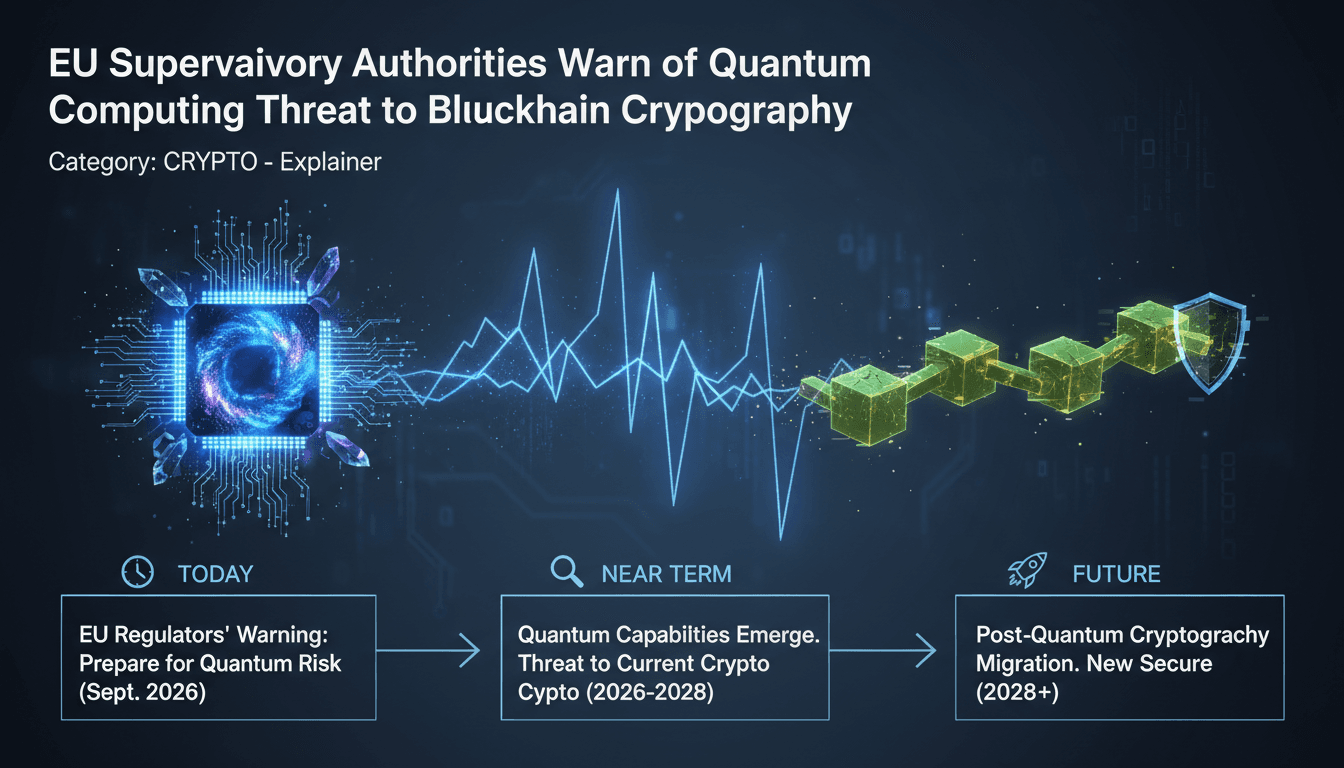
If you rely on blockchain technology for transactions or data security, prepare for potential vulnerabilities as quantum computing advances.
Why it matters
The integrity of blockchain systems, crucial for cryptocurrencies and secure communications, is at risk from emerging quantum computing technologies.
What happened (in 30 seconds)
- On September 23, 2026, the Joint Committee of the European Supervisory Authorities issued a warning about quantum computing risks to blockchain cryptography.
- Approximately 6.89 million BTC are estimated to have public-key exposure, making them vulnerable to future quantum attacks.
- EU regulators are urging immediate preparation and migration to post-quantum cryptography solutions by the end of 2026.
The context you actually need
- Quantum computing could break current cryptographic algorithms, such as those securing Bitcoin, through methods like Shor's algorithm.
- The EU's roadmap for post-quantum cryptography aims for member states to begin transitioning by the end of 2026, with high-risk protections by 2030.
- Previous analyses from ESMA and IBM have highlighted the urgency of addressing quantum threats in financial markets, emphasizing the need for early action.
What's really happening
The warning from the Joint Committee of the European Supervisory Authorities (EBA, EIOPA, ESMA) on September 23, 2026, underscores a critical juncture in the intersection of quantum computing and blockchain technology. As quantum computers evolve, they pose a significant threat to the cryptographic foundations that secure blockchain transactions, databases, and communications. The alert highlights that these risks could materialize even before quantum computers become commercially viable, indicating a pressing need for proactive measures.
The report estimates that around 6.89 million BTC are currently exposed due to public-key vulnerabilities. This figure, provided by CryptoQuant, illustrates the scale of potential risk for Bitcoin holders and the broader cryptocurrency market. The European regulators are not merely issuing a cautionary note; they are advocating for immediate preparation and migration to post-quantum cryptography solutions. This proactive stance is essential given the lengthy timelines required for implementing new cryptographic standards.
The EU's roadmap for post-quantum cryptography is ambitious, aiming for member states to initiate transitions by the end of 2026, with a target for high-risk protections to be in place by 2030. This timeline reflects the understanding that while current quantum devices are not yet capable of executing large-scale attacks, the migration to more secure systems must begin now to mitigate future risks. The urgency is further compounded by previous analyses from ESMA, which have detailed potential vulnerabilities in existing cryptographic schemes like RSA and elliptic-curve cryptography (ECC).
Institutional custodians, including major players like Coinbase, are already beginning to design post-quantum custody solutions, indicating a shift in how financial institutions are preparing for this impending threat. Meanwhile, discussions among Bitcoin developers regarding BIPs 360 and 361, which propose quantum-resistant outputs and migration policies, are ongoing but lack activated consensus rules. This highlights the complexity of achieving agreement on new standards in a decentralized ecosystem.
Despite the gravity of the situation, market reactions have been minimal thus far, as the threat remains prospective. No immediate price or trading impacts have been documented, suggesting that many in the market are still assessing the implications of the warning. However, the call for vigilance and preparation is clear, as the potential for quantum attacks looms on the horizon.
Who feels it first (and how)
- Cryptocurrency holders: Individuals with Bitcoin or other cryptocurrencies face potential vulnerabilities in their assets.
- Financial institutions: Banks and custodians must adapt to new security protocols to protect client assets.
- Tech developers: Those involved in blockchain technology need to innovate and implement quantum-resistant solutions.
What to watch next
- Regulatory developments: Monitor EU member states' progress on post-quantum migration plans and compliance timelines.
- Technological advancements: Keep an eye on breakthroughs in quantum computing that could accelerate the timeline for potential attacks.
- Market responses: Watch for shifts in cryptocurrency prices or trading volumes as awareness of quantum risks increases.
Quantum computing poses a theoretical risk to current cryptographic systems.
Financial institutions will begin implementing post-quantum solutions in the coming years.
The exact timeline for when quantum computers will be capable of executing significant attacks on blockchain systems.
Frequently Asked Questions
- Why it matters?
- The integrity of blockchain systems, crucial for cryptocurrencies and secure communications, is at risk from emerging quantum computing technologies.
- What happened (in 30 seconds)?
- On September 23, 2026, the Joint Committee of the European Supervisory Authorities issued a warning about quantum computing risks to blockchain cryptography. Approximately 6.89 million BTC are estimated to have public-key exposure, making them vulnerable to future quantum attacks. EU regulators are urging immediate preparation and migration to post-quantum cryptography solutions by the end of 2026.
- What's really happening?
- The warning from the Joint Committee of the European Supervisory Authorities (EBA, EIOPA, ESMA) on September 23, 2026, underscores a critical juncture in the intersection of quantum computing and blockchain technology. As quantum computers evolve, they pose a significant threat to the cryptographic foundations that secure blockchain transactions, databases, and communications. The alert highlights that these risks could materialize even before quantum computers become commercially viable, indica
- Who feels it first (and how)?
- Cryptocurrency holders: Individuals with Bitcoin or other cryptocurrencies face potential vulnerabilities in their assets. Financial institutions: Banks and custodians must adapt to new security protocols to protect client assets. Tech developers: Those involved in blockchain technology need to innovate and implement quantum-resistant solutions.
- What to watch next?
- Regulatory developments: Monitor EU member states' progress on post-quantum migration plans and compliance timelines. Technological advancements: Keep an eye on breakthroughs in quantum computing that could accelerate the timeline for potential attacks. Market responses: Watch for shifts in cryptocurrency prices or trading volumes as awareness of quantum risks increases.
Real-time updates, analysis, and reports on the blockchain and cryptocurrency sectors.
"Crypto News delivers real-time updates, analysis, and reports on the blockchain and cryptocurrency sectors."
— A47 Editor
EU watchdogs warn quantum computers could hit blockchains
EU financial watchdogs have issued warnings that advancements in quantum computing could significantly undermine the cryptographic security of blockchain technologies, particularly affecting Bitcoin. This alert has sparked intense discussions among d...
Covers blockchain, cryptocurrency news, project analysis, and market insights.
"CoinDesk is a well-established cryptocurrency and blockchain news provider, offering comprehensive insights, market data, and industry research."
— A47 Editor
EU financial watchdogs warn quantum computing poses imminent threat to blockchain encryption
EU financial watchdogs have issued a warning that advancements in quantum computing pose an imminent threat to the encryption of blockchain technologies, particularly affecting cryptocurrencies like Bitcoin. This alert has intensified discussions reg...
Covers blockchain, cryptocurrency news, project analysis, and market insights.
"Cointelegraph is a leading crypto-focused media outlet known for timely news, analysis, and educational content related to blockchain and digital assets."
— A47 Editor
EU watchdogs warn quantum computers could pick crypto’s locks
EU regulators have issued warnings that advancements in quantum computing could compromise the security of cryptocurrencies, particularly Bitcoin and Ethereum, as developers consider migration strategies to counteract these threats.