
White-hat operators secure over $5.7 million in NFTs following payment processor vulnerability exploit
Why it matters
This operation underscores the vulnerabilities in blockchain payment systems and the critical role of white-hat hackers in safeguarding digital assets.
What happened (in 30 seconds)
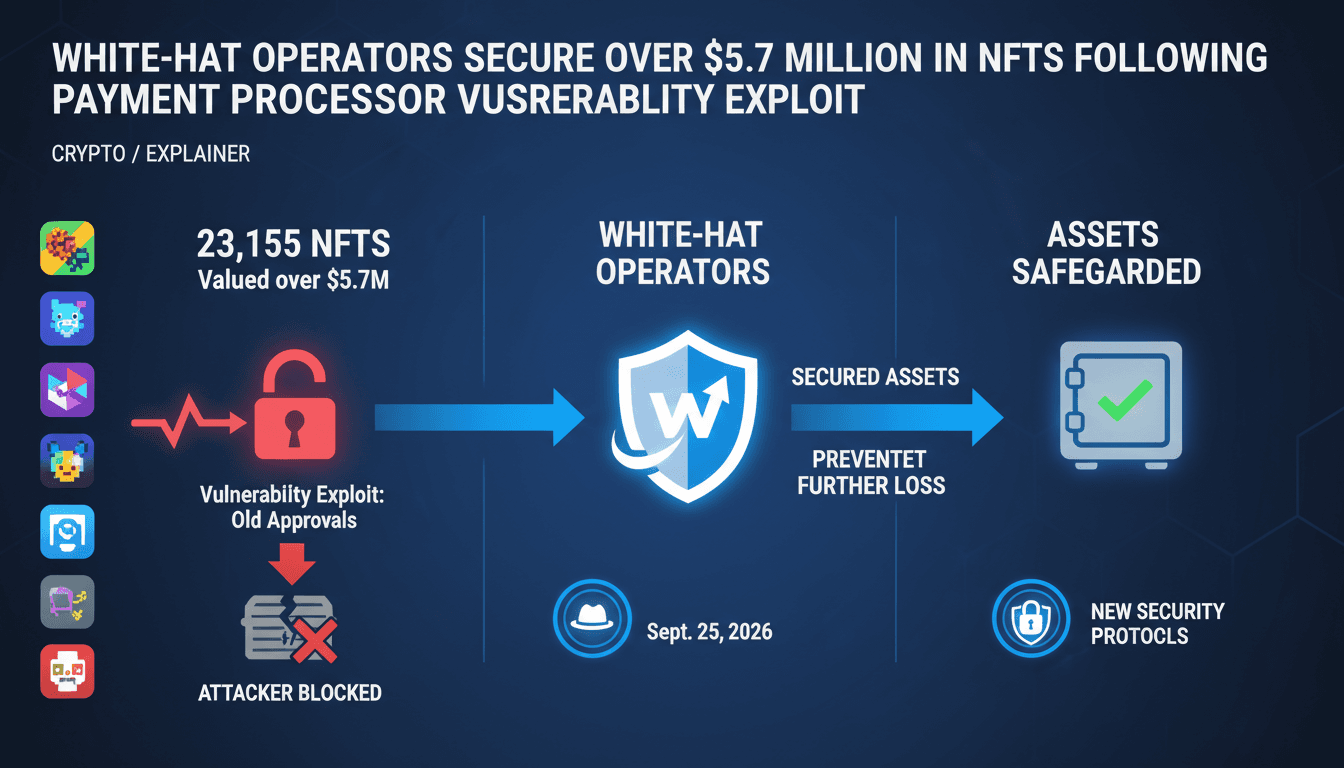
- On September 25, 2026, white-hat operators led by Yuga Labs VP 0xQuit rescued 23,155 NFTs valued at over $5.7 million from a vulnerability in Limit Break’s Payment Processor.
- An attacker exploited old approvals to steal NFTs from various collections, prompting the white-hat intervention to secure the assets.
- Approximately 660 WETH, valued at around $1.7 million, was not recovered in time, highlighting the ongoing risks in the ecosystem.
The context you actually need
- Magic Eden previously used Limit Break’s Payment Processor for trades on its Ethereum marketplace, which ceased operations in early 2026.
- Legacy token approvals remained active, creating an exploitable vector when a vulnerability was identified in the Payment Processor V2 contract.
- The white-hat operation was confirmed by 0xQuit, who stated that the rescued assets would be returned once risks were mitigated.
What's really happening
The incident on September 25, 2026, reveals a complex interplay of vulnerabilities and proactive measures within the NFT and blockchain ecosystem. The white-hat operation led by 0xQuit was a direct response to an exploit that took advantage of outdated token approvals in Limit Break’s Payment Processor V2 contract. This contract had been previously utilized by Magic Eden, a marketplace that shifted its focus to Solana, leaving behind legacy approvals that were still active.
When the vulnerability was discovered, it allowed an attacker to exploit these old approvals, leading to the theft of NFTs from prominent collections such as Meebits, Otherdeeds, World of Women, and Desperate Apewives. The white-hat team acted swiftly, transferring 23,155 NFTs into protective custody to prevent further losses. This operation not only secured significant assets but also highlighted the critical role of white-hat hackers in the blockchain space, who often operate without the same recognition as malicious actors.
The incident also raises questions about the security protocols in place for NFT marketplaces and the need for users to remain vigilant. Magic Eden's confirmation that no live listings were affected is a relief, but the fact that approximately 660 WETH was lost underscores the potential for significant financial damage in such scenarios. Users were advised to revoke approvals associated with the vulnerable contracts, a step that does not restore already-moved assets but is essential for future security.
As the investigation continues, the collaboration between Magic Eden and Limit Break on mitigations will be crucial in preventing similar incidents. The ongoing dialogue about security in the NFT space is vital, especially as more users engage with digital assets. This incident serves as a reminder that while the blockchain offers innovative opportunities, it also presents risks that require constant vigilance and proactive measures.
Who feels it first (and how)
- NFT Holders: Individuals who own NFTs from affected collections may face potential losses and need to take immediate action to secure their assets.
- Marketplace Operators: Platforms like Magic Eden must enhance security measures to regain user trust and prevent future vulnerabilities.
- Investors: Those investing in NFTs or blockchain technologies will need to reassess risk management strategies in light of this incident.
What to watch next
- User Actions: Monitor how many NFT holders revoke approvals on vulnerable contracts, as this will indicate user awareness and responsiveness to security threats.
- Marketplace Security Enhancements: Watch for announcements from NFT marketplaces regarding new security protocols or features aimed at preventing similar exploits.
- Regulatory Responses: Keep an eye on any potential regulatory discussions or actions that may arise from this incident, as increased scrutiny could reshape the NFT landscape.
The white-hat operation successfully secured 23,155 NFTs valued at over $5.7 million.
NFT marketplaces will implement stricter security measures and user education initiatives in response to this incident.
The long-term impact on user trust and market dynamics in the NFT space remains uncertain.
Frequently Asked Questions
- Why it matters?
- This operation underscores the vulnerabilities in blockchain payment systems and the critical role of white-hat hackers in safeguarding digital assets.
- What happened (in 30 seconds)?
- On September 25, 2026, white-hat operators led by Yuga Labs VP 0xQuit rescued 23,155 NFTs valued at over $5.7 million from a vulnerability in Limit Break’s Payment Processor. An attacker exploited old approvals to steal NFTs from various collections, prompting the white-hat intervention to secure the assets. Approximately 660 WETH, valued at around $1.7 million, was not recovered in time, highlighting the ongoing risks in the ecosystem.
- What's really happening?
- The incident on September 25, 2026, reveals a complex interplay of vulnerabilities and proactive measures within the NFT and blockchain ecosystem. The white-hat operation led by 0xQuit was a direct response to an exploit that took advantage of outdated token approvals in Limit Break’s Payment Processor V2 contract. This contract had been previously utilized by Magic Eden, a marketplace that shifted its focus to Solana, leaving behind legacy approvals that were still active. When the vulnerabili
- Who feels it first (and how)?
- NFT Holders: Individuals who own NFTs from affected collections may face potential losses and need to take immediate action to secure their assets. Marketplace Operators: Platforms like Magic Eden must enhance security measures to regain user trust and prevent future vulnerabilities. Investors: Those investing in NFTs or blockchain technologies will need to reassess risk management strategies in light of this incident.
- What to watch next?
- User Actions: Monitor how many NFT holders revoke approvals on vulnerable contracts, as this will indicate user awareness and responsiveness to security threats. Marketplace Security Enhancements: Watch for announcements from NFT marketplaces regarding new security protocols or features aimed at preventing similar exploits. Regulatory Responses: Keep an eye on any potential regulatory discussions or actions that may arise from this incident, as increased scrutiny could reshape the NFT landsc
Covers Bitcoin plus altcoin news, market updates, and educational resources.
"Bitcoin.com provides news, market data, and guides focused on Bitcoin and the wider crypto industry."
— A47 Editor
White Hats Swipe $5.7M in NFTs Before Attackers Get Their Shot
White hat hackers successfully intervened to secure $5.7 million worth of NFTs before potential attackers could exploit vulnerabilities. This operation highlights the proactive measures taken by ethical hackers to protect digital assets in the crypto...
Covers blockchain, cryptocurrency news, project analysis, and market insights.
"Cointelegraph is a leading crypto-focused media outlet known for timely news, analysis, and educational content related to blockchain and digital assets."
— A47 Editor
Magic Eden scare puts 3,832 NFTs in whitehat protective custody
A recent incident involving Magic Eden has led to the protective custody of 3,832 NFTs, as Yuga Labs' 0xQuit confirmed that these assets are secure and will be returned once the risk subsides. Holders have been advised to revoke NFT permissions to sa...
Real-time updates, analysis, and reports on the blockchain and cryptocurrency sectors.
"Crypto News delivers real-time updates, analysis, and reports on the blockchain and cryptocurrency sectors."
— A47 Editor
Magic Eden undergoing possible exploit as thousands of NFTs move for 0 ETH
Magic Eden is currently facing scrutiny due to reports of a potential contract exploit, with thousands of NFTs being transferred for 0 ETH. An account involved in these transactions claims they are part of a whitehat operation aimed at protecting ass...