
Proposal for Shielded Bitcoin Introduces Zcash-Style Privacy Features Without Consensus Changes
Why it matters
This proposal could significantly alter the landscape of transaction privacy in the cryptocurrency market.
What happened (in 30 seconds)
- On September 25, 2026, researchers from [alloc] init published a proposal for "Shielded Bitcoin," enabling private transfers similar to Zcash.
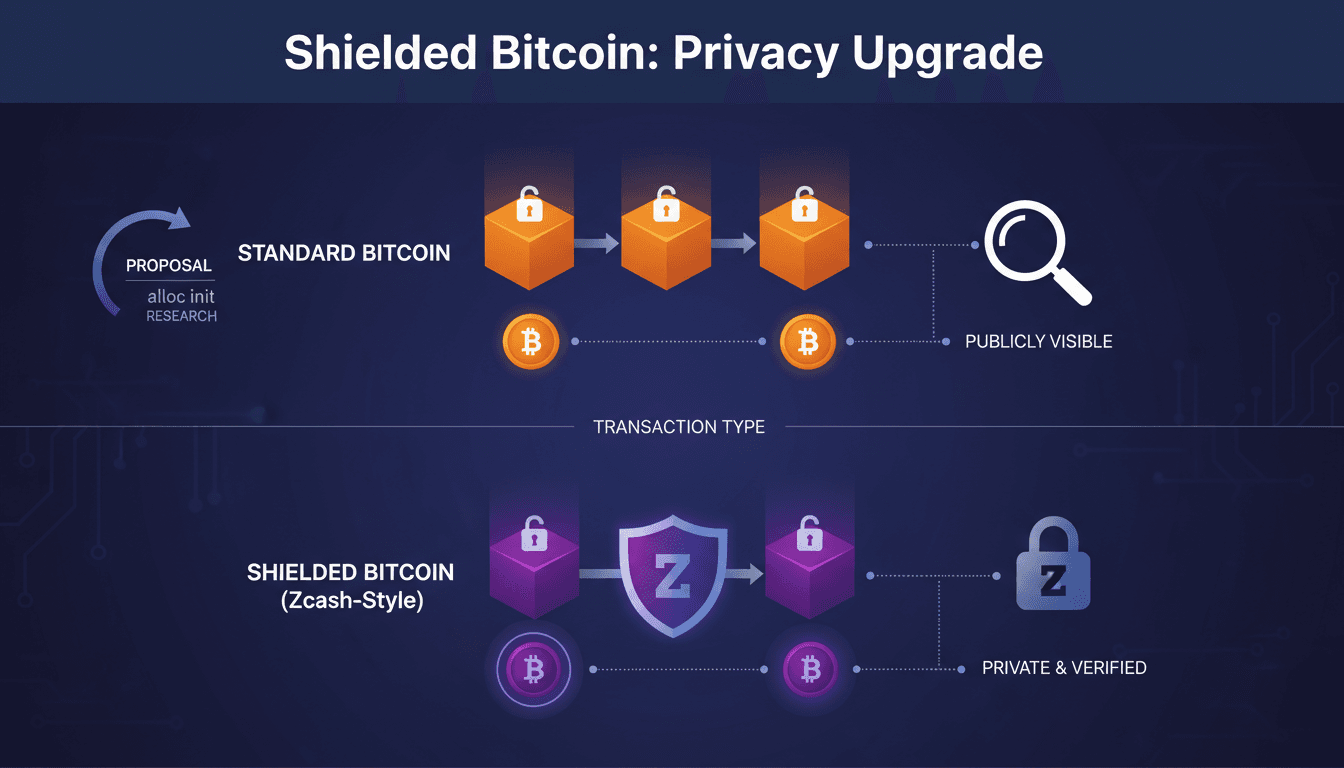
- The system uses encrypted notes and zero-knowledge proofs, allowing for transaction privacy without changing Bitcoin's consensus rules.
- Market reactions have been mixed, with some skepticism about the proposal's feasibility and implications for transaction fees.
The context you actually need
- Bitcoin's transparency has long exposed transaction details, prompting calls for enhanced privacy features.
- Previous attempts to integrate privacy features via soft forks faced resistance due to regulatory concerns and consensus requirements.
- Zcash has demonstrated effective privacy solutions, but users must exit Bitcoin's ecosystem to access them.
What's really happening
The Shielded Bitcoin proposal introduces a metaprotocol that allows for Zcash-style private transactions on the Bitcoin base layer without altering its consensus rules. This innovative approach leverages encrypted notes, nullifiers, and zero-knowledge proofs, which are published through Bitcoin transactions. Verification is handled by independent indexers rather than relying on Bitcoin's consensus mechanisms, thus maintaining the integrity of the existing network.
The core of this proposal lies in its use of witness encryption techniques, known as Bitcoin PIPEs, which enforce transaction conditions mathematically rather than through changes to Bitcoin's scripting language. Users deposit Bitcoin into encrypted notes, and when they wish to transfer funds, they publish proofs and nullifiers on-chain. This method allows for privacy while anchoring data to Bitcoin, effectively positioning it as a neutral publication and ordering layer.
Despite the innovative nature of this proposal, there are challenges ahead. The implementation is still incomplete, and a complete bridge for locking and releasing Bitcoin remains unfinished. Additionally, the proposal has sparked skepticism among developers, particularly regarding its overlap with existing Zcash implementations and the potential for higher transaction fees. Each shielded transaction is estimated to be around 700 vbytes, resulting in fees approximately four times higher than standard Bitcoin transactions.
The proposal's reception has been cautious, with limited market and community responses as of September 27, 2026. Concerns have been raised about the trusted setup elements and the implications of higher fees, while Zcash-related entities have pointed out the advantages of their more mature production capabilities. As the proposal moves forward, it will be crucial to monitor how it addresses these challenges and whether it can gain traction within the broader Bitcoin community.
Who feels it first (and how)
- Cryptocurrency traders: Increased transaction privacy could enhance trading strategies and asset management.
- Developers: Those working on Bitcoin-related projects may need to adapt to new privacy features and their implications.
- Regulatory bodies: Governments and financial institutions will need to assess the impact of enhanced privacy on compliance and oversight.
What to watch next
- Implementation progress: Monitoring the development of the Shielded Bitcoin proposal will reveal its viability and potential adoption.
- Community feedback: Developer and user reactions will indicate whether the proposal gains traction or faces significant pushback.
- Regulatory responses: How governments react to enhanced privacy features in Bitcoin could shape future cryptocurrency regulations.
The proposal introduces a new method for private transactions on Bitcoin.
There will be ongoing debates within the developer community regarding its feasibility and implications.
The long-term adoption and regulatory response to this proposal remain uncertain.
Frequently Asked Questions
- Why it matters?
- This proposal could significantly alter the landscape of transaction privacy in the cryptocurrency market.
- What happened (in 30 seconds)?
- On September 25, 2026, researchers from [alloc] init published a proposal for "Shielded Bitcoin," enabling private transfers similar to Zcash. The system uses encrypted notes and zero-knowledge proofs, allowing for transaction privacy without changing Bitcoin's consensus rules. Market reactions have been mixed, with some skepticism about the proposal's feasibility and implications for transaction fees.
- What's really happening?
- The Shielded Bitcoin proposal introduces a metaprotocol that allows for Zcash-style private transactions on the Bitcoin base layer without altering its consensus rules. This innovative approach leverages encrypted notes, nullifiers, and zero-knowledge proofs, which are published through Bitcoin transactions. Verification is handled by independent indexers rather than relying on Bitcoin's consensus mechanisms, thus maintaining the integrity of the existing network. The core of this proposal lies
- Who feels it first (and how)?
- Cryptocurrency traders: Increased transaction privacy could enhance trading strategies and asset management. Developers: Those working on Bitcoin-related projects may need to adapt to new privacy features and their implications. Regulatory bodies: Governments and financial institutions will need to assess the impact of enhanced privacy on compliance and oversight.
- What to watch next?
- Implementation progress: Monitoring the development of the Shielded Bitcoin proposal will reveal its viability and potential adoption. Community feedback: Developer and user reactions will indicate whether the proposal gains traction or faces significant pushback. Regulatory responses: How governments react to enhanced privacy features in Bitcoin could shape future cryptocurrency regulations.
Covers blockchain, cryptocurrency news, project analysis, and market insights.
"CoinDesk is a well-established cryptocurrency and blockchain news provider, offering comprehensive insights, market data, and industry research."
— A47 Editor
Bitcoin could soon get Zcash-style 'shielded' privacy without changing its rules
Researchers have proposed a method for implementing Zcash-style privacy features for Bitcoin transactions without altering its existing rules. This approach involves private Bitcoin-denominated transfers that run alongside the main Bitcoin network, u...
Real-time updates, analysis, and reports on the blockchain and cryptocurrency sectors.
"Crypto News delivers real-time updates, analysis, and reports on the blockchain and cryptocurrency sectors."
— A47 Editor
Bitcoin privacy proposal avoids soft fork with ZK proofs
Researchers have introduced a proposal for Shielded Bitcoin, which employs zero-knowledge (ZK) proofs and encrypted notes to facilitate private Bitcoin transactions without necessitating a soft fork or changes to the consensus mechanism. This innovat...
Covers blockchain, cryptocurrency news, project analysis, and market insights.
"Cointelegraph is a leading crypto-focused media outlet known for timely news, analysis, and educational content related to blockchain and digital assets."
— A47 Editor
Researchers propose Zcash-style private Bitcoin transfers without a soft fork
Researchers have proposed a method for private Bitcoin transfers that mimics Zcash's privacy features without requiring a soft fork. This approach utilizes zero-knowledge proofs and encrypted notes to conceal transaction details while maintaining Bit...