
NEAR Intents Blocks Over $50 Million in Bitget Hack Fund Swaps
Why it matters
This event underscores the ongoing vulnerabilities in the crypto ecosystem and the critical role of protocols in preventing money laundering.
What happened (in 30 seconds)
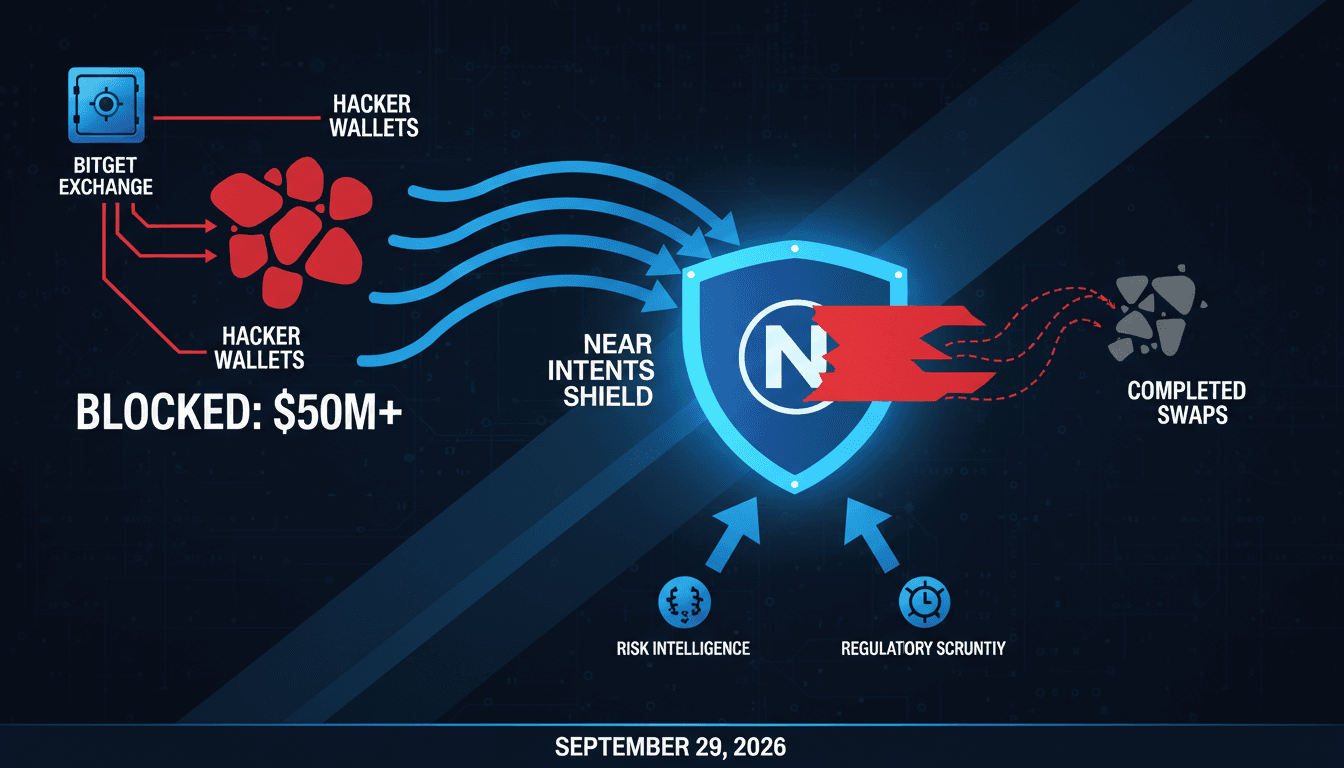
- NEAR Intents blocked over $50 million in attempted cross-chain swaps linked to the Bitget exchange hack.
- $503,000 was frozen mid-execution, while approximately $166,000 was allowed to complete before detection.
- Bitget's CEO praised NEAR Intents for its proactive measures, contrasting with other protocols that processed stolen funds.
The context you actually need
- Bitget suffered a breach on September 24, 2026, resulting in approximately $387.5 million being transferred to attacker-controlled addresses.
- Attackers utilized cross-chain swaps to launder funds, primarily converting stablecoins to evade centralized freezes.
- NEAR Intents' SHIELD system flagged suspicious transactions, demonstrating the effectiveness of risk-intelligence layers in blockchain protocols.
What's really happening
The recent incident involving NEAR Intents and the Bitget hack illustrates a critical moment in the evolution of blockchain security and the ongoing battle against crypto theft. On September 24, 2026, Bitget experienced a significant security breach, leading to the theft of approximately $387.5 million. In the days following, attackers attempted to launder over $50 million through NEAR Intents, a cross-chain protocol designed to facilitate transactions across different blockchain networks.
NEAR Intents employs a risk-intelligence layer known as SHIELD, which aggregates signals from various sources, including Know Your Transaction (KYT) providers and intelligence firms. This system is designed to identify and block suspicious transactions before they can be executed. In this case, the SHIELD system successfully flagged the majority of the attempted swaps as suspicious, rejecting them prior to execution and redirecting the funds elsewhere. Notably, $503,000 was frozen mid-swap, while approximately $166,000 was allowed to complete before detection.
This incident raises important questions about the nature of permissionless protocols. NEAR Intents' General Manager, Alex Shevchenko, emphasized that the platform's permissionless infrastructure does not necessitate neutrality toward known stolen assets. This stance contrasts sharply with other protocols, such as THORChain, which processed approximately $6.3 million in related swaps despite Bitget's requests to block those transactions. The decision to waive any recovery bounty offered by Bitget further distinguishes NEAR Intents' approach, focusing on legal recovery processes rather than automatic seizure of funds.
The aftermath of this incident has sparked a broader debate within the crypto community regarding the balance between protocol neutrality and anti-money laundering measures. While some argue that permissionless systems should not discriminate against any transactions, others contend that protocols have a responsibility to prevent the facilitation of theft. The frozen funds are now directed through legal channels, highlighting a shift towards more proactive measures in the crypto space.
As the industry grapples with these challenges, the NEAR Intents incident serves as a case study in the evolving landscape of blockchain security and the ongoing efforts to combat crypto-related crime.
Who feels it first (and how)
- Crypto exchanges: Increased scrutiny and pressure to implement robust security measures.
- Investors: Heightened awareness of risks associated with cross-chain transactions.
- Regulatory bodies: Potential for new regulations aimed at enhancing security protocols in the crypto space.
What to watch next
- Future security breaches: Monitor how other exchanges respond to similar threats and the effectiveness of their security measures.
- Regulatory developments: Watch for potential new regulations targeting anti-money laundering practices in the crypto industry.
- Protocol responses: Observe how other blockchain protocols adapt their policies in light of NEAR Intents' actions and the ongoing debate about transaction neutrality.
NEAR Intents successfully blocked the majority of attempted swaps linked to the Bitget hack.
Other protocols will reassess their transaction policies in response to this incident.
The long-term impact on regulatory frameworks and industry standards for security in crypto transactions.
Frequently Asked Questions
- Why it matters?
- This event underscores the ongoing vulnerabilities in the crypto ecosystem and the critical role of protocols in preventing money laundering.
- What happened (in 30 seconds)?
- NEAR Intents blocked over $50 million in attempted cross-chain swaps linked to the Bitget exchange hack. $503,000 was frozen mid-execution, while approximately $166,000 was allowed to complete before detection. Bitget's CEO praised NEAR Intents for its proactive measures, contrasting with other protocols that processed stolen funds.
- What's really happening?
- The recent incident involving NEAR Intents and the Bitget hack illustrates a critical moment in the evolution of blockchain security and the ongoing battle against crypto theft. On September 24, 2026, Bitget experienced a significant security breach, leading to the theft of approximately $387.5 million. In the days following, attackers attempted to launder over $50 million through NEAR Intents, a cross-chain protocol designed to facilitate transactions across different blockchain networks. NEAR
- Who feels it first (and how)?
- Crypto exchanges: Increased scrutiny and pressure to implement robust security measures. Investors: Heightened awareness of risks associated with cross-chain transactions. Regulatory bodies: Potential for new regulations aimed at enhancing security protocols in the crypto space.
- What to watch next?
- Future security breaches: Monitor how other exchanges respond to similar threats and the effectiveness of their security measures. Regulatory developments: Watch for potential new regulations targeting anti-money laundering practices in the crypto industry. Protocol responses: Observe how other blockchain protocols adapt their policies in light of NEAR Intents' actions and the ongoing debate about transaction neutrality.
Covers blockchain, cryptocurrency news, project analysis, and market insights.
"CoinDesk is a well-established cryptocurrency and blockchain news provider, offering comprehensive insights, market data, and industry research."
— A47 Editor
Near Intents blocks $50 million in Bitget hacker swaps, here's what happened
NEAR Intents has successfully blocked over $50 million in attempted transfers linked to hackers involved in a significant breach at Bitget, which has seen unauthorized transfers totaling approximately $388 million. This action underscores NEAR Intent...
Real-time updates, analysis, and reports on the blockchain and cryptocurrency sectors.
"Crypto News delivers real-time updates, analysis, and reports on the blockchain and cryptocurrency sectors."
— A47 Editor
NEAR Intents says it stopped $50M Bitget laundering bid
NEAR Intents has successfully blocked over $50 million in transfers linked to hackers involved in a significant breach at Bitget, which resulted in the theft of approximately $388 million. This decisive action underscores NEAR Intents' proactive stan...
Covers blockchain, cryptocurrency news, project analysis, and market insights.
"Cointelegraph is a leading crypto-focused media outlet known for timely news, analysis, and educational content related to blockchain and digital assets."
— A47 Editor
NEAR Intents says it blocked $50M tied to Bitget hackers
NEAR Intents announced that it successfully blocked approximately $50 million in funds linked to hackers involved in a significant breach at Bitget, which resulted in the theft of around $388 million. This action highlights NEAR Intents' commitment t...
Covers Bitcoin plus altcoin news, market updates, and educational resources.
"Bitcoin.com provides news, market data, and guides focused on Bitcoin and the wider crypto industry."
— A47 Editor
Near Intents Slams Door on $50M in Bitget Hack Laundering Flows
Near Intents has successfully blocked approximately $50 million in laundering flows linked to the recent Bitget hack, which saw hackers drain significant funds from the cryptocurrency exchange. This decisive action highlights the ongoing efforts to c...
Real-time updates, analysis, and reports on the blockchain and cryptocurrency sectors.
"Crypto News delivers real-time updates, analysis, and reports on the blockchain and cryptocurrency sectors."
— A47 Editor
Bitget hacker moves $6.3 million into Bitcoin after THORChain rejects freeze request
A wallet associated with the Bitget hacker has converted approximately $6.3 million in Ethereum to Bitcoin via THORChain, following the network's refusal to honor Bitget's request to freeze addresses linked to a recent security breach. This breach ha...
Real-time updates, analysis, and reports on the blockchain and cryptocurrency sectors.
"Crypto News delivers real-time updates, analysis, and reports on the blockchain and cryptocurrency sectors."
— A47 Editor
Bitget wants stolen funds blocked. Who can make a cross chain network comply?
Bitget has requested THORChain to block addresses associated with a recent security breach that resulted in the theft of approximately $387.5 million. THORChain, however, has stated that its emergency halt is intended to protect the network as a whol...
Covers blockchain, cryptocurrency news, project analysis, and market insights.
"CoinDesk is a well-established cryptocurrency and blockchain news provider, offering comprehensive insights, market data, and industry research."
— A47 Editor
THORChain rejects Bitget request to block hacker as $6 million moves to bitcoin
THORChain has declined a request from Bitget to block addresses linked to a recent $387.5 million hack, as approximately $6 million has been moved from Ethereum to Bitcoin. This decision comes amidst ongoing scrutiny of THORChain's security measures ...
Real-time updates, analysis, and reports on the blockchain and cryptocurrency sectors.
"Crypto News delivers real-time updates, analysis, and reports on the blockchain and cryptocurrency sectors."
— A47 Editor
Bitget hack sparks dispute over THORChain’s permissionless design
THORChain has defended its permissionless design after Bitget requested that the cross-chain protocol block addresses linked to a recent security breach that resulted in the theft of approximately $387.5 million. This request has sparked a dispute re...