
Senate Report Reveals Tether USDT as Key Tool for Iranian Sanctions Evasion
Why it matters
The extensive use of Tether by sanctioned entities highlights vulnerabilities in the cryptocurrency ecosystem that could affect regulatory frameworks worldwide.
What happened (in 30 seconds)
- On September 28, 2026, the U.S. Senate released a report detailing Tether's significant role in facilitating Iranian sanctions evasion.
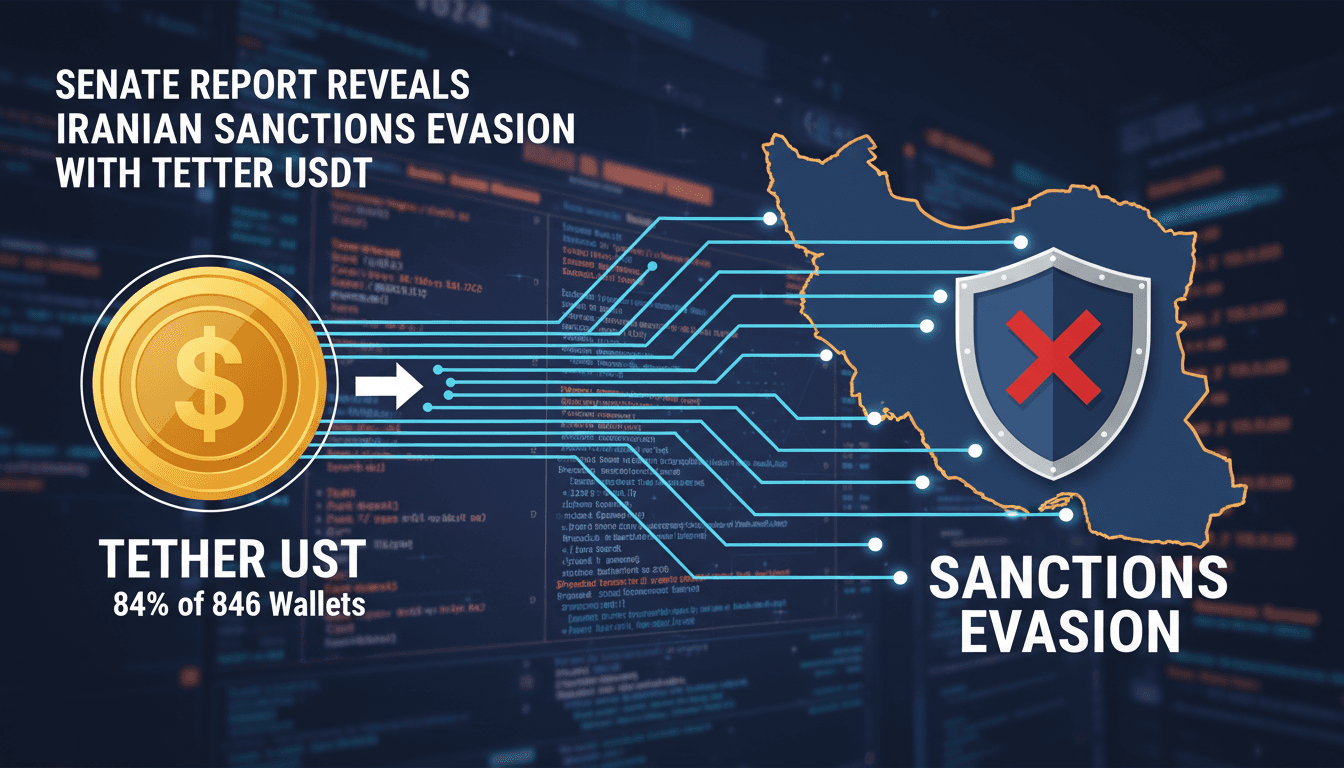
- 84% of analyzed wallets linked to Iran exclusively used Tether's USDT stablecoin for transactions, underscoring its dominance in illicit finance.
- Investigations are underway as findings have been referred to the U.S. Treasury and Justice Departments for compliance review.
The context you actually need
- The U.S. maintains strict sanctions on Iran, targeting its financial systems and regional proxy support, which has pushed Iran towards cryptocurrencies for financial transactions.
- Tether's USDT holds a 60% market share in the stablecoin sector, making it a primary vehicle for transactions in sanctioned jurisdictions.
- Previous reports have linked Tether to illicit finance, raising concerns about its compliance with anti-money laundering (AML) regulations.
What's really happening
The Senate's report, titled "Tethered to Terrorism: Crypto & Iran's Shadow Banking Network," reveals a troubling trend in the intersection of cryptocurrency and international sanctions. Conducted by the Democratic staff of the Senate Permanent Subcommittee on Investigations, the analysis scrutinized 846 cryptocurrency wallets that had been sanctioned or targeted for seizure by the U.S. Treasury's Office of Foreign Assets Control (OFAC) and Israel's National Bureau for Counter Terror Financing (NBCTF) between June 2021 and August 2026.
The findings are stark: 84% of these wallets, with an even higher rate of 87% among those designated by Israel, predominantly utilized Tether's USDT for their transactions. This reliance on USDT has facilitated various activities, including the funding of Iranian proxies like Hezbollah and Hamas, as well as supporting the Central Bank of Iran. The report also highlighted delays by Tether in freezing wallets that were flagged for sanctions, raising questions about the company's commitment to compliance.
The implications of these findings are significant. As Tether is the largest stablecoin by market capitalization, its role in facilitating transactions for sanctioned entities poses a risk not only to the integrity of the cryptocurrency market but also to global financial systems. The report's release has prompted immediate action, with referrals made to the Treasury and Justice Departments for further investigation into Tether's compliance with AML and sanctions regulations.
Tether's response has been to emphasize its cooperation with authorities, claiming to have frozen approximately $550 million in USDT linked to Iran in 2026. However, the lack of immediate market-wide shifts or additional governmental actions as of early October 2026 suggests that the broader implications of these findings are still unfolding. The scrutiny on Tether could lead to increased regulatory measures across the cryptocurrency landscape, impacting how cryptocurrencies are perceived and utilized in global finance.
Who feels it first (and how)
- Cryptocurrency exchanges: Increased compliance scrutiny may lead to stricter regulations and operational changes.
- Investors in stablecoins: Potential shifts in market dynamics could affect the value and utility of USDT and other stablecoins.
- Regulatory bodies: Heightened focus on AML compliance could lead to new guidelines and enforcement actions.
What to watch next
- Regulatory responses: Watch for new guidelines from the U.S. Treasury and Justice Departments regarding cryptocurrency compliance.
- Market reactions: Monitor how exchanges and investors adjust their strategies in response to increased scrutiny on Tether.
- International implications: Observe how other countries may react to the findings and whether they will implement similar investigations into cryptocurrency use for sanctions evasion.
Tether's USDT is widely used in sanctioned jurisdictions, particularly by Iranian entities.
Increased regulatory scrutiny and potential compliance measures will emerge in the cryptocurrency market.
The long-term impact on Tether's market position and the broader cryptocurrency ecosystem remains uncertain.
Frequently Asked Questions
- Why it matters?
- The extensive use of Tether by sanctioned entities highlights vulnerabilities in the cryptocurrency ecosystem that could affect regulatory frameworks worldwide.
- What happened (in 30 seconds)?
- On September 28, 2026, the U.S. Senate released a report detailing Tether's significant role in facilitating Iranian sanctions evasion. 84% of analyzed wallets linked to Iran exclusively used Tether's USDT stablecoin for transactions, underscoring its dominance in illicit finance. Investigations are underway as findings have been referred to the U.S. Treasury and Justice Departments for compliance review.
- What's really happening?
- The Senate's report, titled "Tethered to Terrorism: Crypto & Iran's Shadow Banking Network," reveals a troubling trend in the intersection of cryptocurrency and international sanctions. Conducted by the Democratic staff of the Senate Permanent Subcommittee on Investigations, the analysis scrutinized 846 cryptocurrency wallets that had been sanctioned or targeted for seizure by the U.S. Treasury's Office of Foreign Assets Control (OFAC) and Israel's National Bureau for Counter Terror Financing (N
- Who feels it first (and how)?
- Cryptocurrency exchanges: Increased compliance scrutiny may lead to stricter regulations and operational changes. Investors in stablecoins: Potential shifts in market dynamics could affect the value and utility of USDT and other stablecoins. Regulatory bodies: Heightened focus on AML compliance could lead to new guidelines and enforcement actions.
- What to watch next?
- Regulatory responses: Watch for new guidelines from the U.S. Treasury and Justice Departments regarding cryptocurrency compliance. Market reactions: Monitor how exchanges and investors adjust their strategies in response to increased scrutiny on Tether. International implications: Observe how other countries may react to the findings and whether they will implement similar investigations into cryptocurrency use for sanctions evasion.
Markets desk coverage, trading insights, and investor updates.
"WSJ’s markets reporting provides in-depth analysis and context for investors."
— A47 Editor
The Morning Risk Report: Senate Investigation Finds Rampant Use of Tether’s Stablecoin by Iranian Regime
A recent Senate investigation has uncovered extensive use of Tether's stablecoin, USDT, by wallets linked to the Iranian regime, raising serious concerns about the cryptocurrency's role in facilitating financial transactions for sanctioned entities.
Tech business coverage, major deals, product launches, and Silicon Valley trends.
"WSJ’s tech section offers authoritative reporting on the intersection of technology and business, including exclusive industry analysis."
— A47 Editor
The Morning Risk Report: Senate Investigation Finds Rampant Use of Tether’s Stablecoin by Iranian Regime
A Senate investigation has revealed extensive use of Tether's stablecoin by the Iranian regime, raising concerns about the implications for U.S. sanctions and financial regulations. This finding underscores the potential for cryptocurrencies to facil...
Covers blockchain, cryptocurrency news, project analysis, and market insights.
"Cointelegraph is a leading crypto-focused media outlet known for timely news, analysis, and educational content related to blockchain and digital assets."
— A47 Editor
Tether says it helped freeze $550M in Iran-linked USDT this year
Tether announced that it assisted in freezing approximately $550 million in USDT linked to Iran, amid allegations from Senate Democratic investigators that USDT has become integral to Iran's shadow banking network. This action follows U.S. authoritie...
Real-time updates, analysis, and reports on the blockchain and cryptocurrency sectors.
"Crypto News delivers real-time updates, analysis, and reports on the blockchain and cryptocurrency sectors."
— A47 Editor
Tether faces Senate scrutiny over Iran-linked USDT
Tether is under scrutiny from the U.S. Senate after investigations revealed that its stablecoin, USDT, is linked to 846 wallets associated with Iran. The company has reported assisting in freezing approximately $550 million in USDT related to these w...