
Circle Requests Revision of MiCA Stablecoin Reserve Requirements from EU
Why it matters
The European Commission's decisions on stablecoin regulations will influence market stability and compliance for issuers worldwide.
What happened (in 30 seconds)
- Circle submitted a response to the European Commission on October 2, 2026, advocating for changes to MiCA's reserve requirements.
- The proposal suggests replacing fixed bank deposit mandates with liquidity-based requirements to mitigate counterparty risks.
- Only three of the top stablecoins currently comply with MiCA, highlighting potential market disruptions if regulations remain unchanged.
The context you actually need
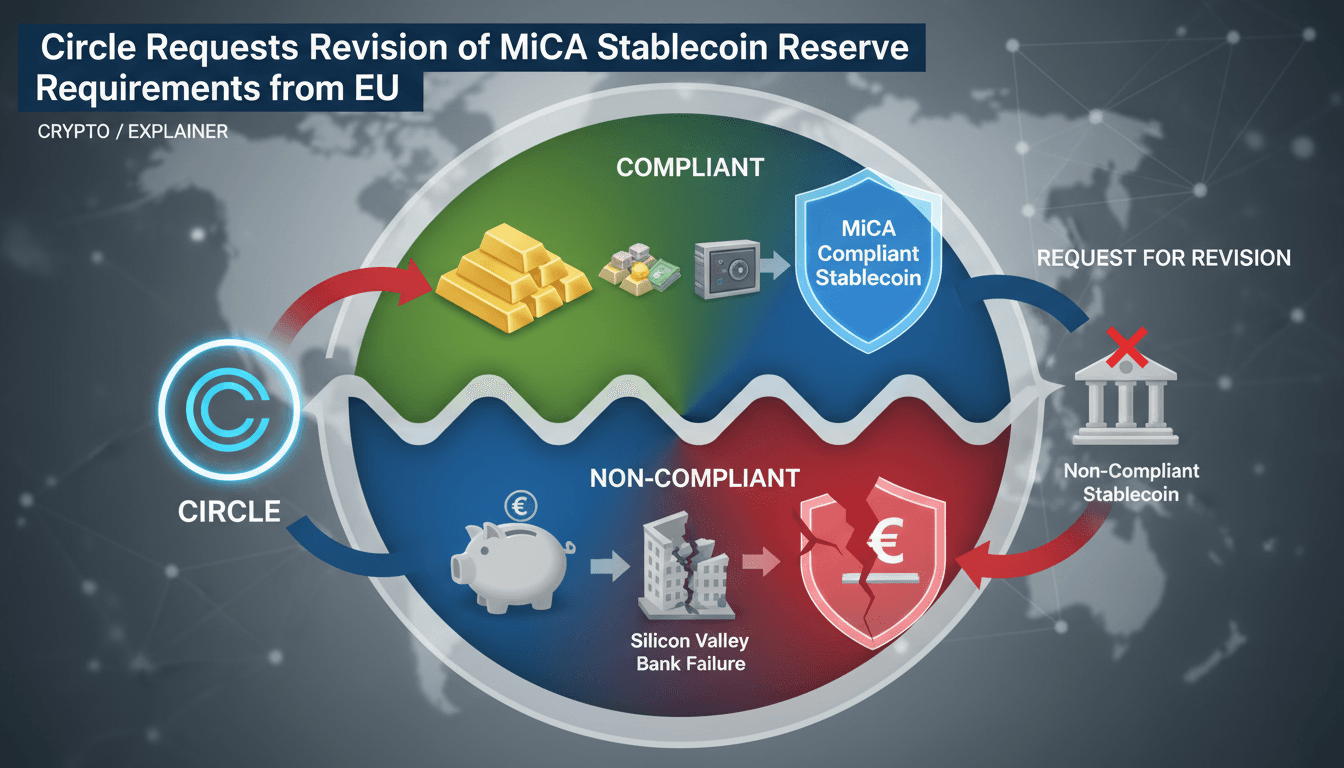
- MiCA regulations mandate stablecoin issuers to hold a percentage of reserves in commercial bank deposits to ensure liquidity and stability.
- Circle's advocacy stems from its experience with banking risks, particularly the $3.3 billion exposure to Silicon Valley Bank in 2023.
- The current compliance landscape shows that only USDC, EURC, and USDG meet MiCA standards, raising concerns about the viability of other stablecoins.
What's really happening
Circle's formal response to the European Commission's MiCA review consultation reflects a critical moment for stablecoin regulation in the EU. The MiCA framework, effective from 2024, imposes stringent reserve requirements on stablecoin issuers, mandating that a significant portion of their reserves be held in commercial bank deposits. This requirement aims to ensure liquidity and stability in the market, but it has drawn criticism from various industry players, including Circle and Tether.
Circle's push for regulatory revision is rooted in its experiences with banking counterparty risks, particularly highlighted by the fallout from the 2023 Silicon Valley Bank incident. The firm argues that the current fixed deposit mandates—30% for standard tokens and 60% for significant tokens—are overly restrictive and do not adequately reflect the liquidity needs of stablecoin issuers. Instead, Circle advocates for a shift towards liquidity-based requirements, such as liquidity maturity buckets, which would allow issuers to hold assets that are accessible within a specified timeframe, thereby enhancing flexibility and reducing risk exposure.
The implications of this advocacy are significant. If the European Commission adopts Circle's recommendations, it could lead to a more favorable regulatory environment for stablecoin issuers, encouraging innovation and competition in the market. This shift could also address the current compliance gap, as only three of the top stablecoins by market capitalization meet MiCA's stringent requirements. The potential for a more inclusive regulatory framework could enable a broader range of stablecoins to operate within the EU, fostering a more dynamic and resilient market.
Moreover, Circle's request to relax sovereign exposure caps and single-bank deposit limits indicates a desire for a more nuanced approach to risk management in the stablecoin space. By maintaining multi-issuance models that allow for joint EU and non-EU issuance, Circle aims to preserve the global nature of stablecoins while ensuring compliance with local regulations. This approach could ultimately enhance cross-border crypto usage and liquidity, benefiting users and issuers alike.
As the European Commission reviews these submissions, the outcome will likely shape the future landscape of stablecoin regulation not just in the EU, but globally. The ongoing dialogue between regulators and industry players will be crucial in determining how stablecoins can coexist with traditional financial systems while addressing the inherent risks associated with digital assets.
Who feels it first (and how)
- Stablecoin issuers: Companies like Circle and Tether will face immediate impacts on compliance and operational strategies.
- Investors and users: Individuals and businesses using stablecoins for transactions may experience changes in liquidity and availability.
- Regulatory bodies: The European Commission and national regulators will need to adapt their frameworks based on industry feedback and market realities.
What to watch next
- Regulatory responses: Monitor how the European Commission reacts to Circle's proposals and the timeline for any changes to MiCA.
- Market compliance: Watch for shifts in the number of stablecoins that achieve compliance with MiCA as regulations evolve.
- Cross-border implications: Observe how changes in EU regulations may influence stablecoin usage and liquidity in non-EU markets, particularly in regions like Dubai.
Circle's advocacy highlights significant concerns about current MiCA requirements and their impact on stablecoin liquidity.
The European Commission will consider industry feedback, potentially leading to revisions in MiCA regulations.
The extent to which these changes will affect global stablecoin markets and compliance dynamics remains uncertain.
Frequently Asked Questions
- Why it matters?
- The European Commission's decisions on stablecoin regulations will influence market stability and compliance for issuers worldwide.
- What happened (in 30 seconds)?
- Circle submitted a response to the European Commission on October 2, 2026, advocating for changes to MiCA's reserve requirements. The proposal suggests replacing fixed bank deposit mandates with liquidity-based requirements to mitigate counterparty risks. Only three of the top stablecoins currently comply with MiCA, highlighting potential market disruptions if regulations remain unchanged.
- What's really happening?
- Circle's formal response to the European Commission's MiCA review consultation reflects a critical moment for stablecoin regulation in the EU. The MiCA framework, effective from 2024, imposes stringent reserve requirements on stablecoin issuers, mandating that a significant portion of their reserves be held in commercial bank deposits. This requirement aims to ensure liquidity and stability in the market, but it has drawn criticism from various industry players, including Circle and Tether. Cir
- Who feels it first (and how)?
- Stablecoin issuers: Companies like Circle and Tether will face immediate impacts on compliance and operational strategies. Investors and users: Individuals and businesses using stablecoins for transactions may experience changes in liquidity and availability. Regulatory bodies: The European Commission and national regulators will need to adapt their frameworks based on industry feedback and market realities.
- What to watch next?
- Regulatory responses: Monitor how the European Commission reacts to Circle's proposals and the timeline for any changes to MiCA. Market compliance: Watch for shifts in the number of stablecoins that achieve compliance with MiCA as regulations evolve. Cross-border implications: Observe how changes in EU regulations may influence stablecoin usage and liquidity in non-EU markets, particularly in regions like Dubai.
Real-time updates, analysis, and reports on the blockchain and cryptocurrency sectors.
"Crypto News delivers real-time updates, analysis, and reports on the blockchain and cryptocurrency sectors."
— A47 Editor
Circle wants EU to ease MiCA bank deposit rules for stablecoins
Circle has urged the European Commission to reconsider fixed bank deposit requirements for stablecoin reserves as part of the ongoing review of the Markets in Crypto-Assets (MiCA) regulation. The company argues that these mandatory deposit minimums h...
Covers blockchain, cryptocurrency news, project analysis, and market insights.
"Cointelegraph is a leading crypto-focused media outlet known for timely news, analysis, and educational content related to blockchain and digital assets."
— A47 Editor
Circle urges EU to revise stablecoin reserve rules in MiCA review
Circle has urged the European Union (EU) to revise its stablecoin reserve rules during the ongoing review of the Markets in Crypto-Assets (MiCA) regulation, advocating for more flexible liquidity requirements instead of mandatory bank-deposit minimum...
Covers blockchain, cryptocurrency news, project analysis, and market insights.
"Cointelegraph is a leading crypto-focused media outlet known for timely news, analysis, and educational content related to blockchain and digital assets."
— A47 Editor
50,000 Europeans call on EU to ease stablecoin rewards restrictions in MiCA review
A campaign comprising 50,000 letters has urged the European Union to reconsider its restrictions on stablecoin rewards as part of the ongoing review of the Markets in Crypto-Assets (MiCA) regulation. This initiative comes as EU central banks are advo...