
Ethereum Glamsterdam Upgrade Activates on Sepolia Testnet
Why it matters
The Glamsterdam upgrade is a critical step in Ethereum's ongoing efforts to enhance network capacity and efficiency.
What happened (in 30 seconds)
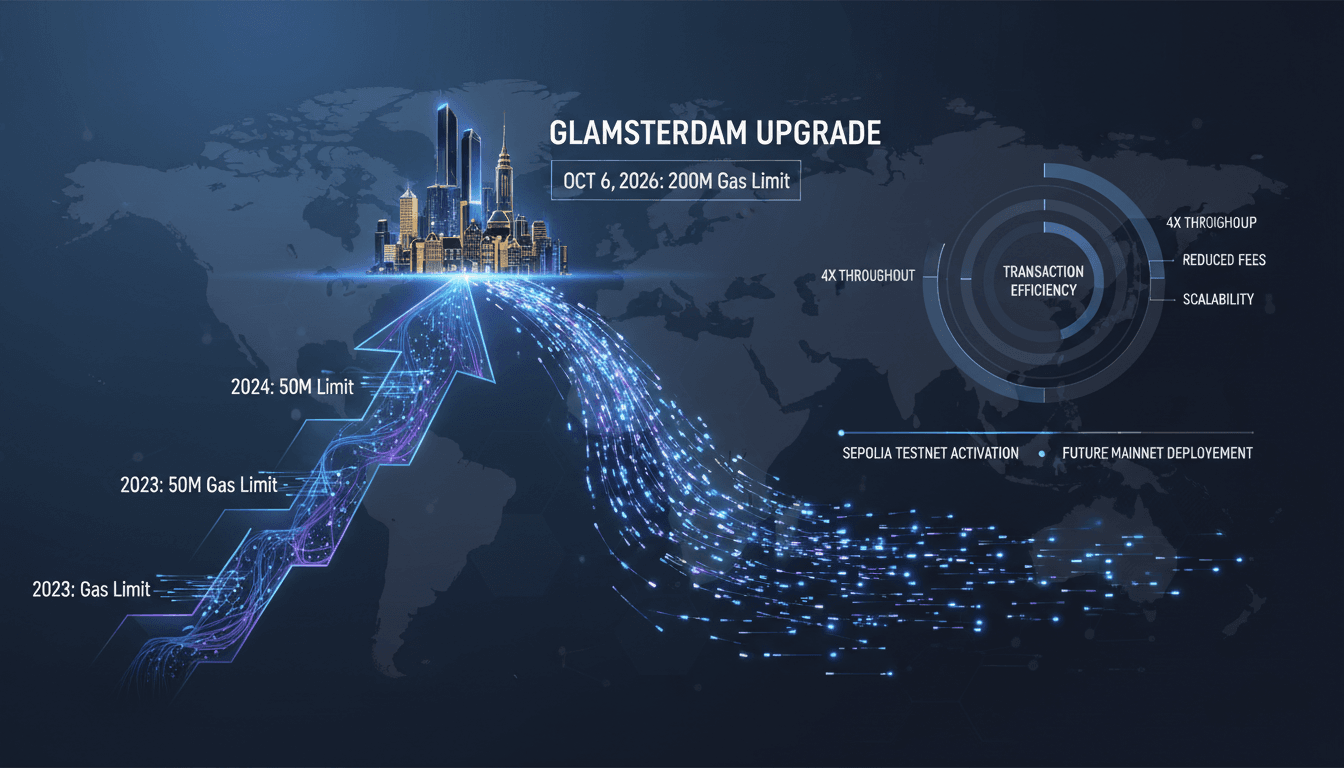
- Glamsterdam upgrade activated on the Sepolia testnet on October 6, 2026, enabling a 200 million gas limit evaluation.
- Key features introduced include enshrined proposer-builder separation, block-level access lists, and gas repricing changes.
- Next steps involve analyzing performance data to inform the Hoodi testnet schedule and potential mainnet deployment.
The context you actually need
- Ethereum's scaling roadmap aims to increase throughput through parallel execution and modified block production mechanics.
- Previous tests validated the 200 million gas limit configuration across approximately 84,000 validators, addressing sequential processing limitations.
- Future upgrades like Hegotá in 2027 are planned to further enhance network capabilities based on the outcomes of the Glamsterdam upgrade.
What's really happening
On October 6, 2026, at 13:53:36 UTC, the Ethereum Glamsterdam upgrade activated on the Sepolia testnet, marking a significant milestone in the network's scaling efforts. This upgrade is part of a broader strategy to enhance Ethereum's Layer 1 capabilities, allowing for increased transaction throughput and improved efficiency. The introduction of EIP-7732 for enshrined proposer-builder separation, EIP-7928 for block-level access lists, and EIP-8037 for revised gas accounting on state creation are pivotal changes aimed at optimizing how transactions are processed.
The 200 million gas limit tested during this upgrade is more than three times the previous limit of approximately 60 million, indicating a substantial increase in the network's capacity to handle transactions. This is crucial as Ethereum continues to face challenges related to network congestion and high transaction fees, which have been barriers to broader adoption and usability.
Developers and node operators are now focused on analyzing the performance data generated from this test. The insights gained will inform the timeline for the Hoodi testnet and the eventual mainnet deployment. This is particularly important as the Ethereum community seeks to ensure that the network can handle increased demand without compromising performance or security.
The implications of this upgrade extend beyond technical enhancements; they also reflect a shift in how Ethereum is evolving to meet the needs of its users. As the network becomes more efficient, users can expect changes in transaction costs and application behavior, particularly if the upgrades are successfully implemented on the mainnet. This could lead to a more favorable environment for developers and users alike, fostering innovation and growth within the Ethereum ecosystem.
Who feels it first (and how)
- Developers: They will need to adapt their applications to leverage the new features and gas limits.
- Node operators: Increased responsibilities in monitoring network performance and stability.
- Ethereum users: Potential changes in transaction costs and application responsiveness as the network scales.
- Investors: Those holding Ethereum may see fluctuations in asset value based on network performance and adoption rates.
What to watch next
- Performance data analysis: Monitoring the outcomes from the Sepolia testnet will be crucial for understanding the upgrade's impact.
- Hoodi testnet schedule: The timeline for the next phase will indicate how quickly Ethereum is moving toward mainnet deployment.
- Market reactions: Observing how the broader crypto market responds to these upgrades can provide insights into investor sentiment and potential price movements.
The Glamsterdam upgrade has activated on the Sepolia testnet.
Performance data will influence the timeline for the Hoodi testnet and mainnet deployment.
The exact impact on transaction costs and application behavior until the upgrades are fully implemented on the mainnet.
Frequently Asked Questions
- Why it matters?
- The Glamsterdam upgrade is a critical step in Ethereum's ongoing efforts to enhance network capacity and efficiency.
- What happened (in 30 seconds)?
- Glamsterdam upgrade activated on the Sepolia testnet on October 6, 2026, enabling a 200 million gas limit evaluation. Key features introduced include enshrined proposer-builder separation, block-level access lists, and gas repricing changes. Next steps involve analyzing performance data to inform the Hoodi testnet schedule and potential mainnet deployment.
- What's really happening?
- On October 6, 2026, at 13:53:36 UTC, the Ethereum Glamsterdam upgrade activated on the Sepolia testnet, marking a significant milestone in the network's scaling efforts. This upgrade is part of a broader strategy to enhance Ethereum's Layer 1 capabilities, allowing for increased transaction throughput and improved efficiency. The introduction of EIP-7732 for enshrined proposer-builder separation, EIP-7928 for block-level access lists, and EIP-8037 for revised gas accounting on state creation are
- Who feels it first (and how)?
- Developers: They will need to adapt their applications to leverage the new features and gas limits. Node operators: Increased responsibilities in monitoring network performance and stability. Ethereum users: Potential changes in transaction costs and application responsiveness as the network scales. Investors: Those holding Ethereum may see fluctuations in asset value based on network performance and adoption rates.
- What to watch next?
- Performance data analysis: Monitoring the outcomes from the Sepolia testnet will be crucial for understanding the upgrade's impact. Hoodi testnet schedule: The timeline for the next phase will indicate how quickly Ethereum is moving toward mainnet deployment. Market reactions: Observing how the broader crypto market responds to these upgrades can provide insights into investor sentiment and potential price movements.
Real-time updates, analysis, and reports on the blockchain and cryptocurrency sectors.
"Crypto News delivers real-time updates, analysis, and reports on the blockchain and cryptocurrency sectors."
— A47 Editor
Ethereum Glamsterdam hits Sepolia with 200 million gas limit test
Ethereum's Glamsterdam upgrade has been successfully activated on the Sepolia testnet, marking a significant milestone in its scaling efforts with a new gas limit set at 200 million. This upgrade is a crucial step towards enhancing the network's capa...
Covers blockchain, cryptocurrency news, project analysis, and market insights.
"Cointelegraph is a leading crypto-focused media outlet known for timely news, analysis, and educational content related to blockchain and digital assets."
— A47 Editor
Ethereum’s Glamsterdam upgrade launches on Sepolia testnet
Ethereum's Glamsterdam upgrade is set to launch on the Sepolia testnet on October 6, 2026, marking a significant step towards enhancing the network's efficiency and scalability. This upgrade follows successful rehearsals that increased the work limit...
Real-time updates, analysis, and reports on the blockchain and cryptocurrency sectors.
"Crypto News delivers real-time updates, analysis, and reports on the blockchain and cryptocurrency sectors."
— A47 Editor
Ethereum is testing how much cheaper block space it can safely create
Ethereum is set to conduct a public test on its Sepolia testnet, increasing the gas limit per block to 200 million as part of the Glamsterdam upgrade scheduled for October 6, 2026. This marks a significant expansion from the network's previous capaci...
Covers blockchain, cryptocurrency news, project analysis, and market insights.
"CoinDesk is a well-established cryptocurrency and blockchain news provider, offering comprehensive insights, market data, and industry research."
— A47 Editor
Ethereum’s Glamsterdam test gets last-minute fix before major capacity jump
Ethereum's main validator client implemented a software update just hours before the Sepolia test, which is set to increase the maximum gas limit per block to 200 million. This adjustment is part of the upcoming Glamsterdam upgrade scheduled for Octo...