
Ethereum Launches Glamsterdam Upgrade on Sepolia Testnet for Gas Limit Testing
Why it matters
The Glamsterdam upgrade is a critical step in Ethereum's ongoing efforts to enhance network scalability and efficiency.
What happened (in 30 seconds)
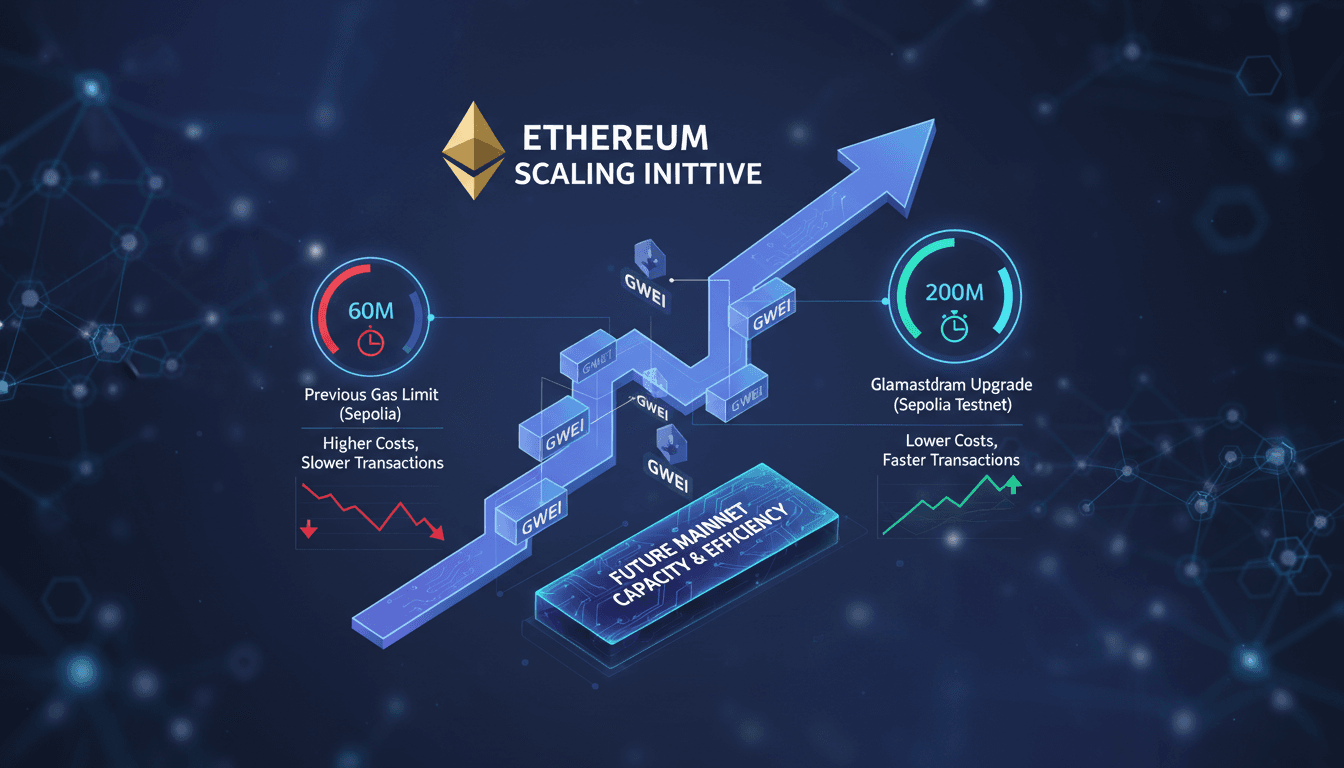
- On October 6, 2026, Ethereum activated the Glamsterdam upgrade on the Sepolia testnet, allowing for a 200 million gas limit stress test.
- This upgrade aims to evaluate network performance under significantly higher execution loads, tripling the previous limit of approximately 60 million gas.
- No immediate changes to the mainnet parameters are planned, as this test is confined to the Sepolia testnet.
The context you actually need
- Ethereum's gas limit has historically been around 60 million, which has constrained transaction throughput and efficiency.
- The Glamsterdam upgrade combines execution-layer and consensus-layer changes, including enshrined proposer-builder separation and block-level access lists, to improve parallel execution efficiency.
- Developer discussions in mid-2026 confirmed that a tripling of capacity was feasible, leading to the endorsement of the 200 million gas limit target.
What's really happening
The Glamsterdam upgrade represents a significant technical evolution for Ethereum, focusing on enhancing Layer 1 capacity while maintaining the integrity of the network. By activating this upgrade on the Sepolia testnet, Ethereum developers are conducting a crucial experiment to assess how the network behaves under increased loads. The optional 200 million gas limit is more than three times the previous cap, which allows for a more extensive range of transactions to be processed simultaneously.
This upgrade is not merely a technical adjustment; it reflects a broader strategy to address scalability challenges that have plagued Ethereum. The network has been under pressure to improve transaction speeds and reduce costs, especially as decentralized finance (DeFi) and non-fungible tokens (NFTs) continue to gain traction. The introduction of a higher gas limit could potentially lead to lower transaction fees and faster processing times, making Ethereum more attractive for developers and users alike.
The decision to implement this upgrade follows extensive discussions among developers and client teams, who have been preparing for this moment since mid-2026. The Prysm client team, for instance, released updates to support the new configurations, ensuring that validators could opt into the higher gas limit. This proactive approach indicates a commitment to not only improving the network's performance but also to fostering a collaborative environment among developers.
However, it is essential to note that this upgrade is currently limited to the Sepolia testnet, meaning that any benefits or changes observed will not immediately impact the mainnet. The Ethereum community is closely monitoring validator adoption of the higher gas preference and node performance, as these factors will ultimately determine the feasibility of implementing similar changes on the mainnet.
The implications of this upgrade extend beyond technical specifications; they touch on the broader ecosystem of Ethereum and its users. As the network continues to evolve, the potential for increased transaction throughput could lead to a more vibrant and diverse range of applications, further solidifying Ethereum's position as a leader in the blockchain space.
Who feels it first (and how)
- Developers: They will benefit from improved transaction speeds and reduced costs, making it easier to build and deploy applications.
- Validators: Those participating in the test will gain insights into network performance and potential rewards from higher gas limits.
- DeFi users: Individuals engaging in decentralized finance may experience faster transactions and lower fees, enhancing their overall experience.
What to watch next
- Validator adoption rates: Monitoring how many validators opt into the 200 million gas limit will indicate the upgrade's acceptance and potential for mainnet implementation.
- Network performance metrics: Keep an eye on transaction speeds and costs during the test to gauge the upgrade's effectiveness.
- Mainnet scheduling: Any announcements regarding the timeline for implementing similar changes on the mainnet will be crucial for the Ethereum community.
The Glamsterdam upgrade has been activated on the Sepolia testnet.
Increased transaction speeds and reduced costs could emerge from the higher gas limit if adopted on the mainnet.
The timeline for mainnet activation remains uncertain, pending further test results.
Frequently Asked Questions
- Why it matters?
- The Glamsterdam upgrade is a critical step in Ethereum's ongoing efforts to enhance network scalability and efficiency.
- What happened (in 30 seconds)?
- On October 6, 2026, Ethereum activated the Glamsterdam upgrade on the Sepolia testnet, allowing for a 200 million gas limit stress test. This upgrade aims to evaluate network performance under significantly higher execution loads, tripling the previous limit of approximately 60 million gas. No immediate changes to the mainnet parameters are planned, as this test is confined to the Sepolia testnet.
- What's really happening?
- The Glamsterdam upgrade represents a significant technical evolution for Ethereum, focusing on enhancing Layer 1 capacity while maintaining the integrity of the network. By activating this upgrade on the Sepolia testnet, Ethereum developers are conducting a crucial experiment to assess how the network behaves under increased loads. The optional 200 million gas limit is more than three times the previous cap, which allows for a more extensive range of transactions to be processed simultaneously.
- Who feels it first (and how)?
- Developers: They will benefit from improved transaction speeds and reduced costs, making it easier to build and deploy applications. Validators: Those participating in the test will gain insights into network performance and potential rewards from higher gas limits. DeFi users: Individuals engaging in decentralized finance may experience faster transactions and lower fees, enhancing their overall experience.
- What to watch next?
- Validator adoption rates: Monitoring how many validators opt into the 200 million gas limit will indicate the upgrade's acceptance and potential for mainnet implementation. Network performance metrics: Keep an eye on transaction speeds and costs during the test to gauge the upgrade's effectiveness. Mainnet scheduling: Any announcements regarding the timeline for implementing similar changes on the mainnet will be crucial for the Ethereum community.
Bitcoin news, technical analysis, and forecasts across crypto markets.
"NewsBTC covers Bitcoin news, technical analysis, and forecasts across crypto markets and major blockchain projects."
— A47 Editor
Ethereum Tests 200 Million Gas Limit On Sepolia As Glamsterdam Moves Forward
Ethereum's Sepolia testnet is currently testing a new gas limit of 200 million blocks as part of the Glamsterdam upgrade, significantly exceeding the previous limit of 60 million. This testing phase aims to evaluate the performance of clients and val...
Real-time updates, analysis, and reports on the blockchain and cryptocurrency sectors.
"Crypto News delivers real-time updates, analysis, and reports on the blockchain and cryptocurrency sectors."
— A47 Editor
Ethereum Glamsterdam hits Sepolia with 200 million gas limit test
Ethereum's Glamsterdam upgrade has been successfully activated on the Sepolia testnet, marking a significant milestone in its scaling efforts with a new gas limit set at 200 million. This upgrade is a crucial step towards enhancing the network's capa...
Covers blockchain, cryptocurrency news, project analysis, and market insights.
"Cointelegraph is a leading crypto-focused media outlet known for timely news, analysis, and educational content related to blockchain and digital assets."
— A47 Editor
Ethereum’s Glamsterdam upgrade launches on Sepolia testnet
Ethereum's Glamsterdam upgrade is set to launch on the Sepolia testnet on October 6, 2026, marking a significant step towards enhancing the network's efficiency and scalability. This upgrade follows successful rehearsals that increased the work limit...
Real-time updates, analysis, and reports on the blockchain and cryptocurrency sectors.
"Crypto News delivers real-time updates, analysis, and reports on the blockchain and cryptocurrency sectors."
— A47 Editor
Ethereum is testing how much cheaper block space it can safely create
Ethereum is set to conduct a public test on its Sepolia testnet, increasing the gas limit per block to 200 million as part of the Glamsterdam upgrade scheduled for October 6, 2026. This marks a significant expansion from the network's previous capaci...
Covers blockchain, cryptocurrency news, project analysis, and market insights.
"CoinDesk is a well-established cryptocurrency and blockchain news provider, offering comprehensive insights, market data, and industry research."
— A47 Editor
Ethereum’s Glamsterdam test gets last-minute fix before major capacity jump
Ethereum's main validator client implemented a software update just hours before the Sepolia test, which is set to increase the maximum gas limit per block to 200 million. This adjustment is part of the upcoming Glamsterdam upgrade scheduled for Octo...