
Glamsterdam upgrade activates 200 million gas limit on Ethereum's Sepolia testnet
Why it matters
This upgrade is a critical step in Ethereum's ongoing efforts to scale its network amid rising competition from other blockchain platforms.
What happened (in 30 seconds)
- The Glamsterdam upgrade activated on Ethereum's Sepolia testnet on October 6, 2026, raising the block gas limit to nearly 200 million.
- Initial testing showed block production success, but utilization remained below 50% of the new limit, indicating potential issues with validator performance.
- Future tests are planned, with the next scheduled for the Hoodi testnet on October 27, 2026, as developers continue to assess scaling improvements.
The context you actually need
- Ethereum's scaling strategy involves incremental upgrades to its execution and consensus layers, aiming to enhance capacity while reducing validator load.
- The Glamsterdam fork combines changes from the Amsterdam execution layer and the Gloas consensus layer, introducing features like proposer-builder separation and gas repricing.
- Competition from Layer-1 networks is intensifying, making successful scaling essential for Ethereum to maintain its market position.
What's really happening
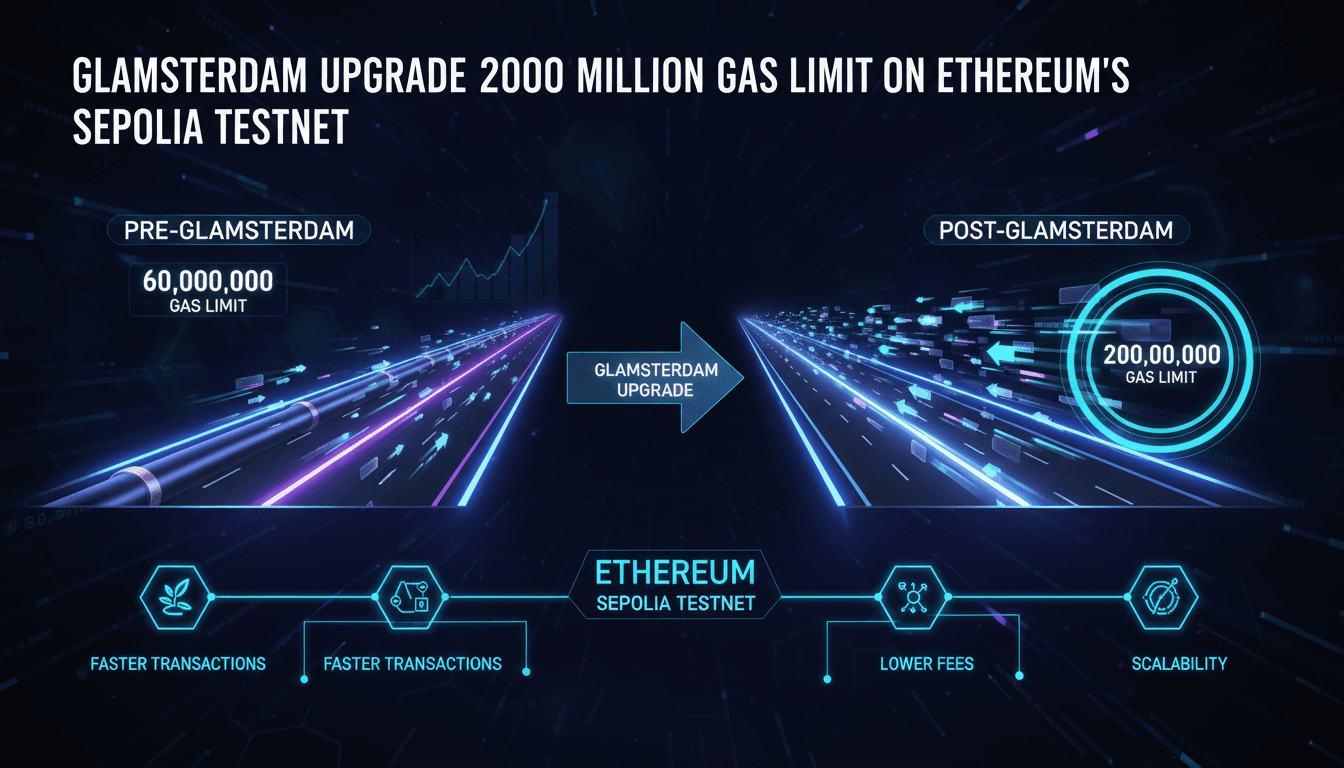
The Glamsterdam upgrade on the Sepolia testnet represents a significant evolution in Ethereum's approach to scalability. By increasing the block gas limit from approximately 60 million to nearly 200 million, developers aim to enhance the network's computational capacity. This change is crucial as Ethereum faces mounting pressure from competing Layer-1 networks that offer faster transaction speeds and lower fees.
The upgrade incorporates several key features designed to optimize performance. Enshrined proposer-builder separation (ePBS) allows for more efficient block production, while block-level access lists and gas repricing mechanisms are intended to manage state growth and reduce the computational burden on validators. These modifications are not merely technical enhancements; they reflect a strategic pivot to ensure Ethereum can handle increased demand without compromising on decentralization or security.
However, the initial results from the Sepolia testnet raise important questions. While the upgrade successfully produced blocks under the new gas limit, utilization rates hovered between 52 million and 92 million gas, indicating that less than half of the new capacity was being utilized. This underutilization suggests that validators may struggle to perform under maximum load, a concern that developers must address before any mainnet activation can occur.
The implications of this test extend beyond technical metrics. If Ethereum can successfully scale its network, it could lead to lower transaction fees and improved throughput for decentralized applications (dApps) popular in regions like Dubai, where cryptocurrency adoption is on the rise. Conversely, if the test reveals significant limitations in validator performance, it could delay the mainnet activation and hinder Ethereum's competitive edge.
As the Ethereum community prepares for the next scheduled test on the Hoodi testnet, developers are closely monitoring validator performance and client compatibility. The outcomes of these tests will be pivotal in determining the timeline for any future mainnet upgrades and the overall trajectory of Ethereum's scaling efforts.
Who feels it first (and how)
- Ethereum developers: They are directly involved in testing and implementing the upgrade, impacting their workload and timelines.
- Validators and node operators: Their performance under the new gas limit will determine the upgrade's success and future network stability.
- Cryptocurrency users in Dubai: They may experience changes in transaction fees and network efficiency, influencing their engagement with Ethereum-based applications.
What to watch next
- Validator performance metrics: Monitoring how validators adapt to the new gas limit will provide insights into the upgrade's viability for mainnet deployment.
- Utilization rates in upcoming tests: Higher utilization in future tests could indicate readiness for mainnet activation, affecting transaction costs and network throughput.
- Market reactions: Observing shifts in Ethereum's market position relative to competitors will reveal the broader implications of the upgrade on user adoption and investment.
The Glamsterdam upgrade has successfully raised the gas limit on the Sepolia testnet.
Future tests will continue to assess validator performance and network capacity.
The timeline for mainnet activation remains undetermined, pending further validation results.
Frequently Asked Questions
- Why it matters?
- This upgrade is a critical step in Ethereum's ongoing efforts to scale its network amid rising competition from other blockchain platforms.
- What happened (in 30 seconds)?
- The Glamsterdam upgrade activated on Ethereum's Sepolia testnet on October 6, 2026, raising the block gas limit to nearly 200 million. Initial testing showed block production success, but utilization remained below 50% of the new limit, indicating potential issues with validator performance. Future tests are planned, with the next scheduled for the Hoodi testnet on October 27, 2026, as developers continue to assess scaling improvements.
- What's really happening?
- The Glamsterdam upgrade on the Sepolia testnet represents a significant evolution in Ethereum's approach to scalability. By increasing the block gas limit from approximately 60 million to nearly 200 million, developers aim to enhance the network's computational capacity. This change is crucial as Ethereum faces mounting pressure from competing Layer-1 networks that offer faster transaction speeds and lower fees. The upgrade incorporates several key features designed to optimize performance. Ens
- Who feels it first (and how)?
- Ethereum developers: They are directly involved in testing and implementing the upgrade, impacting their workload and timelines. Validators and node operators: Their performance under the new gas limit will determine the upgrade's success and future network stability. Cryptocurrency users in Dubai: They may experience changes in transaction fees and network efficiency, influencing their engagement with Ethereum-based applications.
- What to watch next?
- Validator performance metrics: Monitoring how validators adapt to the new gas limit will provide insights into the upgrade's viability for mainnet deployment. Utilization rates in upcoming tests: Higher utilization in future tests could indicate readiness for mainnet activation, affecting transaction costs and network throughput. Market reactions: Observing shifts in Ethereum's market position relative to competitors will reveal the broader implications of the upgrade on user adoption and in
Beginner-friendly crypto tutorials, guides, and news.
"99Bitcoins is a crypto education and news site known for easy-to-understand content and comprehensive guides."
— A47 Editor
Ethereum News: Glamsterdam Test Leaves Validator Strain Unresolved
The Ethereum network's Glamsterdam test has raised the gas limit on the Sepolia testnet, but early blocks indicate that validators may struggle to handle full-capacity loads on the mainnet. Despite the increase to 200 million gas per block, the abili...
Covers blockchain, cryptocurrency news, project analysis, and market insights.
"CoinDesk is a well-established cryptocurrency and blockchain news provider, offering comprehensive insights, market data, and industry research."
— A47 Editor
Ethereum’s Glamsterdam test runs near 200 million gas per block after upgrade
Ethereum's Sepolia testnet has successfully conducted tests with a new gas limit of 200 million per block following the Glamsterdam upgrade, which significantly enhances its processing capacity. This upgrade comes after a software update was implemen...
Bitcoin news, technical analysis, and forecasts across crypto markets.
"NewsBTC covers Bitcoin news, technical analysis, and forecasts across crypto markets and major blockchain projects."
— A47 Editor
Ethereum Tests 200 Million Gas Limit On Sepolia As Glamsterdam Moves Forward
Ethereum's Sepolia testnet is currently testing a new gas limit of 200 million blocks as part of the Glamsterdam upgrade, significantly exceeding the previous limit of 60 million. This testing phase aims to evaluate the performance of clients and val...
Real-time updates, analysis, and reports on the blockchain and cryptocurrency sectors.
"Crypto News delivers real-time updates, analysis, and reports on the blockchain and cryptocurrency sectors."
— A47 Editor
Ethereum Glamsterdam hits Sepolia with 200 million gas limit test
Ethereum's Glamsterdam upgrade has been successfully activated on the Sepolia testnet, marking a significant milestone in its scaling efforts with a new gas limit set at 200 million. This upgrade is a crucial step towards enhancing the network's capa...
Covers blockchain, cryptocurrency news, project analysis, and market insights.
"Cointelegraph is a leading crypto-focused media outlet known for timely news, analysis, and educational content related to blockchain and digital assets."
— A47 Editor
Ethereum’s Glamsterdam upgrade launches on Sepolia testnet
Ethereum's Glamsterdam upgrade is set to launch on the Sepolia testnet on October 6, 2026, marking a significant step towards enhancing the network's efficiency and scalability. This upgrade follows successful rehearsals that increased the work limit...
Real-time updates, analysis, and reports on the blockchain and cryptocurrency sectors.
"Crypto News delivers real-time updates, analysis, and reports on the blockchain and cryptocurrency sectors."
— A47 Editor
Ethereum is testing how much cheaper block space it can safely create
Ethereum is set to conduct a public test on its Sepolia testnet, increasing the gas limit per block to 200 million as part of the Glamsterdam upgrade scheduled for October 6, 2026. This marks a significant expansion from the network's previous capaci...