
Solana Foundation Introduces Open-Source DvP Standard for Atomic Settlement
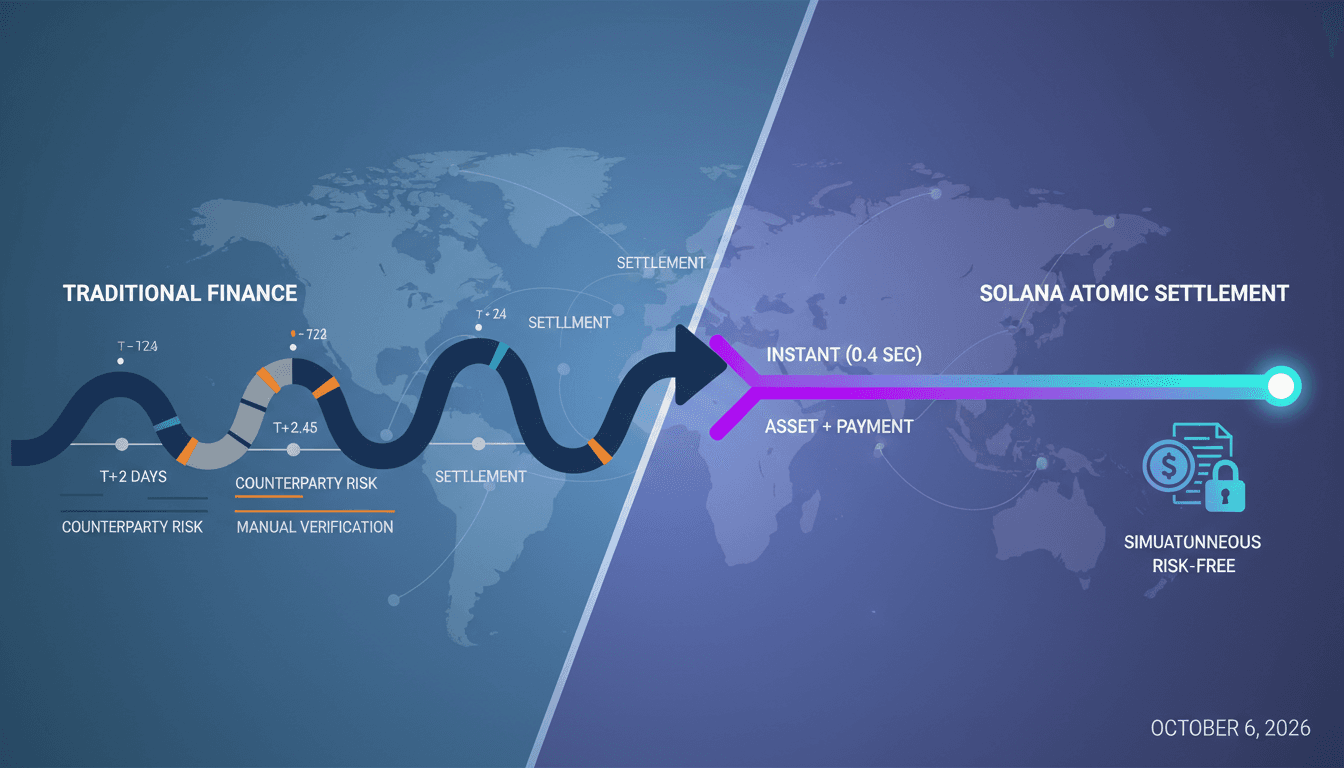
Why it matters
The Solana DvP standard could revolutionize how financial institutions handle asset settlements, significantly reducing the time and risk involved.
What happened (in 30 seconds)
- Launch Announcement: The Solana Foundation introduced the Solana DvP, an open-source delivery-versus-payment standard, on October 6, 2026.
- Key Features: It enables simultaneous settlement of tokenized assets and payments, addressing risks in traditional multi-day processes.
- Advisory Input: Developed with insights from J.P. Morgan, the program has undergone external security audits and is now available on the Solana blockchain.
The context you actually need
- Traditional Settlement Risks: Conventional securities settlement can take 1-2 days, exposing participants to principal risk if a trade fails.
- Need for Standardization: Prior on-chain institutional settlements often required custom smart contracts, lacking a unified framework.
- Solana's Infrastructure: With sub-second finality and low costs, Solana is well-positioned for tokenized finance applications, making it attractive for institutional use.
What's really happening
On October 6, 2026, the Solana Foundation launched the Solana DvP as an open-source program, now deployed on both mainnet and devnet. This initiative introduces a standardized escrow framework that records trade terms on-chain, allowing for atomic settlement—where both asset delivery and payment occur simultaneously or not at all. This is a significant shift from traditional finance, where settlements can take days and involve multiple intermediaries, increasing the risk of failure.
The Solana DvP framework requires each party to fund isolated escrow accounts through standard token transfers. A designated settlement authority executes both legs of the transaction atomically, ensuring that if the settlement fails or expires, the escrowed assets return to their originators. This mechanism not only mitigates counterparty risk but also enhances liquidity by reducing the time assets are tied up in the settlement process.
The program supports SPL Token and Token-2022 standards, including features for regulated issuers, such as pausable tokens and transfer hooks. Notably, it excludes certain features like transfer fees, making it more appealing for institutions looking to minimize costs. J.P. Morgan's advisory role highlights the importance of aligning the DvP standard with existing securities practices, although they did not design or endorse the program.
As of now, the Solana DvP is in its early adoption phase, with no announced production institutional flows. However, the potential for this standard to scale operations while reducing risk is significant, especially as financial institutions look for more efficient ways to handle tokenized assets.
Who feels it first (and how)
- Financial Institutions: Banks and asset managers will benefit from reduced settlement times and risks.
- Tokenized Asset Platforms: Companies dealing in tokenized assets may adopt this standard for smoother transactions.
- Regulatory Bodies: Regulators will need to assess the implications of this new standard on existing frameworks.
What to watch next
- Adoption Rates: Monitor how quickly financial institutions begin implementing the Solana DvP standard. Rapid adoption could signal a shift in industry practices.
- Regulatory Responses: Keep an eye on how regulators respond to this new standard. Their stance could influence its acceptance and integration into existing systems.
- Market Reactions: Watch for any shifts in market dynamics or institutional flows. Increased efficiency could lead to more liquidity in tokenized asset markets.
The Solana DvP standard is now available as an open-source program.
Financial institutions will explore its adoption to enhance operational efficiency.
The long-term regulatory implications and market reactions remain uncertain.
Frequently Asked Questions
- Why it matters?
- The Solana DvP standard could revolutionize how financial institutions handle asset settlements, significantly reducing the time and risk involved.
- What happened (in 30 seconds)?
- Launch Announcement: The Solana Foundation introduced the Solana DvP, an open-source delivery-versus-payment standard, on October 6, 2026. Key Features: It enables simultaneous settlement of tokenized assets and payments, addressing risks in traditional multi-day processes. Advisory Input: Developed with insights from J.P. Morgan, the program has undergone external security audits and is now available on the Solana blockchain.
- What's really happening?
- On October 6, 2026, the Solana Foundation launched the Solana DvP as an open-source program, now deployed on both mainnet and devnet. This initiative introduces a standardized escrow framework that records trade terms on-chain, allowing for atomic settlement—where both asset delivery and payment occur simultaneously or not at all. This is a significant shift from traditional finance, where settlements can take days and involve multiple intermediaries, increasing the risk of failure. The Solana
- Who feels it first (and how)?
- Financial Institutions: Banks and asset managers will benefit from reduced settlement times and risks. Tokenized Asset Platforms: Companies dealing in tokenized assets may adopt this standard for smoother transactions. Regulatory Bodies: Regulators will need to assess the implications of this new standard on existing frameworks.
- What to watch next?
- Adoption Rates: Monitor how quickly financial institutions begin implementing the Solana DvP standard. Rapid adoption could signal a shift in industry practices. Regulatory Responses: Keep an eye on how regulators respond to this new standard. Their stance could influence its acceptance and integration into existing systems. Market Reactions: Watch for any shifts in market dynamics or institutional flows. Increased efficiency could lead to more liquidity in tokenized asset markets.
English-language digital publication covering business, politics, technology, and current affairs.
"The Arabian Post mixes original and syndicated-style coverage with a broad regional and global business-news orientation."
— A47 Editor
Solana introduces DvP standard for atomic settlement
The Solana Foundation has launched an open-source delivery-versus-payment (DvP) program, enabling financial institutions to settle tokenized assets and payments in a single atomic transaction on the Solana blockchain. Announced on October 6, this ini...
Bitcoin news, technical analysis, and forecasts across crypto markets.
"NewsBTC covers Bitcoin news, technical analysis, and forecasts across crypto markets and major blockchain projects."
— A47 Editor
Solana Foundation Launches Atomic DvP Settlement Tool With JPMorgan Input
The Solana Foundation has launched Solana DvP, an open-source delivery-versus-payment settlement tool designed for financial institutions, enabling the atomic settlement of asset and cash legs of transactions. Developed with input from JPMorgan, this...
Real-time updates, analysis, and reports on the blockchain and cryptocurrency sectors.
"Crypto News delivers real-time updates, analysis, and reports on the blockchain and cryptocurrency sectors."
— A47 Editor
Solana launches tool to settle bank trades in seconds
The Solana Foundation has launched an open-source Delivery versus Payment (DvP) program that enables the simultaneous settlement of asset and payment legs, significantly reducing transaction times from days to mere seconds. This initiative was develo...
Covers blockchain, cryptocurrency news, project analysis, and market insights.
"Cointelegraph is a leading crypto-focused media outlet known for timely news, analysis, and educational content related to blockchain and digital assets."
— A47 Editor
Solana Foundation targets settlement in seconds with DvP launch
The Solana Foundation has launched its new Delivery versus Payment (DvP) program, designed to facilitate asset transfers and payments for financial institutions in mere seconds. This open-source settlement solution aims to enhance transaction efficie...