
Tether Partners with Kazakhstan Central Bank to Develop Tenge Stablecoin
Why it matters
This initiative signals a significant step in the evolution of stablecoins and asset tokenization, potentially influencing global financial systems.
What happened (in 30 seconds)
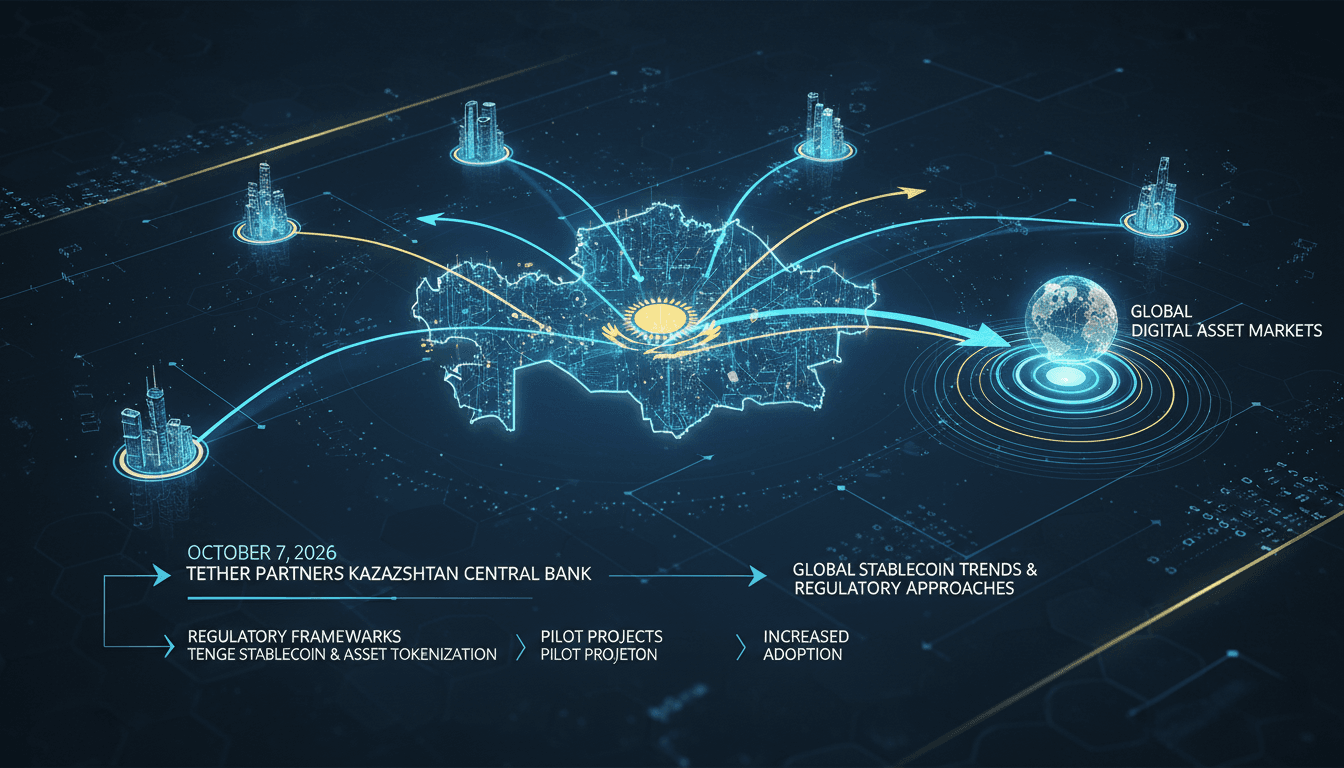
- On October 7, 2026, Tether signed a memorandum of understanding with Kazakhstan’s National Bank and Alatau City Authority.
- The agreement focuses on exploring a tenge-pegged stablecoin and developing a framework for asset tokenization.
- Kazakhstan aims to enhance its digital asset industry through regulatory sandboxes and innovative financial solutions.
The context you actually need
- Kazakhstan has been proactive in advancing its digital asset initiatives, including a comprehensive 65-measure plan approved in September 2026.
- The National Strategic Crypto Reserve in Kazakhstan is valued at approximately $700 million, positioning the country as a key player in the crypto space.
- Alatau City operates under a special legal regime that facilitates fintech testing, making it an ideal environment for this exploratory agreement.
What's really happening
On October 7, 2026, Tether, the National Bank of Kazakhstan (NBK), and the Alatau City Authority entered into a memorandum of understanding (MoU) to explore the development of a tenge-pegged stablecoin and a framework for asset tokenization. This agreement is part of Kazakhstan's broader strategy to enhance its digital asset landscape, which has gained momentum in 2026 through a government-approved plan that encompasses stablecoins, tokenization, crypto payments, and mining.
The MoU outlines a collaborative approach where the parties will study international stablecoin models, identify potential use cases, and prepare a pilot proposal for a national currency-backed token. This initiative is particularly significant as it aligns with Kazakhstan's ambition to position itself as a leader in the digital asset sector. The agreement emphasizes the importance of financial stability, transparency, and investor protection, although it remains non-binding and exploratory at this stage.
Tether's involvement is noteworthy, given its status as a major player in the stablecoin market, with an approximate circulation of $140 billion for its USDT stablecoin. The potential use of Tether’s Hadron platform for asset tokenization in Alatau could streamline the process of creating digital representations of real-world assets, thereby enhancing liquidity and accessibility in the market.
Workshops and training sessions on stablecoin issuance, reserve management, and tokenization are also planned as part of this initiative. This educational component is crucial for building local expertise and ensuring that stakeholders are well-equipped to navigate the complexities of digital assets.
Kazakhstan's regulatory sandbox approach allows for experimentation with digital assets in a controlled environment, which could lead to innovative financial solutions that benefit both local and international markets. As the country continues to develop its digital asset framework, the outcomes of this MoU could have far-reaching implications for the global stablecoin landscape.
Who feels it first (and how)
- Financial institutions in Kazakhstan may adapt their services to accommodate new stablecoin frameworks.
- Investors looking for stable digital assets could see new opportunities in Kazakhstan's evolving market.
- Tech companies involved in fintech and blockchain may find new avenues for collaboration and innovation.
What to watch next
- Regulatory developments: Keep an eye on how Kazakhstan's regulatory framework evolves as the MoU progresses, as this could set precedents for other countries.
- Pilot program outcomes: The success of the pilot proposal for the tenge-backed stablecoin will be crucial in determining its viability and potential adoption.
- Market reactions: Monitor how global markets respond to Kazakhstan's advancements in digital assets, particularly in relation to stablecoins and tokenization.
Tether, the NBK, and Alatau City have signed a non-binding MoU to explore stablecoin and tokenization.
The pilot proposal for a tenge-backed stablecoin will be developed, with potential implications for local and international markets.
The exact timeline and outcomes of the exploratory phase remain uncertain, as no formal product launch has been committed.
Frequently Asked Questions
- Why it matters?
- This initiative signals a significant step in the evolution of stablecoins and asset tokenization, potentially influencing global financial systems.
- What happened (in 30 seconds)?
- On October 7, 2026, Tether signed a memorandum of understanding with Kazakhstan’s National Bank and Alatau City Authority. The agreement focuses on exploring a tenge-pegged stablecoin and developing a framework for asset tokenization. Kazakhstan aims to enhance its digital asset industry through regulatory sandboxes and innovative financial solutions.
- What's really happening?
- On October 7, 2026, Tether, the National Bank of Kazakhstan (NBK), and the Alatau City Authority entered into a memorandum of understanding (MoU) to explore the development of a tenge-pegged stablecoin and a framework for asset tokenization. This agreement is part of Kazakhstan's broader strategy to enhance its digital asset landscape, which has gained momentum in 2026 through a government-approved plan that encompasses stablecoins, tokenization, crypto payments, and mining. The MoU outlines a
- Who feels it first (and how)?
- Financial institutions in Kazakhstan may adapt their services to accommodate new stablecoin frameworks. Investors looking for stable digital assets could see new opportunities in Kazakhstan's evolving market. Tech companies involved in fintech and blockchain may find new avenues for collaboration and innovation.
- What to watch next?
- Regulatory developments: Keep an eye on how Kazakhstan's regulatory framework evolves as the MoU progresses, as this could set precedents for other countries. Pilot program outcomes: The success of the pilot proposal for the tenge-backed stablecoin will be crucial in determining its viability and potential adoption. Market reactions: Monitor how global markets respond to Kazakhstan's advancements in digital assets, particularly in relation to stablecoins and tokenization.
Covers blockchain, cryptocurrency news, project analysis, and market insights.
"Cointelegraph is a leading crypto-focused media outlet known for timely news, analysis, and educational content related to blockchain and digital assets."
— A47 Editor
Tether, Kazakhstan cenbank mull tenge stablecoin and asset tokenization
Tether and the Kazakhstan central bank are collaborating to explore the development of a tenge-backed stablecoin and a framework for tokenizing real-world assets, marking a significant step in Kazakhstan's digital asset industry expansion.
Covers blockchain, cryptocurrency news, project analysis, and market insights.
"CoinDesk is a well-established cryptocurrency and blockchain news provider, offering comprehensive insights, market data, and industry research."
— A47 Editor
Tether tapped by Kazakhstan’s central bank to explore stablecoin and tokenization
The National Bank of Kazakhstan has partnered with Tether to explore the development of a stablecoin linked to the local currency and the tokenization of real-world assets. This initiative aims to enhance Kazakhstan's digital asset landscape and impr...
Real-time updates, analysis, and reports on the blockchain and cryptocurrency sectors.
"Crypto News delivers real-time updates, analysis, and reports on the blockchain and cryptocurrency sectors."
— A47 Editor
Tether, Kazakhstan plan tenge stablecoin pilot
Tether has announced a collaboration with Kazakhstan to pilot a tenge-backed stablecoin and develop an asset tokenization framework, with testing set to take place in Alatau City. This initiative aims to enhance the digital asset landscape in Kazakhs...