
Kalshi's Gold Prediction Markets Surpass Ether in September 2026 Trading Volume
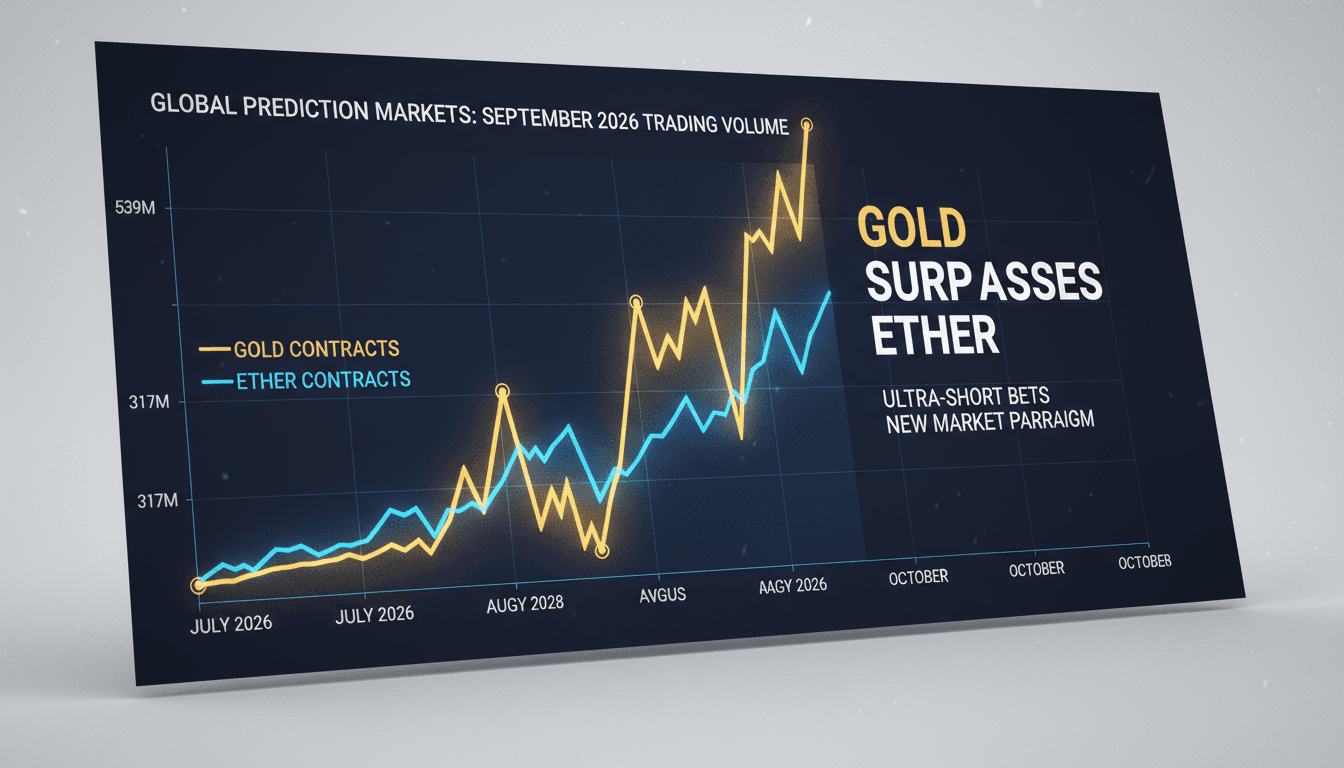
The rise of gold prediction markets could reshape your trading strategies and investment decisions.
Why it matters
This shift indicates a growing preference for high-frequency trading in commodities, potentially altering market dynamics.
What happened (in 30 seconds)
- Kalshi’s gold prediction markets surpassed Ether in contract volume for the first time in September 2026.
- 539 million gold contracts were traded compared to 317 million for Ether, marking a significant increase in trader interest.
- Estimated fees generated from gold contracts reached approximately $4.94–5 million, nearly doubling those from Ether.
The context you actually need
- Kalshi launched its 15-minute gold markets on July 31, 2026, following the earlier introduction of Ether markets.
- Short-duration contracts have gained traction as traders seek rapid positions on price movements, similar to in-play betting.
- Bitcoin remains dominant in the overall market, generating 6.74 billion contracts and $60.4 million in fees during the same period.
What's really happening
Kalshi's recent success with its 15-minute gold prediction markets reflects a broader trend in trading behavior, where speed and frequency are becoming paramount. The platform's ability to offer ultra-short-duration contracts aligns with a growing appetite for quick trades, particularly in volatile markets. This shift is not merely a fleeting trend; it signifies a fundamental change in how traders engage with assets.
The launch of gold markets came after a period of regulatory clarity regarding event contracts tied to asset prices, allowing Kalshi to expand its offerings. The rapid adoption of these gold contracts, which saw a staggering 539 million trades in September, indicates that traders are increasingly looking for ways to capitalize on short-term price fluctuations. This is particularly relevant in the context of commodities, where price movements can be influenced by a myriad of factors, including geopolitical events, economic data releases, and market sentiment.
The comparison to in-play betting is noteworthy. Just as sports bettors place wagers on the outcome of a game as it unfolds, traders are now able to bet on the price movements of gold in real-time. This model appeals to a demographic that thrives on immediacy and rapid decision-making, which is a stark contrast to traditional longer-term contracts that require more extensive analysis and patience.
Moreover, the financial implications are significant. With estimated fees from gold contracts reaching nearly $5 million, Kalshi is not only attracting traders but also generating substantial revenue. This revenue model is crucial for the platform's sustainability and growth, especially as it competes with established players in both the commodities and cryptocurrency markets.
The dominance of Bitcoin in the overall market, with 6.74 billion contracts traded, highlights the competitive landscape. However, the fact that gold has overtaken Ether in a specific category suggests that traders are diversifying their strategies and exploring new avenues for profit. This could lead to a more fragmented market where different assets vie for attention, ultimately benefiting traders who are willing to adapt.
As Kalshi continues to innovate and expand its offerings, the implications for traders and investors are profound. The rise of gold prediction markets could lead to increased volatility in both the commodities and cryptocurrency markets, as traders react to rapid price changes and adjust their positions accordingly.
Who feels it first (and how)
- Traders: Those engaged in high-frequency trading will benefit from the increased opportunities in gold markets.
- Investors: Individuals looking to diversify their portfolios may find new strategies in short-duration contracts.
- Financial analysts: Professionals monitoring market trends will need to adjust their analyses to account for the growing popularity of these prediction markets.
What to watch next
- Regulatory developments: Keep an eye on how the CFTC responds to the growing popularity of prediction markets, as this could impact future offerings.
- Market adoption rates: Monitor the trading volumes in gold versus other assets to gauge ongoing interest and potential shifts in trader behavior.
- Fee generation trends: Watch for changes in estimated fees across different markets, as this will indicate which assets are gaining traction among traders.
Kalshi's gold prediction markets have surpassed Ether in contract volume and fee generation.
The trend towards high-frequency trading in commodities will continue to grow.
The long-term impact of regulatory scrutiny on prediction markets remains uncertain.
Frequently Asked Questions
- Why it matters?
- This shift indicates a growing preference for high-frequency trading in commodities, potentially altering market dynamics.
- What happened (in 30 seconds)?
- Kalshi’s gold prediction markets surpassed Ether in contract volume for the first time in September 2026. 539 million gold contracts were traded compared to 317 million for Ether, marking a significant increase in trader interest. Estimated fees generated from gold contracts reached approximately $4.94–5 million, nearly doubling those from Ether.
- What's really happening?
- Kalshi's recent success with its 15-minute gold prediction markets reflects a broader trend in trading behavior, where speed and frequency are becoming paramount. The platform's ability to offer ultra-short-duration contracts aligns with a growing appetite for quick trades, particularly in volatile markets. This shift is not merely a fleeting trend; it signifies a fundamental change in how traders engage with assets. The launch of gold markets came after a period of regulatory clarity regarding
- Who feels it first (and how)?
- Traders: Those engaged in high-frequency trading will benefit from the increased opportunities in gold markets. Investors: Individuals looking to diversify their portfolios may find new strategies in short-duration contracts. Financial analysts: Professionals monitoring market trends will need to adjust their analyses to account for the growing popularity of these prediction markets.
- What to watch next?
- Regulatory developments: Keep an eye on how the CFTC responds to the growing popularity of prediction markets, as this could impact future offerings. Market adoption rates: Monitor the trading volumes in gold versus other assets to gauge ongoing interest and potential shifts in trader behavior. Fee generation trends: Watch for changes in estimated fees across different markets, as this will indicate which assets are gaining traction among traders.
Covers Bitcoin plus altcoin news, market updates, and educational resources.
"Bitcoin.com provides news, market data, and guides focused on Bitcoin and the wider crypto industry."
— A47 Editor
Kalshi’s 15-Minute Gold Bets Top Ether as Fast Markets Drive Fees
Kalshi's newly launched 15-minute gold betting markets have quickly surpassed Ether in trading volume, achieving 542 million contracts and generating approximately $5 million in fees in September, compared to Ether's 318 million contracts and $2.6 mi...
Real-time updates, analysis, and reports on the blockchain and cryptocurrency sectors.
"Crypto News delivers real-time updates, analysis, and reports on the blockchain and cryptocurrency sectors."
— A47 Editor
Kalshi gold trading beats Ether just weeks after launch
Kalshi's newly launched 15-minute gold trading markets have quickly gained traction, logging 542 million contracts and generating approximately $5 million in fees during September, surpassing Ether's trading volume of 318 million contracts and $2.6 m...
Covers blockchain, cryptocurrency news, project analysis, and market insights.
"Cointelegraph is a leading crypto-focused media outlet known for timely news, analysis, and educational content related to blockchain and digital assets."
— A47 Editor
Kalshi’s 15-min gold markets overtake Ether just weeks after launch
Kalshi's newly launched 15-minute gold markets have quickly surpassed Ether in trading volume, recording 542 million contracts and generating approximately $5 million in fees in September, compared to Ether's 318 million contracts and $2.6 million in...