
Russia Initiates Licensing for Cryptocurrency Exchanges Under Central Bank Oversight
Why it matters
This development formalizes a previously informal market, potentially influencing global crypto trading practices and regulatory approaches.
What happened (in 30 seconds)
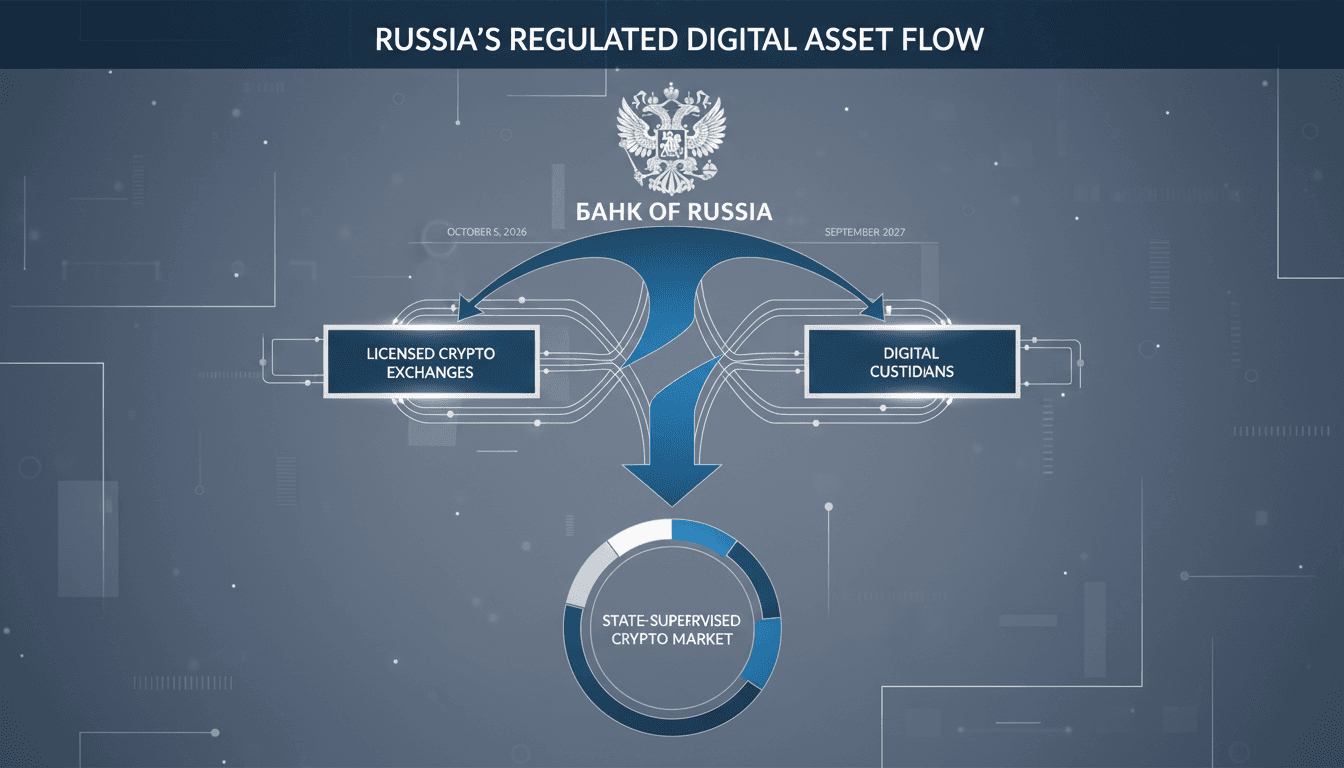
- Russia initiated operational licensing for cryptocurrency exchanges and custodians on October 5, 2026, under the oversight of the Bank of Russia.
- Four exchange operators and five digital custodians were registered, including major state-linked banks like VTB and Sberbank.
- The longstanding ban on using cryptocurrency for payments remains in effect, emphasizing a controlled environment for trading rather than liberalization.
The context you actually need
- Federal Law No. 282-FZ, signed in August 2026, established the legal framework for a supervised crypto market, separating ownership from payment use.
- The transitional compliance period for registered entities lasts until September 1, 2027, during which they must adhere to new transaction and accounting rules.
- Retail investor limits are in place, capping non-qualified investors at 300,000 rubles annually through a single intermediary.
What's really happening
On October 5, 2026, Russia took a significant step in regulating its cryptocurrency market by beginning the operational licensing of exchanges and custodians. This move is part of a broader strategy to balance the country's interest in digital assets with concerns over capital flows and monetary sovereignty. The Bank of Russia has now officially registered nine entities, including four cryptocurrency exchanges and five digital custodians, under the new framework established by Federal Law No. 282-FZ.
The law, which took effect on September 1, 2026, aims to create a supervised environment for cryptocurrency trading while maintaining the prohibition on using cryptocurrencies for payments. This means that while trading can occur under regulated conditions, the use of cryptocurrencies as a medium of exchange for goods and services remains illegal. The involvement of major state-linked banks like VTB and Sberbank in the initial wave of registrations underscores the central role that traditional financial institutions will play in this new landscape.
The framework emphasizes state supervision, which is a departure from the independent exchanges that have characterized much of the global crypto market. This could lead to a more stable environment for investors, but it also raises questions about the level of freedom and innovation that can occur within such a tightly controlled system. Registered entities must comply with transaction and accounting rules immediately and achieve full operational compliance by September 1, 2027. This transitional period allows these organizations to adapt to the new regulations while ensuring that the central bank maintains oversight.
VTB and Sberbank are already planning to launch services that will support major cryptocurrencies like Bitcoin, Ether, and USDT. However, retail investors will face restrictions, limiting their annual investments to 300,000 rubles through a single intermediary. This cap is designed to protect non-qualified investors from excessive risk in a volatile market.
Overall, this regulatory framework represents a significant shift in Russia's approach to cryptocurrency, moving from a ban to a regulated environment. While it may provide more security for investors, it also highlights the ongoing tension between innovation in digital assets and the need for regulatory oversight.
Who feels it first (and how)
- Investors: Retail investors will face strict limits on their investments, impacting their ability to engage with the market.
- Financial institutions: Major banks like VTB and Sberbank will benefit from new revenue streams through crypto services.
- Crypto exchanges: Newly registered exchanges will need to adapt quickly to comply with regulations, affecting their operational strategies.
What to watch next
- Compliance developments: Monitor how quickly registered entities adapt to the new rules and whether they can meet the September 2027 deadline.
- Market reactions: Observe how the crypto market responds to this regulated environment, particularly in terms of trading volumes and investor sentiment.
- International implications: Watch for potential ripple effects in other countries considering similar regulatory frameworks, as Russia's approach may influence global standards.
The initial registration of nine entities under the new regulatory framework.
Increased participation from traditional financial institutions in the crypto market.
The long-term impact of these regulations on innovation and market dynamics in Russia and beyond.
Frequently Asked Questions
- Why it matters?
- This development formalizes a previously informal market, potentially influencing global crypto trading practices and regulatory approaches.
- What happened (in 30 seconds)?
- Russia initiated operational licensing for cryptocurrency exchanges and custodians on October 5, 2026, under the oversight of the Bank of Russia. Four exchange operators and five digital custodians were registered, including major state-linked banks like VTB and Sberbank. The longstanding ban on using cryptocurrency for payments remains in effect, emphasizing a controlled environment for trading rather than liberalization.
- What's really happening?
- On October 5, 2026, Russia took a significant step in regulating its cryptocurrency market by beginning the operational licensing of exchanges and custodians. This move is part of a broader strategy to balance the country's interest in digital assets with concerns over capital flows and monetary sovereignty. The Bank of Russia has now officially registered nine entities, including four cryptocurrency exchanges and five digital custodians, under the new framework established by Federal Law No. 28
- Who feels it first (and how)?
- Investors: Retail investors will face strict limits on their investments, impacting their ability to engage with the market. Financial institutions: Major banks like VTB and Sberbank will benefit from new revenue streams through crypto services. Crypto exchanges: Newly registered exchanges will need to adapt quickly to comply with regulations, affecting their operational strategies.
- What to watch next?
- Compliance developments: Monitor how quickly registered entities adapt to the new rules and whether they can meet the September 2027 deadline. Market reactions: Observe how the crypto market responds to this regulated environment, particularly in terms of trading volumes and investor sentiment. International implications: Watch for potential ripple effects in other countries considering similar regulatory frameworks, as Russia's approach may influence global standards.
News and analysis on Bitcoin, altcoins, and blockchain innovation.
"Bitcoinist delivers news and analysis on Bitcoin, altcoins, and blockchain innovation with a focus on market trends and industry updates."
— A47 Editor
Russia Starts Licensing Crypto Exchanges And Custodians Under New Register
Russia has initiated a regulated framework for cryptocurrency exchanges and custodians, with the Bank of Russia adding firms like VTB and Sberbank to its registers. This marks a significant step in establishing a legal infrastructure for cryptocurren...
Real-time updates, analysis, and reports on the blockchain and cryptocurrency sectors.
"Crypto News delivers real-time updates, analysis, and reports on the blockchain and cryptocurrency sectors."
— A47 Editor
Russia approves first crypto exchanges and custodians under new rules
Russia has officially registered its first four cryptocurrency exchange operators and five digital custodians as part of a newly regulated crypto market that commenced on September 1, 2026. This move, sanctioned by the Bank of Russia, marks a signifi...
Covers blockchain, cryptocurrency news, project analysis, and market insights.
"Cointelegraph is a leading crypto-focused media outlet known for timely news, analysis, and educational content related to blockchain and digital assets."
— A47 Editor
Russia clears first crypto exchanges, custodians under new law
Russia has registered its first cryptocurrency exchanges and custodians, including Sberbank, which plans to launch crypto products by December 1, 2026, under a new regulatory framework. This marks a significant step in formalizing the country's appro...