
Europol Warns of Quantum Computing Threat to Cryptocurrency Wallet Keys
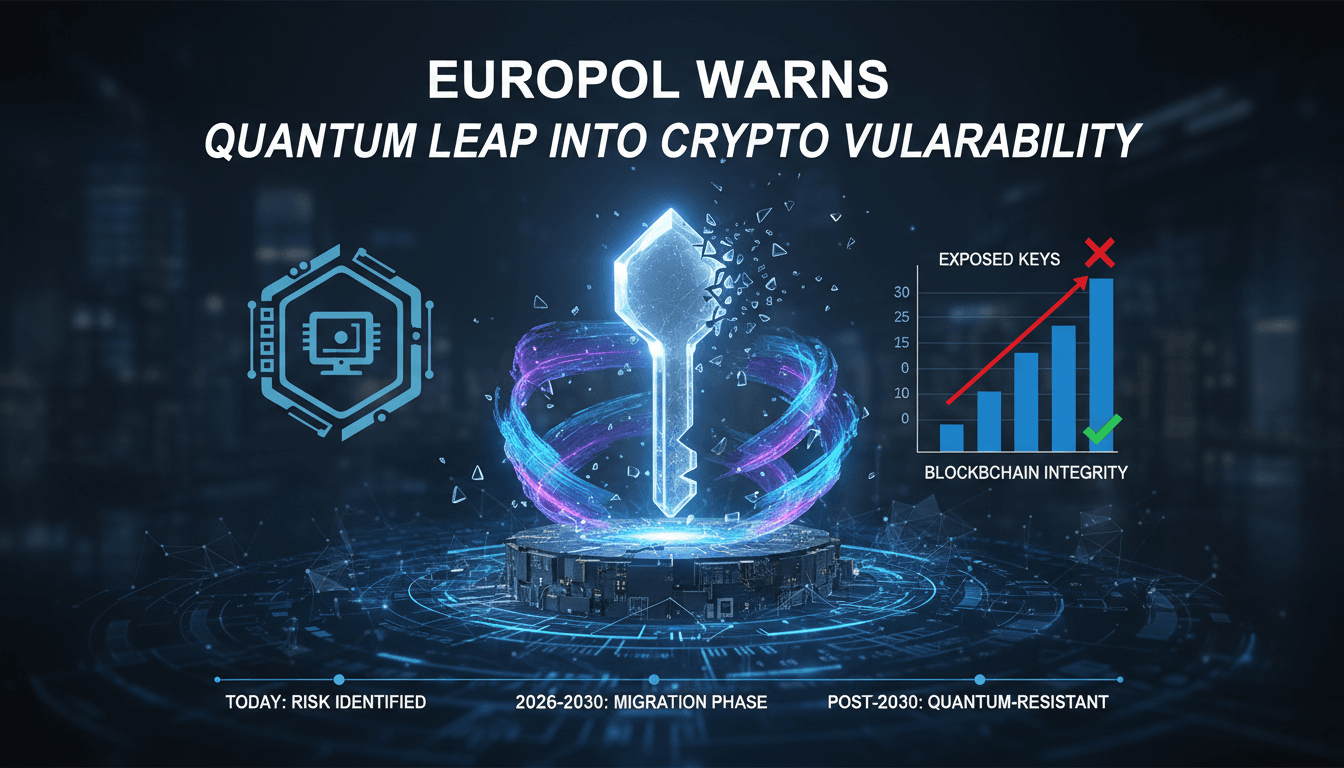
Why it matters
The integrity of cryptocurrency wallets is now under scrutiny as quantum computing advances, potentially jeopardizing millions in assets.
What happened (in 30 seconds)
- Europol released a report on October 7, 2026, highlighting that exposed crypto wallet keys are the primary risk from quantum computing.
- The report clarifies that while blockchain hash functions remain secure, public-key cryptography in wallets is vulnerable to Shor's algorithm attacks.
- Immediate action is urged for users and developers to transition to post-quantum standards to safeguard assets.
The context you actually need
- Quantum computing has been a concern for public-key cryptography, with Shor's algorithm capable of deriving private keys from public ones.
- Europol's report emphasizes that cryptocurrencies won't collapse but require a coordinated migration to protect exposed wallet keys.
- The EU is focusing on cybersecurity as crypto adoption rises, with Europol addressing misconceptions about quantum threats dismantling entire blockchains.
What's really happening
On October 7, 2026, Europol's European Cybercrime Centre published a pivotal report titled "Quantum Computing and Cryptocurrencies." This document clarifies a critical misconception: while blockchain hash functions, such as SHA-256 used in Bitcoin, are largely resistant to quantum attacks, the real vulnerability lies in the public keys of cryptocurrency wallets. These keys, if exposed, can be compromised by quantum computers using Shor's algorithm, which can efficiently factor large numbers and derive private keys from public ones.
The report indicates that approximately 6.9 million Bitcoin are held at addresses with exposed public keys, representing a significant portion of the cryptocurrency supply that is at risk. This vulnerability is particularly concerning for dormant or legacy wallets, which may not have been actively managed or updated. Europol emphasizes that these keys cannot be retroactively secured, necessitating a proactive migration to post-quantum cryptographic standards.
The transition to these new standards is not without challenges. Europol estimates that migrating the entire Bitcoin network could take around 76 days of full block capacity for UTXO (Unspent Transaction Output) transfers. This highlights the urgency for developers, wallet providers, and exchanges to initiate phased migrations to safeguard user assets. The report calls for immediate action, urging all stakeholders in the cryptocurrency ecosystem to collaborate and implement these changes to avoid potential theft risks.
Despite the gravity of the situation, the market reaction has been muted, with no immediate regulatory mandates or significant volatility reported following the release of the report. However, the industry recognizes the need for coordination, with Bitcoin researchers suggesting that 2029 could be a target year for comprehensive migration planning. The threat posed by quantum computing remains prospective, but the implications for cryptocurrency holders are clear: proactive measures are essential to protect assets from future vulnerabilities.
Who feels it first (and how)
- Cryptocurrency holders: Individuals with exposed wallet keys face potential asset theft.
- Wallet providers: Companies must upgrade their systems to support post-quantum cryptography.
- Exchanges: Platforms facilitating crypto transactions need to ensure security measures are in place.
- Developers: Software engineers must adapt existing protocols to incorporate new cryptographic standards.
What to watch next
- Migration timelines: Monitor industry progress on transitioning to post-quantum standards, as delays could increase vulnerability.
- Regulatory responses: Watch for potential government mandates or guidelines regarding quantum threats and cryptocurrency security.
- Market adaptations: Observe how exchanges and wallet providers implement changes and communicate with users about security upgrades.
Quantum computers pose a significant risk to exposed public keys in cryptocurrency wallets.
A coordinated industry response will emerge, focusing on migration to post-quantum cryptographic standards.
The timeline for widespread adoption of these new standards and the potential regulatory landscape remains uncertain.
Frequently Asked Questions
- Why it matters?
- The integrity of cryptocurrency wallets is now under scrutiny as quantum computing advances, potentially jeopardizing millions in assets.
- What happened (in 30 seconds)?
- Europol released a report on October 7, 2026, highlighting that exposed crypto wallet keys are the primary risk from quantum computing. The report clarifies that while blockchain hash functions remain secure, public-key cryptography in wallets is vulnerable to Shor's algorithm attacks. Immediate action is urged for users and developers to transition to post-quantum standards to safeguard assets.
- What's really happening?
- On October 7, 2026, Europol's European Cybercrime Centre published a pivotal report titled "Quantum Computing and Cryptocurrencies." This document clarifies a critical misconception: while blockchain hash functions, such as SHA-256 used in Bitcoin, are largely resistant to quantum attacks, the real vulnerability lies in the public keys of cryptocurrency wallets. These keys, if exposed, can be compromised by quantum computers using Shor's algorithm, which can efficiently factor large numbers and
- Who feels it first (and how)?
- Cryptocurrency holders: Individuals with exposed wallet keys face potential asset theft. Wallet providers: Companies must upgrade their systems to support post-quantum cryptography. Exchanges: Platforms facilitating crypto transactions need to ensure security measures are in place. Developers: Software engineers must adapt existing protocols to incorporate new cryptographic standards.
- What to watch next?
- Migration timelines: Monitor industry progress on transitioning to post-quantum standards, as delays could increase vulnerability. Regulatory responses: Watch for potential government mandates or guidelines regarding quantum threats and cryptocurrency security. Market adaptations: Observe how exchanges and wallet providers implement changes and communicate with users about security upgrades.
Covers Bitcoin plus altcoin news, market updates, and educational resources.
"Bitcoin.com provides news, market data, and guides focused on Bitcoin and the wider crypto industry."
— A47 Editor
Europol Warns Quantum Threat Could Put Crypto Fortunes at Risk
Europol has issued a warning regarding the potential risks posed by quantum computers to cryptocurrency fortunes, emphasizing that these advanced technologies could compromise exposed private keys rather than the blockchains themselves. This alert ca...
Real-time updates, analysis, and reports on the blockchain and cryptocurrency sectors.
"Crypto News delivers real-time updates, analysis, and reports on the blockchain and cryptocurrency sectors."
— A47 Editor
Europol warns crypto wallets face quantum threats
Europol has issued a warning that quantum threats could compromise crypto wallets and the encrypted data they store, urging stakeholders to adopt post-quantum security measures. This alert highlights the vulnerabilities associated with current crypto...
Covers blockchain, cryptocurrency news, project analysis, and market insights.
"CoinDesk is a well-established cryptocurrency and blockchain news provider, offering comprehensive insights, market data, and industry research."
— A47 Editor
Quantum computers threaten exposed private keys rather than blockchains, Europol warns
Europol has issued a warning that quantum computers pose a significant threat to exposed private keys rather than the blockchains themselves, urging developers, exchanges, and users to begin phased migrations to post-quantum solutions to safeguard ag...
Technology and innovation coverage, including consumer tech and digital transformation stories.
"Emirates 24|7 technology coverage often highlights practical tech developments with relevance to Gulf readers and businesses."
— A47 Editor
Europol warns quantum computing could threaten cryptocurrencies and encrypted data
Europol has issued a warning regarding the potential threats posed by advancements in quantum computing to cryptocurrencies and encrypted data, emphasizing the need for organizations and governments to prepare for these risks. The agency's reports hi...