
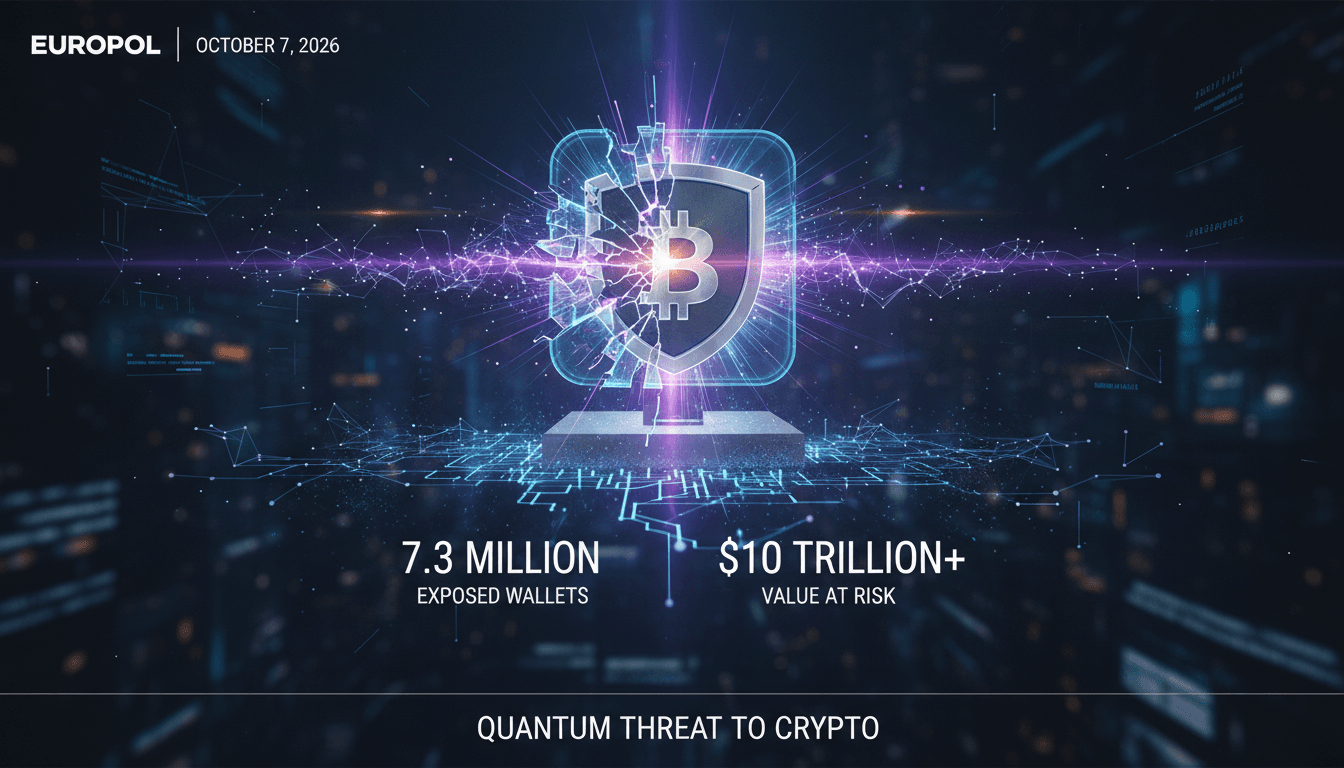
Europol Warns of Quantum Threat to Cryptocurrency Wallet Keys
Why it matters
The integrity of cryptocurrency wallets is at risk, potentially affecting millions of users and billions in assets.
What happened (in 30 seconds)
- Europol released a report on October 7, 2026, warning that quantum computing could compromise cryptocurrency wallet keys.
- The report highlights that while blockchain integrity remains secure, exposed public keys are vulnerable to unauthorized access.
- Europol urges immediate action for wallet providers and users to transition to post-quantum cryptography to safeguard assets.
The context you actually need
- Quantum computing is advancing rapidly, with the potential to disrupt traditional cryptographic methods, particularly public-key cryptography.
- Current estimates suggest that approximately 6.9 million Bitcoin, valued at around $586 billion, are held in addresses with exposed public keys, making them particularly vulnerable.
- Regulatory bodies like NIST are developing post-quantum cryptography standards to address these vulnerabilities, but implementation is still in early stages.
What's really happening
On October 7, 2026, Europol's European Cybercrime Centre published a critical report titled "Quantum Computing and Cryptocurrencies," which outlines the risks posed by quantum computing to cryptocurrency wallet keys. The report emphasizes that while the blockchain's hash functions remain largely resistant to quantum attacks, the public keys associated with cryptocurrency wallets are at significant risk. This vulnerability arises from the ability of sufficiently advanced quantum computers to derive private keys from exposed public keys, enabling unauthorized fund transfers.
The report highlights the concept of "harvest now, decrypt later," where adversaries can store encrypted data today and decrypt it in the future when quantum computing capabilities improve. This strategy poses a long-term threat to the security of cryptocurrencies, particularly for those using older wallet addresses that may have been exposed on-chain.
Europol's analysis indicates that proactive measures are essential. It recommends that wallet providers and users migrate to post-quantum cryptography to mitigate these vulnerabilities. The agency stresses that exposed keys cannot be retroactively secured, meaning that immediate action is necessary to protect assets. The report also notes that a full migration of Bitcoin's unspent transaction outputs (UTXOs) would require significant block capacity over extended periods, highlighting the logistical challenges involved.
Despite the alarming nature of the report, Europol reassures that cryptocurrencies will not collapse under this threat. Instead, it emphasizes the need for timely and proactive defenses to safeguard assets. The report has sparked discussions within the cryptocurrency community, with industry experts calling for early testing of post-quantum wallet solutions and strategic planning for network upgrades.
As the landscape of cryptocurrency security evolves, the implications of quantum computing will likely become a focal point for developers, users, and regulators alike. The urgency of addressing these vulnerabilities cannot be overstated, as the potential for unauthorized access to funds looms large.
Who feels it first (and how)
- Cryptocurrency wallet providers: They must upgrade their systems to post-quantum standards to protect users.
- Cryptocurrency investors: Individuals holding Bitcoin or other cryptocurrencies in exposed wallets face increased risk of theft.
- Regulatory bodies: They will need to establish guidelines and standards for post-quantum cryptography in the financial sector.
What to watch next
- Adoption of post-quantum cryptography: Monitor how quickly wallet providers implement these standards, as it will determine the security of user assets.
- Market response: Watch for any shifts in cryptocurrency prices or trading volumes as users react to the report and its implications.
- Regulatory developments: Keep an eye on announcements from regulatory bodies regarding new standards or guidelines for cryptocurrency security.
Quantum computing poses a significant threat to exposed cryptocurrency wallet keys.
Wallet providers will begin transitioning to post-quantum cryptography in response to the report.
The timeline for widespread adoption of these new security measures remains uncertain.
Frequently Asked Questions
- Why it matters?
- The integrity of cryptocurrency wallets is at risk, potentially affecting millions of users and billions in assets.
- What happened (in 30 seconds)?
- Europol released a report on October 7, 2026, warning that quantum computing could compromise cryptocurrency wallet keys. The report highlights that while blockchain integrity remains secure, exposed public keys are vulnerable to unauthorized access. Europol urges immediate action for wallet providers and users to transition to post-quantum cryptography to safeguard assets.
- What's really happening?
- On October 7, 2026, Europol's European Cybercrime Centre published a critical report titled "Quantum Computing and Cryptocurrencies," which outlines the risks posed by quantum computing to cryptocurrency wallet keys. The report emphasizes that while the blockchain's hash functions remain largely resistant to quantum attacks, the public keys associated with cryptocurrency wallets are at significant risk. This vulnerability arises from the ability of sufficiently advanced quantum computers to deri
- Who feels it first (and how)?
- Cryptocurrency wallet providers: They must upgrade their systems to post-quantum standards to protect users. Cryptocurrency investors: Individuals holding Bitcoin or other cryptocurrencies in exposed wallets face increased risk of theft. Regulatory bodies: They will need to establish guidelines and standards for post-quantum cryptography in the financial sector.
- What to watch next?
- Adoption of post-quantum cryptography: Monitor how quickly wallet providers implement these standards, as it will determine the security of user assets. Market response: Watch for any shifts in cryptocurrency prices or trading volumes as users react to the report and its implications. Regulatory developments: Keep an eye on announcements from regulatory bodies regarding new standards or guidelines for cryptocurrency security.
Covers Bitcoin plus altcoin news, market updates, and educational resources.
"Bitcoin.com provides news, market data, and guides focused on Bitcoin and the wider crypto industry."
— A47 Editor
Europol Warns Quantum Threat Could Put Crypto Fortunes at Risk
Europol has issued a warning regarding the potential risks posed by quantum computers to cryptocurrency fortunes, emphasizing that these advanced technologies could compromise exposed private keys rather than the blockchains themselves. This alert ca...
Real-time updates, analysis, and reports on the blockchain and cryptocurrency sectors.
"Crypto News delivers real-time updates, analysis, and reports on the blockchain and cryptocurrency sectors."
— A47 Editor
Europol warns crypto wallets face quantum threats
Europol has issued a warning that quantum threats could compromise crypto wallets and the encrypted data they store, urging stakeholders to adopt post-quantum security measures. This alert highlights the vulnerabilities associated with current crypto...
Covers blockchain, cryptocurrency news, project analysis, and market insights.
"CoinDesk is a well-established cryptocurrency and blockchain news provider, offering comprehensive insights, market data, and industry research."
— A47 Editor
Quantum computers threaten exposed private keys rather than blockchains, Europol warns
Europol has issued a warning that quantum computers pose a significant threat to exposed private keys rather than the blockchains themselves, urging developers, exchanges, and users to begin phased migrations to post-quantum solutions to safeguard ag...
Technology and innovation coverage, including consumer tech and digital transformation stories.
"Emirates 24|7 technology coverage often highlights practical tech developments with relevance to Gulf readers and businesses."
— A47 Editor
Europol warns quantum computing could threaten cryptocurrencies and encrypted data
Europol has issued a warning regarding the potential threats posed by advancements in quantum computing to cryptocurrencies and encrypted data, emphasizing the need for organizations and governments to prepare for these risks. The agency's reports hi...