
Polymarket Begins Testing Protocol V2 with New ERC-1155 Contract and pUSD Standard
Why it matters
This upgrade represents a significant shift in how prediction markets operate, potentially influencing trading dynamics and user engagement.
What happened (in 30 seconds)
- Polymarket launched Protocol V2 on October 5, 2026, initiating live canary testing on the Polygon blockchain.
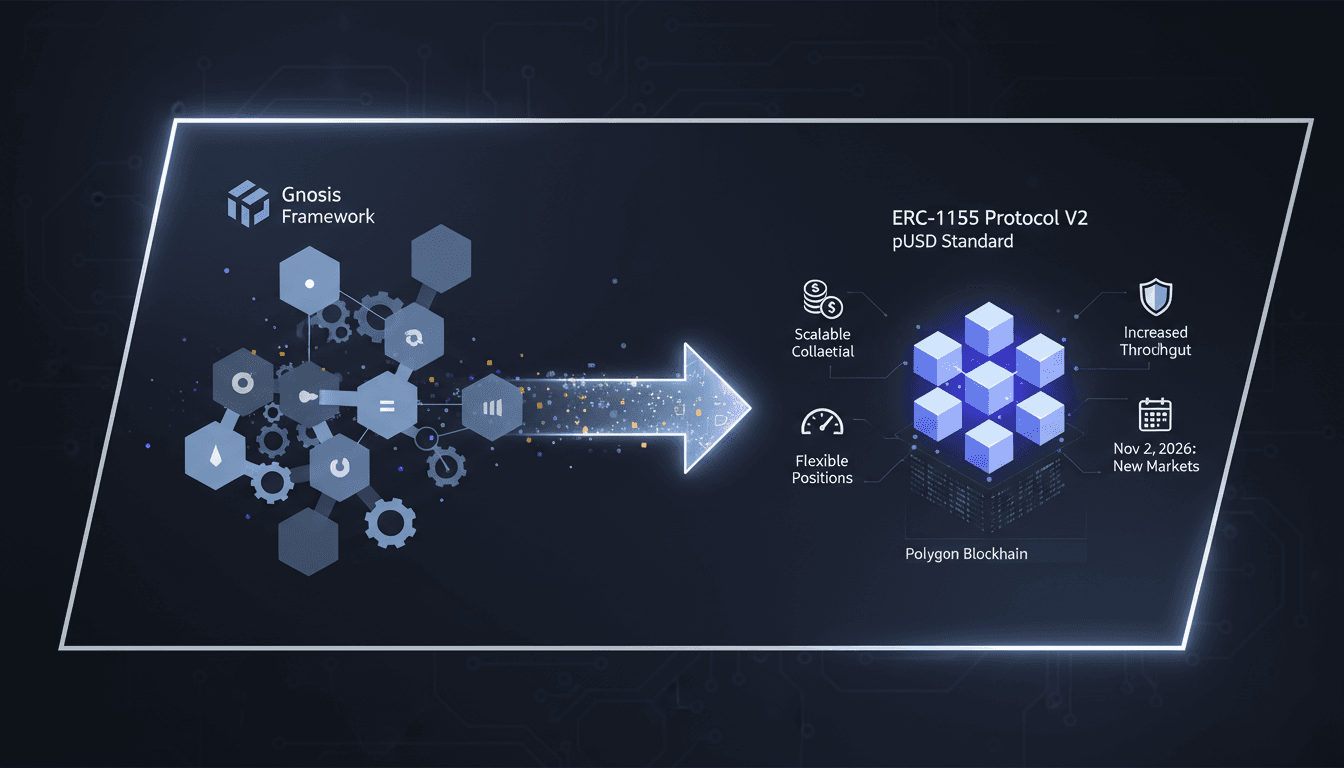
- The upgrade replaces the legacy Gnosis framework with a unified ERC-1155 positions contract and standardizes pUSD as collateral.
- Canary testing will run until October 30, with a transition to new markets planned for November 2, 2026.
The context you actually need
- Polymarket's original infrastructure relied on the Gnosis Conditional Tokens Framework, which became cumbersome as market complexity increased.
- The introduction of pUSD as a collateral token earlier in 2026 aimed to improve settlement efficiency, addressing limitations of bridged USDC.
- The new Protocol V2 consolidates various market types into a single contract, enhancing scalability and flexibility for users.
What's really happening
Polymarket's Protocol V2 upgrade is a strategic overhaul designed to address the limitations of its previous infrastructure. The original system, built on the Gnosis Conditional Tokens Framework, required multiple adapters and wrappers as the platform expanded into various market types, including elections, sports, and macroeconomic events. This fragmentation hindered scalability and made it difficult to manage complex or multi-outcome markets effectively.
By transitioning to a unified ERC-1155 positions contract, Polymarket aims to streamline its operations. This new contract allows for the embedding of metadata directly within the positions, simplifying the user experience and reducing the need for multiple contracts. The introduction of pUSD as the mandatory collateral for new markets is another critical aspect of this upgrade. As a 1:1 USDC-backed ERC-20 token, pUSD enhances settlement efficiency and provides a more stable collateral option compared to the previously used bridged USDC.
The canary testing phase, which runs until October 30, 2026, is crucial for identifying any potential issues before the full transition on November 2. During this period, market participants can engage with the new system while developers receive support for integration. The four initial market modules—binary, atomic neg-risk, incremental neg-risk, and combinatorial formats—are designed to cater to a variety of trading strategies, further enhancing user engagement.
The upgrade also includes an OracleAggregator, which enables market resolution through various sources, including UMA and Chainlink. This flexibility is essential as it allows Polymarket to adapt to different market conditions and user needs. Importantly, existing markets and positions will remain unaffected during this transition, ensuring that current users do not face forced migrations or disruptions.
Overall, the Protocol V2 upgrade is a calculated move to enhance Polymarket's infrastructure, improve user experience, and position the platform for future growth in an increasingly competitive prediction market landscape.
Who feels it first (and how)
- Traders and market participants: They will experience improved efficiency and potentially lower transaction costs.
- Developers and platform engineers: They will need to adapt to the new system and integrate their applications with the upgraded infrastructure.
- Investors in prediction markets: They may see changes in market dynamics and trading volumes as the new system rolls out.
What to watch next
- User adoption rates: Monitoring how quickly traders transition to the new system will indicate its acceptance and effectiveness.
- Market volume changes: Analyzing trading volumes post-upgrade will reveal whether the new infrastructure enhances user engagement.
- Feedback from canary testing: Insights from the ongoing testing phase will provide valuable information on potential adjustments needed before the full rollout.
The upgrade is currently in the canary testing phase, with a planned transition for new markets on November 2, 2026.
The new infrastructure will improve trading efficiency and user experience, attracting more participants to the platform.
The long-term impact on market dynamics and trading volumes remains to be seen as users adapt to the changes.
Frequently Asked Questions
- Why it matters?
- This upgrade represents a significant shift in how prediction markets operate, potentially influencing trading dynamics and user engagement.
- What happened (in 30 seconds)?
- Polymarket launched Protocol V2 on October 5, 2026, initiating live canary testing on the Polygon blockchain. The upgrade replaces the legacy Gnosis framework with a unified ERC-1155 positions contract and standardizes pUSD as collateral. Canary testing will run until October 30, with a transition to new markets planned for November 2, 2026.
- What's really happening?
- Polymarket's Protocol V2 upgrade is a strategic overhaul designed to address the limitations of its previous infrastructure. The original system, built on the Gnosis Conditional Tokens Framework, required multiple adapters and wrappers as the platform expanded into various market types, including elections, sports, and macroeconomic events. This fragmentation hindered scalability and made it difficult to manage complex or multi-outcome markets effectively. By transitioning to a unified ERC-1155
- Who feels it first (and how)?
- Traders and market participants: They will experience improved efficiency and potentially lower transaction costs. Developers and platform engineers: They will need to adapt to the new system and integrate their applications with the upgraded infrastructure. Investors in prediction markets: They may see changes in market dynamics and trading volumes as the new system rolls out.
- What to watch next?
- User adoption rates: Monitoring how quickly traders transition to the new system will indicate its acceptance and effectiveness. Market volume changes: Analyzing trading volumes post-upgrade will reveal whether the new infrastructure enhances user engagement. Feedback from canary testing: Insights from the ongoing testing phase will provide valuable information on potential adjustments needed before the full rollout.
News and analysis on Bitcoin, altcoins, and blockchain innovation.
"Bitcoinist delivers news and analysis on Bitcoin, altcoins, and blockchain innovation with a focus on market trends and industry updates."
— A47 Editor
Polymarket Rebuilds Its Core With Protocol V2 And pUSD Collateral
Polymarket has initiated testing for Protocol V2, a significant overhaul of its prediction market smart contracts, which aims to unify markets under a single exchange system and utilize pUSD as collateral. This testing phase is expected to continue u...
Covers blockchain, cryptocurrency news, project analysis, and market insights.
"Cointelegraph is a leading crypto-focused media outlet known for timely news, analysis, and educational content related to blockchain and digital assets."
— A47 Editor
Polymarket overhauls smart contracts with new Protocol V2 rollout
Polymarket has initiated the rollout of its Protocol V2, which is set to enhance its prediction market capabilities ahead of a planned transition in November, while existing positions will continue to operate under the current system. This upgrade is...
Real-time updates, analysis, and reports on the blockchain and cryptocurrency sectors.
"Crypto News delivers real-time updates, analysis, and reports on the blockchain and cryptocurrency sectors."
— A47 Editor
Polymarket V2 could change how users bet on events
Polymarket is set to transition its new markets to Protocol V2 on November 2, following successful canary tests. This upgrade will introduce pUSD, modular oracles, and a $5 million bug bounty, enhancing the platform's prediction market capabilities.