
Conduit Technology Sues Tether Over $2.76 Million USDT Freeze
Why it matters
This lawsuit highlights the risks associated with centralized control over digital currencies and the potential for unilateral actions that can impact businesses.
What happened (in 30 seconds)
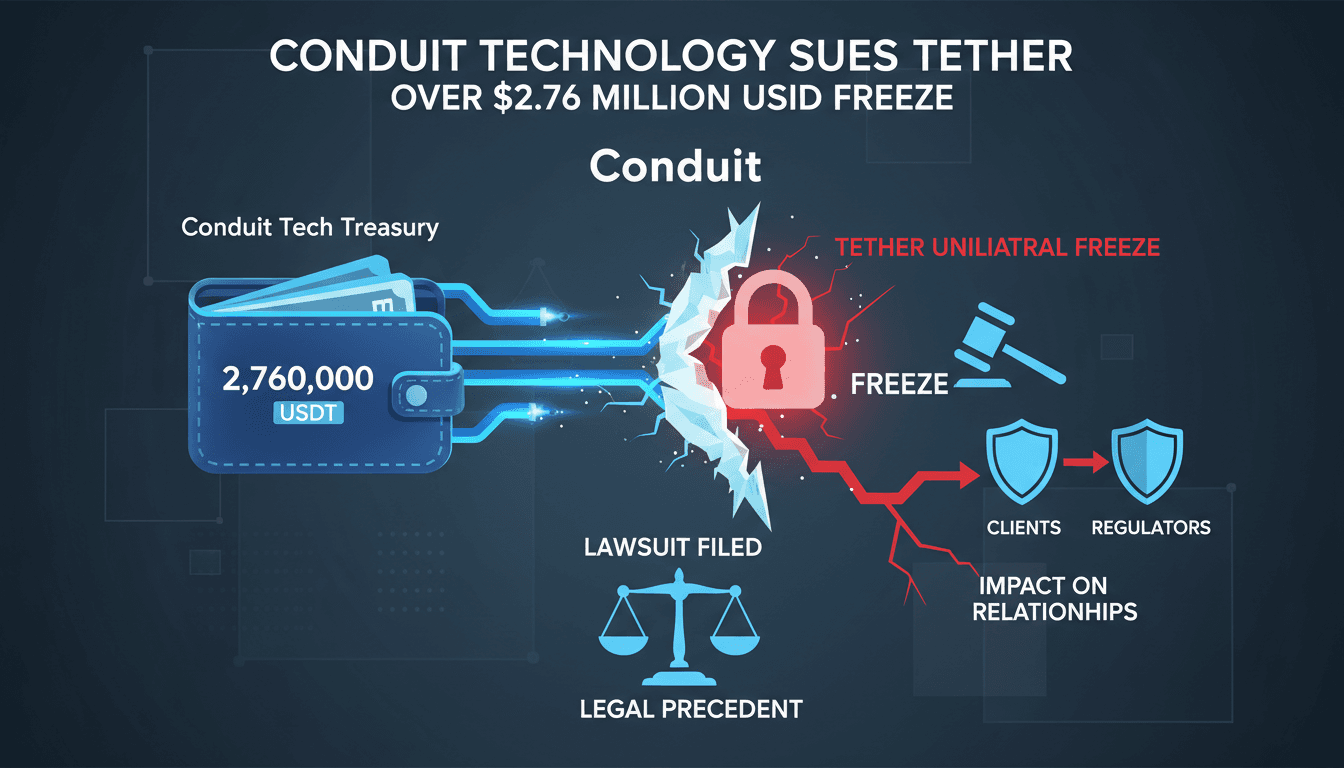
- Conduit Technology, Inc. filed a federal lawsuit against Tether entities on October 5, 2026, over a $2.76 million USDT freeze.
- Tether's T3 Financial Crime Unit allegedly blacklisted Conduit's treasury wallet without a court order, despite no ongoing business ties to the entities under investigation.
- The lawsuit seeks restoration of access to funds, compensatory and punitive damages, and profits earned by Tether on the frozen assets.
The context you actually need
- Tether controls USDT and can freeze wallets under its terms, often in cooperation with law enforcement.
- Conduit created its treasury wallet in May 2025, processing over $1.1 billion in transactions before the freeze.
- The Brazilian Federal Police probe, which led to the freeze, did not include Conduit in its investigations, raising questions about Tether's criteria for blacklisting.
What's really happening
Conduit Technology, a firm specializing in cross-border payments, is embroiled in a legal battle with Tether, a major player in the stablecoin market. The lawsuit stems from Tether's decision to freeze approximately $2.76 million in USDT from Conduit's treasury wallet, a move that Conduit claims was made without proper legal justification. This freeze occurred on September 24, 2025, and has since led to significant operational disruptions for Conduit, including layoffs and potential business closures.
Tether's T3 Financial Crime Unit, which has a history of freezing assets in cooperation with law enforcement, allegedly acted independently in this case. Conduit argues that the Brazilian Federal Police, which is investigating unrelated entities, did not flag its wallet for any action. Instead, Tether's unit applied its own criteria, leading to the blacklisting of Conduit's wallet. This raises critical questions about the authority and discretion exercised by Tether in managing its stablecoin, USDT.
The implications of this lawsuit extend beyond Conduit. It underscores the risks associated with centralized digital currencies, where a single entity can unilaterally freeze assets without due process. This situation could deter businesses from using stablecoins for treasury management, as the fear of sudden asset freezes may outweigh the benefits of using digital currencies for international transactions.
Moreover, the lawsuit is part of a broader scrutiny of Tether's practices. A parallel case in Thailand involves a similar freeze of $42.4 million, indicating that this issue is not isolated. As Tether faces increasing legal challenges, the outcomes of these lawsuits could reshape the regulatory landscape for stablecoins and influence how financial institutions approach digital asset management.
Conduit's complaint seeks not only the restoration of access to its funds but also compensatory and punitive damages, which could set a precedent for future cases involving asset freezes. The case is currently in its early procedural stages, with Tether yet to respond publicly. As the legal proceedings unfold, they will likely attract attention from regulators and industry stakeholders, further complicating the already contentious relationship between traditional finance and digital currencies.
Who feels it first (and how)
- Cross-border payment firms: Increased scrutiny and potential operational disruptions.
- Stablecoin users: Heightened awareness of risks associated with centralized control over digital assets.
- Regulators: Pressure to establish clearer guidelines on asset management and the authority of stablecoin issuers.
What to watch next
- Tether's response: How Tether addresses the lawsuit could influence its operational practices and market perception.
- Regulatory developments: Increased scrutiny from regulators may lead to new guidelines affecting stablecoin operations.
- Market reactions: Watch for any shifts in USDT trading volumes or stability as the lawsuit progresses.
Conduit Technology has filed a lawsuit against Tether for the freeze of $2.76 million in USDT.
The case will attract regulatory attention and could influence future stablecoin regulations.
The potential outcomes of the lawsuit and their impact on Tether's operational practices remain uncertain.
Frequently Asked Questions
- Why it matters?
- This lawsuit highlights the risks associated with centralized control over digital currencies and the potential for unilateral actions that can impact businesses.
- What happened (in 30 seconds)?
- Conduit Technology, Inc. filed a federal lawsuit against Tether entities on October 5, 2026, over a $2.76 million USDT freeze. Tether's T3 Financial Crime Unit allegedly blacklisted Conduit's treasury wallet without a court order, despite no ongoing business ties to the entities under investigation. The lawsuit seeks restoration of access to funds, compensatory and punitive damages, and profits earned by Tether on the frozen assets.
- What's really happening?
- Conduit Technology, a firm specializing in cross-border payments, is embroiled in a legal battle with Tether, a major player in the stablecoin market. The lawsuit stems from Tether's decision to freeze approximately $2.76 million in USDT from Conduit's treasury wallet, a move that Conduit claims was made without proper legal justification. This freeze occurred on September 24, 2025, and has since led to significant operational disruptions for Conduit, including layoffs and potential business clo
- Who feels it first (and how)?
- Cross-border payment firms: Increased scrutiny and potential operational disruptions. Stablecoin users: Heightened awareness of risks associated with centralized control over digital assets. Regulators: Pressure to establish clearer guidelines on asset management and the authority of stablecoin issuers.
- What to watch next?
- Tether's response: How Tether addresses the lawsuit could influence its operational practices and market perception. Regulatory developments: Increased scrutiny from regulators may lead to new guidelines affecting stablecoin operations. Market reactions: Watch for any shifts in USDT trading volumes or stability as the lawsuit progresses.
Real-time updates, analysis, and reports on the blockchain and cryptocurrency sectors.
"Crypto News delivers real-time updates, analysis, and reports on the blockchain and cryptocurrency sectors."
— A47 Editor
Conduit sues Tether over $2.76M frozen USDT
Conduit has initiated legal proceedings against Tether, claiming that the company unlawfully froze $2.76 million in USDT for over a year, linked to a Brazilian investigation. The lawsuit seeks access to the funds, damages, and reserve profits, highli...
Covers Bitcoin plus altcoin news, market updates, and educational resources.
"Bitcoin.com provides news, market data, and guides focused on Bitcoin and the wider crypto industry."
— A47 Editor
Conduit Sues Tether Over a $2.76M USDT Wallet Frozen for a Year
Conduit Technology has initiated legal action against Tether, claiming that the company unlawfully froze $2.76 million in USDT funds for over a year without providing an explanation. This lawsuit is linked to an ongoing investigation by Brazilian aut...
Covers blockchain, cryptocurrency news, project analysis, and market insights.
"Cointelegraph is a leading crypto-focused media outlet known for timely news, analysis, and educational content related to blockchain and digital assets."
— A47 Editor
Conduit sues Tether over allegedly freezing $2.8M without explanation
Conduit has filed a lawsuit against Tether, alleging that the company froze $2.8 million in USDt funds in a wallet linked to an investigation by Brazilian authorities initiated in 2024. The lawsuit claims that Tether did not provide an explanation fo...