
ESMA Directs Crypto Platforms to Halt Services for Non-Compliant Stablecoins by January 2027
Why it matters
This directive could reshape the landscape of stablecoin trading in the EU, impacting liquidity and compliance costs across the market.
What happened (in 30 seconds)
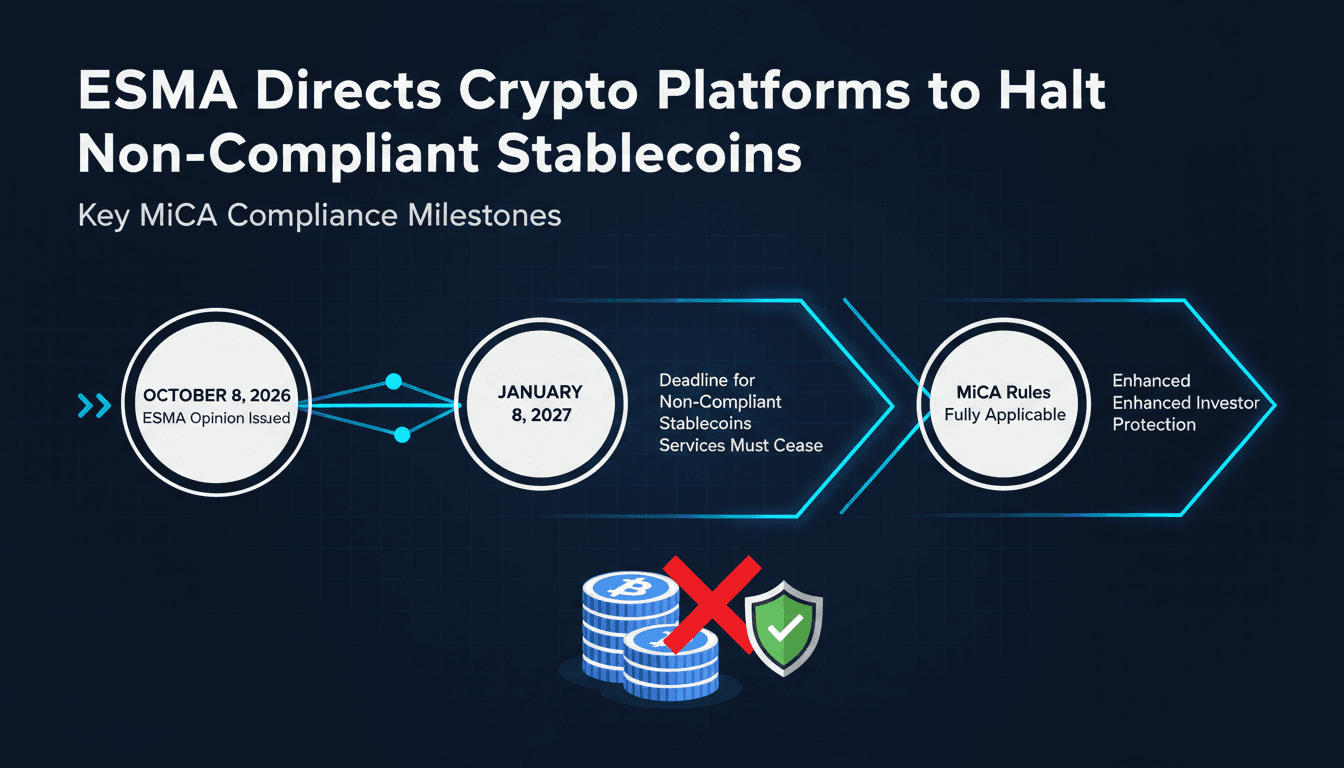
- On October 8, 2026, ESMA issued an opinion requiring MiCA-authorized platforms to stop services for non-compliant stablecoins within three months.
- Platforms must block new client access and remediate existing holdings by January 8, 2027, affecting tokens like USDT and PYUSD.
- This move aims to protect EU investors and uphold regulatory integrity following the full application of MiCA rules.
The context you actually need
- MiCA is the EU's comprehensive crypto framework, which began phased application in 2025, focusing on stablecoin regulations.
- Prior ESMA guidance had already limited services for non-compliant tokens, but the October opinion expands these expectations significantly.
- Concerns over reserve adequacy and governance for stablecoins have prompted stricter oversight as the market grows.
What's really happening
On October 8, 2026, the European Securities and Markets Authority (ESMA) released Opinion ESMA75-113276571-1742, which mandates that MiCA-authorized crypto-asset service providers (CASPs) cease all services related to non-compliant stablecoins. This directive specifically targets asset-referenced tokens (ARTs) and e-money tokens (EMTs) that do not meet the stringent requirements set forth by the Markets in Crypto-Assets Regulation (MiCA).
The opinion requires platforms to block new client access and prevent increased exposure to these non-compliant tokens. This includes a wide range of services such as trading, custody, transfers, and portfolio management. The deadline for remediation of existing client exposures is set for January 8, 2027, meaning platforms must act swiftly to comply. Only time-limited, supervised services for liquidation or withdrawal will be permitted during this period.
The implications of this directive are profound. Platforms like Coinbase have already begun notifying users about withdrawal deadlines for affected tokens, indicating a proactive approach to compliance. Market participants are bracing for a wave of delistings of popular stablecoins like Tether's USDT and PayPal USD (PYUSD) from EU-facing exchanges. This could lead to a significant shift in trading volume towards compliant stablecoins or even offshore venues that do not face the same regulatory scrutiny.
The broader market impact includes increased compliance costs for CASPs, which may lead to consolidation among authorized providers as smaller firms struggle to meet the new standards. The directive also reflects a growing concern among regulators regarding the stability and transparency of stablecoins, particularly as they gain dominance in the crypto market.
As the EU tightens its grip on stablecoin regulation, the ripple effects will likely extend beyond its borders. Global exchanges that serve EU clients may implement geo-blocking measures or delist non-compliant tokens, affecting users in regions like Dubai, where regulatory obligations differ. This could create opportunities for compliant platforms in the UAE to attract EU clients seeking alternatives.
Who feels it first (and how)
- Crypto platforms: MiCA-authorized CASPs must quickly adapt to new compliance requirements.
- Traders and investors: Users of affected stablecoins will face restrictions and potential losses on their holdings.
- Regulatory bodies: National competent authorities (NCAs) will need to enforce the new rules, increasing their oversight responsibilities.
What to watch next
- Compliance adaptations: Monitor how quickly platforms implement changes and communicate with users about affected services.
- Market shifts: Watch for trading volume changes as users migrate to compliant stablecoins or alternative platforms.
- Regulatory responses: Keep an eye on potential statements or actions from EU member states regarding the broader implications of this directive.
The deadline for remediation is January 8, 2027.
Increased compliance costs and potential consolidation among CASPs.
The long-term impact on stablecoin liquidity and market dynamics.
Frequently Asked Questions
- Why it matters?
- This directive could reshape the landscape of stablecoin trading in the EU, impacting liquidity and compliance costs across the market.
- What happened (in 30 seconds)?
- On October 8, 2026, ESMA issued an opinion requiring MiCA-authorized platforms to stop services for non-compliant stablecoins within three months. Platforms must block new client access and remediate existing holdings by January 8, 2027, affecting tokens like USDT and PYUSD. This move aims to protect EU investors and uphold regulatory integrity following the full application of MiCA rules.
- What's really happening?
- On October 8, 2026, the European Securities and Markets Authority (ESMA) released Opinion ESMA75-113276571-1742, which mandates that MiCA-authorized crypto-asset service providers (CASPs) cease all services related to non-compliant stablecoins. This directive specifically targets asset-referenced tokens (ARTs) and e-money tokens (EMTs) that do not meet the stringent requirements set forth by the Markets in Crypto-Assets Regulation (MiCA). The opinion requires platforms to block new client acce
- Who feels it first (and how)?
- Crypto platforms: MiCA-authorized CASPs must quickly adapt to new compliance requirements. Traders and investors: Users of affected stablecoins will face restrictions and potential losses on their holdings. Regulatory bodies: National competent authorities (NCAs) will need to enforce the new rules, increasing their oversight responsibilities.
- What to watch next?
- Compliance adaptations: Monitor how quickly platforms implement changes and communicate with users about affected services. Market shifts: Watch for trading volume changes as users migrate to compliant stablecoins or alternative platforms. Regulatory responses: Keep an eye on potential statements or actions from EU member states regarding the broader implications of this directive.
Covers blockchain, cryptocurrency news, project analysis, and market insights.
"CoinDesk is a well-established cryptocurrency and blockchain news provider, offering comprehensive insights, market data, and industry research."
— A47 Editor
EU securities regulator gives crypto platforms 3 months to remove unauthorized stablecoins
The European Securities and Markets Authority (ESMA) has given cryptocurrency platforms a three-month deadline to cease operations involving stablecoins that do not comply with the Markets in Crypto-Assets (MiCA) regulation. Authorized platforms are ...
Real-time updates, analysis, and reports on the blockchain and cryptocurrency sectors.
"Crypto News delivers real-time updates, analysis, and reports on the blockchain and cryptocurrency sectors."
— A47 Editor
ESMA gives crypto firms 3 months to drop some stablecoins
The European Securities and Markets Authority (ESMA) has mandated that cryptocurrency firms in the EU must cease operations involving stablecoins that do not comply with the Markets in Crypto-Assets (MiCA) regulation within three months. This directi...
Covers blockchain, cryptocurrency news, project analysis, and market insights.
"Cointelegraph is a leading crypto-focused media outlet known for timely news, analysis, and educational content related to blockchain and digital assets."
— A47 Editor
ESMA gives crypto firms 3 months to exit non-compliant stablecoins
The European Securities and Markets Authority (ESMA) has mandated that EU crypto firms cease operations involving stablecoins that do not comply with the Markets in Crypto-Assets (MiCA) framework, providing a three-month window for firms to address t...