
Polygon Integrates TRON into Open Money Stack for Enhanced USDT Payment Solutions
Why it matters
This integration enhances access to stablecoin liquidity, potentially transforming cross-border payment dynamics.
What happened (in 30 seconds)
- Polygon Labs announced the extension of its Open Money Stack to support the TRON network on October 7, 2026.
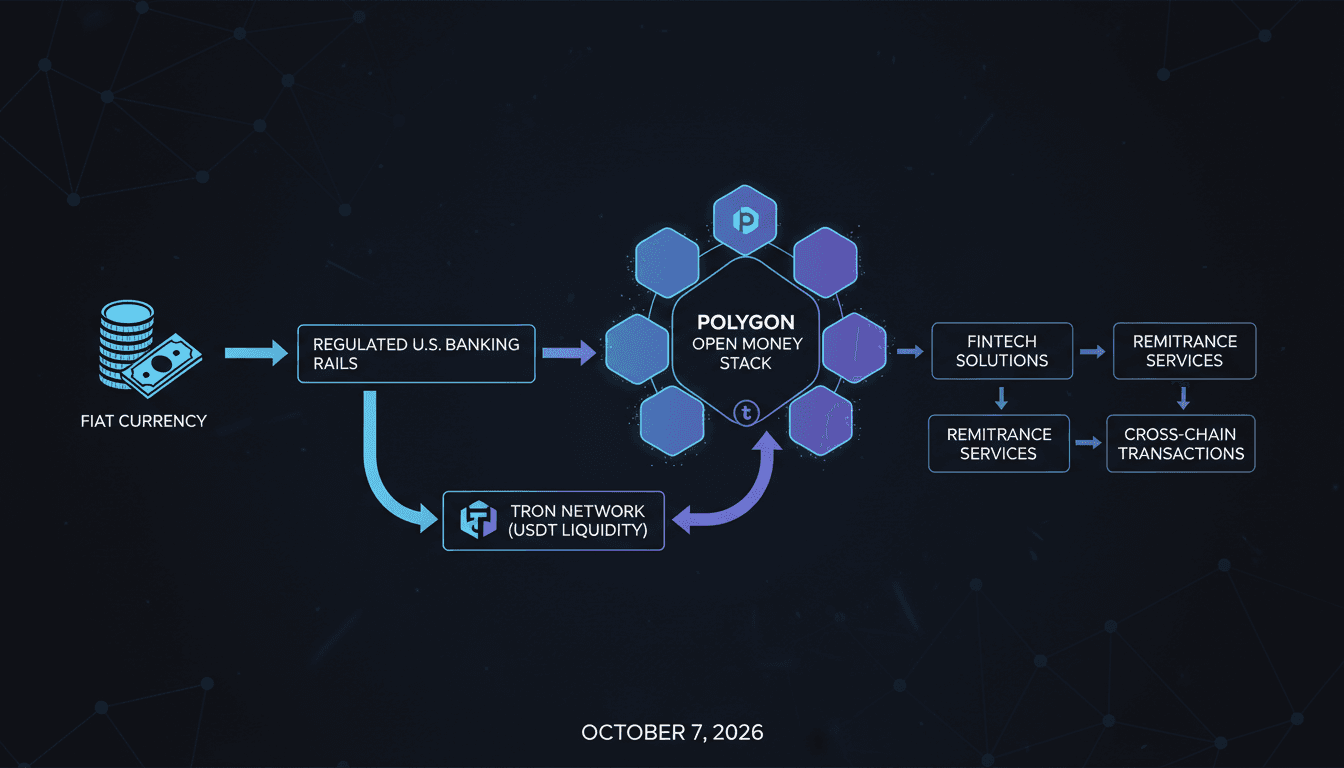
- The integration allows businesses to connect TRON-based USDT flows to U.S. banking rails, facilitating seamless fiat-to-crypto transactions.
- Available from October 8, 2026, the update simplifies operations for fintech and remittance providers by eliminating the need for multiple vendor integrations.
The context you actually need
- Polygon's Open Money Stack is designed to facilitate real-world value transfers, not just crypto transactions, enhancing its utility for businesses.
- TRON has become a primary settlement network for USDT, holding over $94 billion in circulating supply, which is more than half of Tether's total supply across all chains.
- The integration targets businesses in 48 U.S. states, leveraging regulated money transmitter licenses to ensure compliance while expanding operational capabilities.
What's really happening
On October 7, 2026, Polygon Labs announced a significant expansion of its Open Money Stack to include support for the TRON network, a move that could reshape the landscape of digital payments. This integration allows fintech and remittance businesses to connect TRON-based USDT flows directly to regulated U.S. banking rails, facilitating a seamless transition between fiat and cryptocurrency. The announcement, made from Dubai, highlights the growing importance of stablecoins in global finance, particularly in regions where traditional banking systems may be less accessible.
The Open Money Stack serves as an orchestration layer, enabling businesses to accept USDT deposits on TRON, hold balances, and route assets to other chains like Polygon or Ethereum. This is achieved without the need for separate vendor integrations for ramps, wallets, or routing, simplifying the user experience. Polygon Trails, the underlying technology, manages the bridging and execution processes in the background, allowing users to interact with a unified interface rather than navigating multiple systems.
The integration is particularly significant given TRON's dominance in the stablecoin market, with over $94 billion in circulating USDT supply. This represents a substantial liquidity pool that businesses can tap into, enhancing their operational efficiency and reducing transaction costs. By connecting to U.S. banking rails through licensed money transmitter frameworks, businesses can ensure compliance while expanding their service offerings.
Moreover, this integration is positioned as the first phase of TRON support, suggesting that further enhancements and features may be on the horizon. The implications for businesses are profound, as they can now execute payouts to bank accounts, cards, or cash locations through a single, streamlined process. This not only reduces operational complexity but also opens up new avenues for customer engagement and service delivery.
As the digital payment landscape continues to evolve, the integration of Polygon's Open Money Stack with TRON represents a strategic move to capitalize on the growing demand for efficient, cross-border payment solutions. The ability to leverage stablecoin liquidity in conjunction with regulated banking infrastructure could set a new standard for how businesses operate in the fintech space.
Who feels it first (and how)
- Fintech companies: They can streamline operations and reduce costs associated with cross-border transactions.
- Remittance providers: Enhanced access to stablecoin liquidity can improve service offerings and customer satisfaction.
- Businesses in the U.S.: They gain a compliant pathway to integrate cryptocurrency payments into their existing systems.
- Consumers: They may benefit from lower fees and faster transaction times when using USDT for payments.
What to watch next
- Adoption rates: Monitor how quickly businesses integrate this new infrastructure and the impact on transaction volumes.
- Regulatory developments: Keep an eye on any changes in regulations affecting stablecoin usage and cross-border payments.
- Market response: Watch for shifts in the stablecoin market, particularly in USDT's liquidity and usage across different platforms.
The integration is live and operational, allowing businesses to utilize TRON for USDT transactions.
Increased adoption of stablecoins in remittance and payment sectors as businesses seek efficiency.
The long-term impact on regulatory frameworks and how they may evolve in response to increased stablecoin usage.
Frequently Asked Questions
- Why it matters?
- This integration enhances access to stablecoin liquidity, potentially transforming cross-border payment dynamics.
- What happened (in 30 seconds)?
- Polygon Labs announced the extension of its Open Money Stack to support the TRON network on October 7, 2026. The integration allows businesses to connect TRON-based USDT flows to U.S. banking rails, facilitating seamless fiat-to-crypto transactions. Available from October 8, 2026, the update simplifies operations for fintech and remittance providers by eliminating the need for multiple vendor integrations.
- What's really happening?
- On October 7, 2026, Polygon Labs announced a significant expansion of its Open Money Stack to include support for the TRON network, a move that could reshape the landscape of digital payments. This integration allows fintech and remittance businesses to connect TRON-based USDT flows directly to regulated U.S. banking rails, facilitating a seamless transition between fiat and cryptocurrency. The announcement, made from Dubai, highlights the growing importance of stablecoins in global finance, par
- Who feels it first (and how)?
- Fintech companies: They can streamline operations and reduce costs associated with cross-border transactions. Remittance providers: Enhanced access to stablecoin liquidity can improve service offerings and customer satisfaction. Businesses in the U.S.: They gain a compliant pathway to integrate cryptocurrency payments into their existing systems. Consumers: They may benefit from lower fees and faster transaction times when using USDT for payments.
- What to watch next?
- Adoption rates: Monitor how quickly businesses integrate this new infrastructure and the impact on transaction volumes. Regulatory developments: Keep an eye on any changes in regulations affecting stablecoin usage and cross-border payments. Market response: Watch for shifts in the stablecoin market, particularly in USDT's liquidity and usage across different platforms.
Bitcoin news, technical analysis, and forecasts across crypto markets.
"NewsBTC covers Bitcoin news, technical analysis, and forecasts across crypto markets and major blockchain projects."
— A47 Editor
Polygon Opens Its Money Stack To TRON’s $94 Billion USDT Market
Polygon has integrated its Open Money Stack with TRON, enabling payment and fintech businesses to utilize a unified infrastructure for bank transfers, wallets, and cross-chain transactions involving TRC-20 USDT, which currently has a market circulati...
Real-time updates, analysis, and reports on the blockchain and cryptocurrency sectors.
"Crypto News delivers real-time updates, analysis, and reports on the blockchain and cryptocurrency sectors."
— A47 Editor
Polygon Open Money Stack adds TRON support for USDT payments and payouts
Polygon has integrated TRON support into its Open Money Stack, enabling businesses to process USDT payments across various platforms, including fiat accounts and digital wallets, through a single integration. This enhancement allows for a more stream...
Covers blockchain, cryptocurrency news, project analysis, and market insights.
"CoinDesk is a well-established cryptocurrency and blockchain news provider, offering comprehensive insights, market data, and industry research."
— A47 Editor
Polygon taps TRON’s $94 billion stablecoin supply for seamless cross-border transfers
Polygon has announced the integration of TRON's substantial $94 billion stablecoin supply, enabling businesses to conduct seamless cross-border transfers using USDT without the need for wallet providers, bridges, or fiat-ramp operators. This advancem...