
UK High Court Applies Chinese Law to Claims Over Seized Bitcoin
Why it matters
This ruling sets a precedent for how international fraud cases involving cryptocurrency are adjudicated, impacting victims' recovery prospects.
What happened (in 30 seconds)
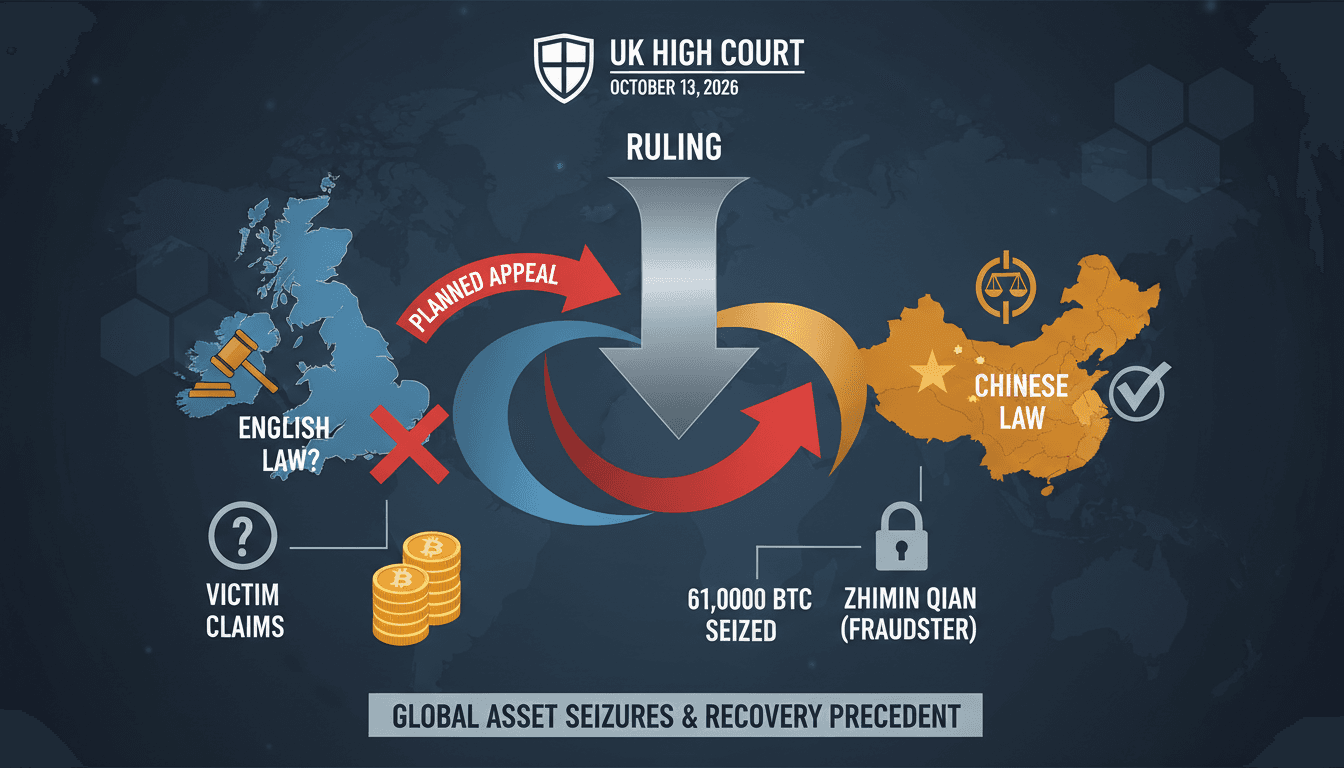
- On October 13, 2026, the UK High Court ruled that Chinese law governs claims to approximately 61,000 BTC seized from fraudster Zhimin Qian.
- The ruling strengthens the UK government's position in retaining the assets, valued at around £3.8 billion ($5 billion), under the Proceeds of Crime Act.
- Victims' lawyers plan to appeal, as the decision narrows their recovery options and raises questions about the application of Chinese law.
The context you actually need
- Zhimin Qian operated a Ponzi scheme that defrauded over 128,000 investors in China from 2014 to 2017, converting proceeds into Bitcoin.
- The Metropolitan Police seized the Bitcoin in London in 2018 after Qian fled to the UK, where she was later convicted of money laundering.
- Victims initiated civil claims under UK law to assert ownership of the seized Bitcoin, leading to the recent court ruling on applicable law.
What's really happening
The UK High Court's ruling on October 13, 2026, is a significant development in the intersection of cryptocurrency and international law. The decision stems from a complex case involving Zhimin Qian, who orchestrated a large-scale Ponzi scheme that defrauded thousands of investors in China. After fleeing to the UK, Qian was convicted of money laundering, leading to the seizure of approximately 61,000 BTC by the Metropolitan Police in 2018.
The court's determination that Chinese law governs the claims made by victims is pivotal. It reflects the court's recognition that the fraud, payments, and economic harm occurred in China, thus aligning the legal framework with the jurisdiction where the crime originated. This ruling does not resolve the ultimate ownership of the Bitcoin or the specifics of Chinese law but significantly narrows the recovery prospects for the victims.
Victims had argued for the application of English law or a hybrid approach, which would have potentially favored their claims. However, the court sided with prosecutors advocating for Chinese law, which may not provide the same level of protection or recovery options for the victims. This ruling underscores the complexities of cross-border legal issues in cryptocurrency cases, where the jurisdiction of the crime can dictate the applicable laws and recovery processes.
The implications of this ruling extend beyond the immediate case. It sets a precedent for how similar cases may be handled in the future, particularly as cryptocurrency continues to gain traction globally. Legal representatives for the victims have indicated plans to appeal the ruling, which could lead to further legal battles and interpretations of both UK and Chinese law. The outcome of these appeals will be crucial in determining the future landscape of asset recovery in international fraud cases involving cryptocurrency.
Who feels it first (and how)
- Victims of the Ponzi scheme: They face limited recovery options under Chinese law, impacting their financial recovery.
- Legal professionals: Lawyers specializing in international law and cryptocurrency will need to navigate new complexities in cross-border claims.
- Investors in cryptocurrency: This ruling may influence future investments and legal frameworks surrounding asset recovery in crypto markets.
What to watch next
- Appeal outcomes: The victims' legal representatives plan to appeal the ruling, which could alter the legal landscape for cryptocurrency claims.
- Legislative changes: Watch for potential changes in UK or international law regarding cryptocurrency and asset recovery as a response to this case.
- Market reactions: Monitor how this ruling affects investor confidence and market dynamics in the cryptocurrency sector.
The UK High Court ruled that Chinese law governs the claims to the seized Bitcoin.
Victims will appeal the ruling, potentially leading to further legal proceedings.
The long-term implications for international cryptocurrency law and asset recovery processes remain uncertain.
Frequently Asked Questions
- Why it matters?
- This ruling sets a precedent for how international fraud cases involving cryptocurrency are adjudicated, impacting victims' recovery prospects.
- What happened (in 30 seconds)?
- On October 13, 2026, the UK High Court ruled that Chinese law governs claims to approximately 61,000 BTC seized from fraudster Zhimin Qian. The ruling strengthens the UK government's position in retaining the assets, valued at around £3.8 billion ($5 billion), under the Proceeds of Crime Act. Victims' lawyers plan to appeal, as the decision narrows their recovery options and raises questions about the application of Chinese law.
- What's really happening?
- The UK High Court's ruling on October 13, 2026, is a significant development in the intersection of cryptocurrency and international law. The decision stems from a complex case involving Zhimin Qian, who orchestrated a large-scale Ponzi scheme that defrauded thousands of investors in China. After fleeing to the UK, Qian was convicted of money laundering, leading to the seizure of approximately 61,000 BTC by the Metropolitan Police in 2018. The court's determination that Chinese law governs the
- Who feels it first (and how)?
- Victims of the Ponzi scheme: They face limited recovery options under Chinese law, impacting their financial recovery. Legal professionals: Lawyers specializing in international law and cryptocurrency will need to navigate new complexities in cross-border claims. Investors in cryptocurrency: This ruling may influence future investments and legal frameworks surrounding asset recovery in crypto markets.
- What to watch next?
- Appeal outcomes: The victims' legal representatives plan to appeal the ruling, which could alter the legal landscape for cryptocurrency claims. Legislative changes: Watch for potential changes in UK or international law regarding cryptocurrency and asset recovery as a response to this case. Market reactions: Monitor how this ruling affects investor confidence and market dynamics in the cryptocurrency sector.
Covers blockchain, cryptocurrency news, project analysis, and market insights.
"CoinDesk is a well-established cryptocurrency and blockchain news provider, offering comprehensive insights, market data, and industry research."
— A47 Editor
UK court ruling boosts government’s chances of keeping $5 billion in seized bitcoin
A UK court ruling has strengthened the government's position regarding the retention of 61,000 Bitcoin, valued at approximately $5 billion, which were seized by the Metropolitan Police during an investigation into Zhimin Qian, who has pleaded guilty ...
Covers blockchain, cryptocurrency news, project analysis, and market insights.
"Cointelegraph is a leading crypto-focused media outlet known for timely news, analysis, and educational content related to blockchain and digital assets."
— A47 Editor
Chinese fraud victims lose key court battle over 61,000 Bitcoin
Chinese fraud victims have encountered a significant legal setback as a UK court has ruled that their claims regarding the recovery of 61,000 seized Bitcoin are governed by Chinese law. This decision complicates their efforts to reclaim the cryptocur...
Real-time updates, analysis, and reports on the blockchain and cryptocurrency sectors.
"Crypto News delivers real-time updates, analysis, and reports on the blockchain and cryptocurrency sectors."
— A47 Editor
Bitcoin fraud victims may lose gains under UK court ruling
A recent ruling by the UK High Court has determined that claims over more than 61,000 Bitcoin will be governed by Chinese law, jeopardizing potential gains for approximately 16,000 victims of fraud, as reported by Caixin. This judgment, issued on Oct...