
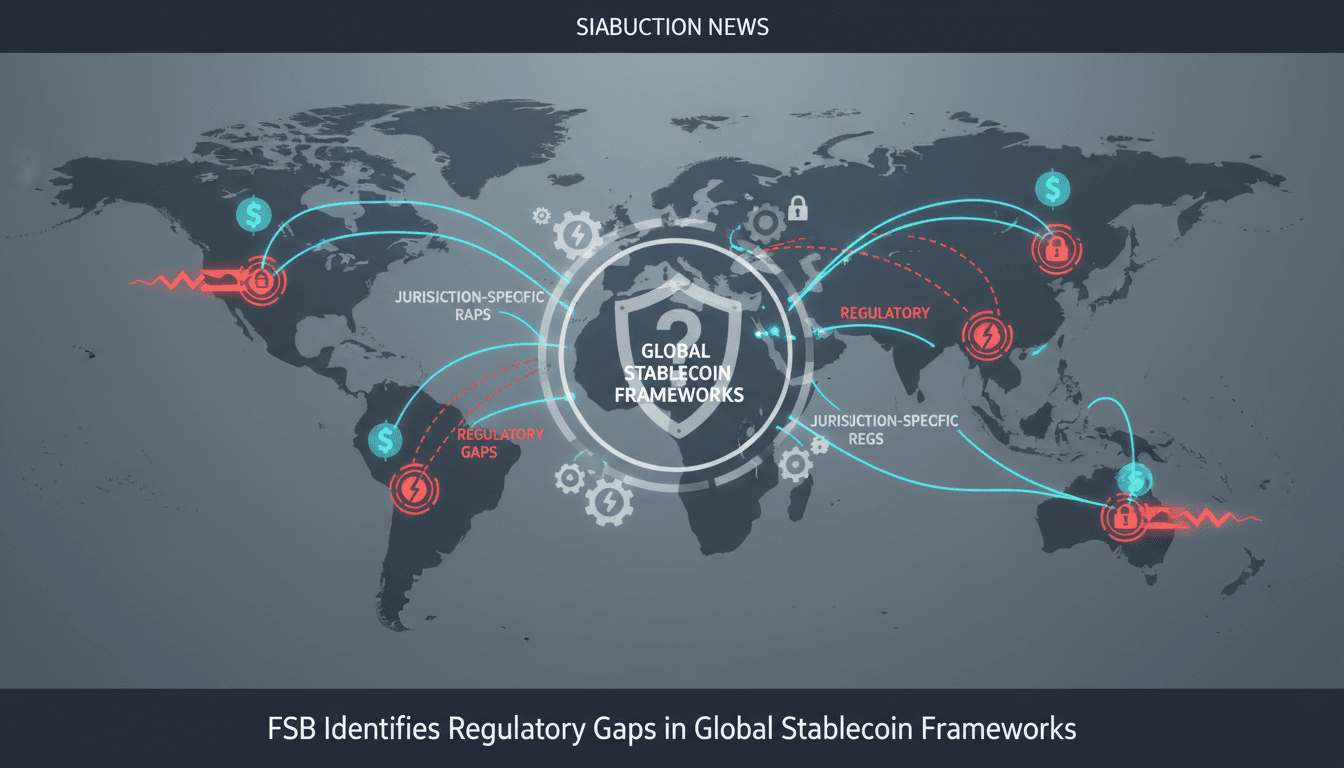
FSB Identifies Regulatory Gaps in Global Stablecoin Frameworks
Why it matters
The Financial Stability Board's findings highlight significant regulatory gaps that could impact the stability of financial systems globally.
What happened (in 30 seconds)
- The Financial Stability Board (FSB) released a note on October 12, 2026, analyzing vulnerabilities in global stablecoin arrangements.
- Approximately $300 billion in dollar-pegged stablecoins circulate across jurisdictions, complicating regulatory oversight.
- Key issues identified include localized redemption pressures and insufficient data on holder locations, which could propagate financial stress.
The context you actually need
- Stablecoin market capitalization reached around $300 billion by mid-2026, with 99% pegged to the U.S. dollar, indicating a significant reliance on this asset class.
- Regulatory frameworks are evolving globally, with jurisdictions like the EU and UAE implementing dedicated regulations to address stablecoin risks.
- Previous FSB recommendations in 2023 highlighted concerns about the systemic importance of stablecoins, prompting ongoing monitoring and data coordination efforts.
What's really happening
The FSB's report sheds light on the complexities of cross-border stablecoin operations, revealing a landscape fraught with regulatory fragmentation. As stablecoins gain traction, particularly those pegged to the U.S. dollar, their market capitalization has surged to approximately $300 billion. This growth is driven by their use in crypto trading, value storage in emerging economies, and potential payment applications. However, the FSB identifies critical vulnerabilities that arise from the decentralized nature of these assets.
One of the primary concerns is the mismatch between the 24/7 mobility of stablecoins and the jurisdiction-specific banking and legal frameworks that govern them. While stablecoins can be transferred globally at any time, the underlying reserve assets and redemption obligations are often tied to specific legal systems. This creates localized pressures during times of financial stress, as holders may rush to redeem their tokens in jurisdictions that may not have the capacity to handle such demands.
Moreover, the report highlights that issuers often lack visibility into the geographic distribution of their holders and the sources of redemption demand. This opacity can lead to stress propagation through various channels, including reserve asset sales, bank deposit withdrawals, and fluctuations in foreign exchange markets. While secondary market arbitrage can stabilize prices under normal conditions, it may prove inadequate during periods of heightened volatility.
The FSB emphasizes the need for enhanced monitoring metrics and international cooperation to address these vulnerabilities. Rather than proposing new binding licensing regimes, the report advocates for improved data sharing and geographic insights into holdings and reserves. This approach aims to empower regulators to better understand and mitigate risks associated with cross-border stablecoin operations.
As jurisdictions like the United States, European Union, and United Arab Emirates advance their regulatory frameworks, the FSB's findings serve as a critical input for ongoing discussions about the future of stablecoin oversight. The emphasis on data gaps and reserve quality will likely shape the regulatory landscape in the coming years, as authorities seek to balance innovation with financial stability.
Who feels it first (and how)
- Stablecoin issuers: They face increased scrutiny and potential regulatory changes affecting their operations.
- Financial regulators: They must adapt to the complexities of monitoring cross-border transactions and holder data.
- Investors and users: Individuals and businesses using stablecoins may experience disruptions or changes in access to services.
- Emerging economies: Countries relying on stablecoins for value storage may face heightened risks during financial stress.
What to watch next
- Regulatory developments: Keep an eye on how jurisdictions implement new frameworks in response to the FSB's findings, as this will impact stablecoin operations.
- Market reactions: Monitor how stablecoin prices and liquidity respond to regulatory changes and potential stress events in the financial system.
- Data transparency initiatives: Watch for efforts aimed at improving data sharing and geographic insights among stablecoin issuers and regulators.
The stablecoin market is significant, with a $300 billion valuation and a reliance on the U.S. dollar.
Regulatory frameworks will continue to evolve, focusing on data transparency and cross-border cooperation.
The long-term impact of these vulnerabilities on market stability and user access remains uncertain.
Frequently Asked Questions
- Why it matters?
- The Financial Stability Board's findings highlight significant regulatory gaps that could impact the stability of financial systems globally.
- What happened (in 30 seconds)?
- The Financial Stability Board (FSB) released a note on October 12, 2026, analyzing vulnerabilities in global stablecoin arrangements. Approximately $300 billion in dollar-pegged stablecoins circulate across jurisdictions, complicating regulatory oversight. Key issues identified include localized redemption pressures and insufficient data on holder locations, which could propagate financial stress.
- What's really happening?
- The FSB's report sheds light on the complexities of cross-border stablecoin operations, revealing a landscape fraught with regulatory fragmentation. As stablecoins gain traction, particularly those pegged to the U.S. dollar, their market capitalization has surged to approximately $300 billion. This growth is driven by their use in crypto trading, value storage in emerging economies, and potential payment applications. However, the FSB identifies critical vulnerabilities that arise from the decen
- Who feels it first (and how)?
- Stablecoin issuers: They face increased scrutiny and potential regulatory changes affecting their operations. Financial regulators: They must adapt to the complexities of monitoring cross-border transactions and holder data. Investors and users: Individuals and businesses using stablecoins may experience disruptions or changes in access to services. Emerging economies: Countries relying on stablecoins for value storage may face heightened risks during financial stress.
- What to watch next?
- Regulatory developments: Keep an eye on how jurisdictions implement new frameworks in response to the FSB's findings, as this will impact stablecoin operations. Market reactions: Monitor how stablecoin prices and liquidity respond to regulatory changes and potential stress events in the financial system. Data transparency initiatives: Watch for efforts aimed at improving data sharing and geographic insights among stablecoin issuers and regulators.
Real-time updates, analysis, and reports on the blockchain and cryptocurrency sectors.
"Crypto News delivers real-time updates, analysis, and reports on the blockchain and cryptocurrency sectors."
— A47 Editor
Stablecoins are global. Their oversight still stops at borders
A recent note from the Financial Stability Board highlights the complexities of stablecoins, which can be traded across borders and blockchains while their reserves may be held in different jurisdictions. This situation raises concerns about regulato...
Covers blockchain, cryptocurrency news, project analysis, and market insights.
"CoinDesk is a well-established cryptocurrency and blockchain news provider, offering comprehensive insights, market data, and industry research."
— A47 Editor
Global financial watchdog calls for cross-border information sharing, planning for stablecoin crisis
The global financial watchdog has called for enhanced cross-border information sharing and proactive planning to address potential crises related to stablecoins, which can complicate crisis responses when reserves are trapped in one jurisdiction whil...
Covers blockchain, cryptocurrency news, project analysis, and market insights.
"Cointelegraph is a leading crypto-focused media outlet known for timely news, analysis, and educational content related to blockchain and digital assets."
— A47 Editor
Global watchdog flags stablecoin risks, AI threats ahead of G20
The Financial Stability Board has raised alarms regarding the risks associated with cross-border stablecoins and AI-related cybersecurity threats, urging G20 policymakers to implement stronger safeguards ahead of the upcoming summit. This warning hig...