
Financial Stability Board Highlights Oversight Gaps in Global Stablecoin Systems
Why it matters
The systemic risks associated with stablecoins can impact liquidity and financial stability across jurisdictions.
What happened (in 30 seconds)
- The Financial Stability Board (FSB) published a note on October 12, 2026, highlighting vulnerabilities in global stablecoin arrangements.
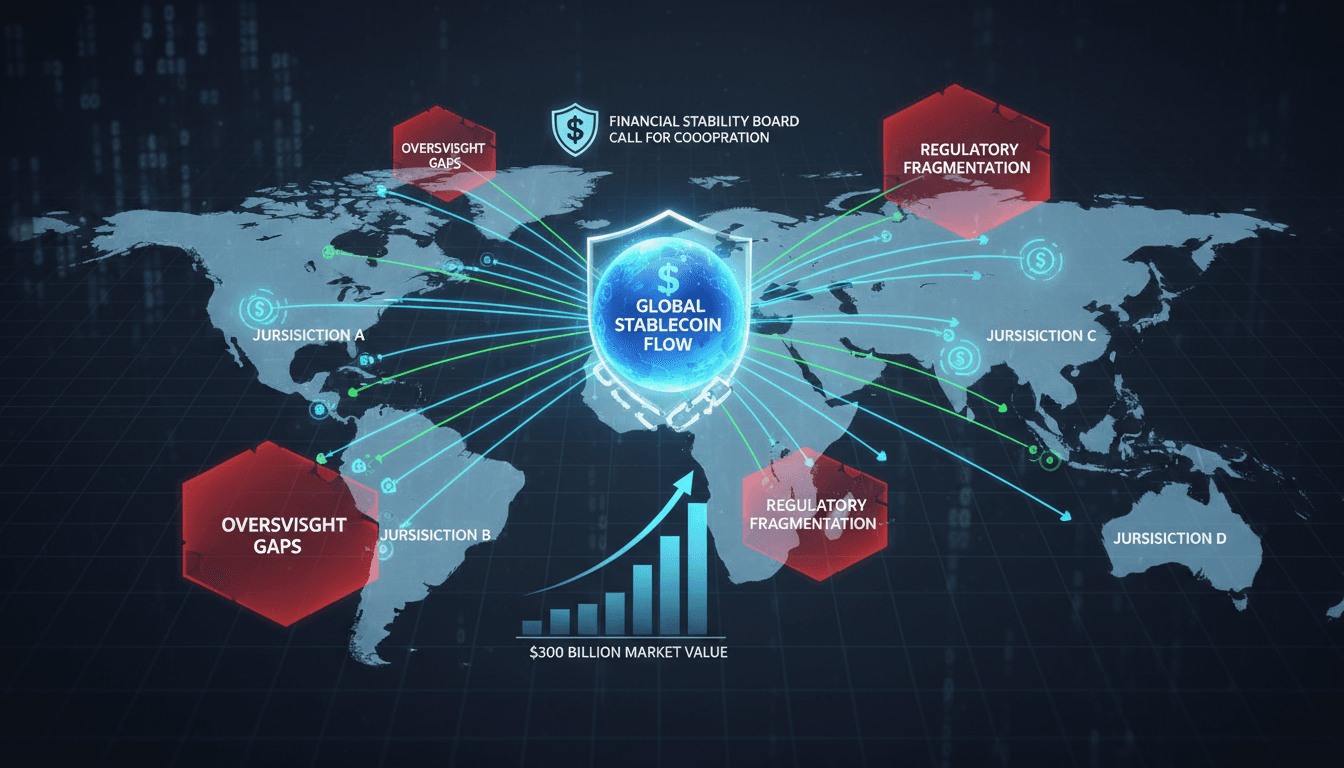
- Dollar-pegged stablecoins reached a market value of approximately $300 billion by mid-2026, raising concerns about their cross-border circulation.
- Localized pressures from redemption demands can create financial instability, as issuers lack visibility into holder locations and redemption geography.
The context you actually need
- Stablecoins are integral to the crypto market, primarily used for trading and liquidity, with 99% pegged to the U.S. dollar.
- Previous FSB recommendations in 2023 aimed to establish a regulatory framework, but implementation remains inconsistent globally.
- The October 2026 note emphasizes the need for improved data sharing and monitoring rather than new regulatory frameworks.
What's really happening
The FSB's recent note sheds light on the complexities of stablecoin arrangements, particularly their cross-border implications. As stablecoins have surged to a market value of around $300 billion, their role in the financial ecosystem has become increasingly significant. However, the decentralized nature of these assets creates unique challenges for oversight and regulation.
One of the core issues identified is that while stablecoins circulate globally, the reserves backing them and the obligations for redemption are often tied to specific jurisdictions. This creates a mismatch where localized redemption pressures can arise without the ability for a single regulatory authority to observe or mitigate them effectively. For instance, if a large number of holders in one region decide to redeem their stablecoins simultaneously, it could lead to liquidity issues that ripple through the financial system, affecting banks and payment systems that rely on these assets.
Moreover, the FSB highlights that affiliated issuers may share liability while maintaining reserves in different jurisdictions. This structural design can exacerbate risks during periods of market stress, as the interconnectedness of these issuers may not be transparent to regulators. The lack of reliable data on holder geography and beneficial ownership further complicates the situation, as public blockchain records do not provide sufficient insight into the actual flow of funds or the purpose of transfers.
While secondary markets and arbitrage can help stabilize prices and mitigate de-pegging risks, the effectiveness of these mechanisms is contingent on access to redemption, the timing of settlements, and the quality of reserves held by issuers. The FSB's report does not claim that systemic events have occurred at scale but warns of potential spillovers through reserve asset sales and bank deposit withdrawals.
In response to these findings, the FSB advocates for enhanced data sharing and aggregate reporting from issuers and intermediaries. The focus is on developing consistent metrics that can provide a clearer picture of the risks associated with stablecoins, rather than imposing new prescriptive rules that may not address the underlying issues.
Who feels it first (and how)
- Regulators: Struggle to monitor and manage risks associated with cross-border stablecoin transactions.
- Financial institutions: May face liquidity challenges if redemption pressures arise unexpectedly.
- Stablecoin issuers: Need to adapt to evolving regulatory frameworks and improve transparency in their operations.
- Investors and users: Could experience volatility in stablecoin values and access issues during market stress.
What to watch next
- Regulatory developments: Monitor how jurisdictions like the EU, UAE, and Singapore implement frameworks to address stablecoin risks, as these could set precedents for global standards.
- Market liquidity: Keep an eye on secondary market activities and redemption mechanisms, as shifts here could indicate broader market stability or instability.
- Data coordination efforts: Watch for initiatives aimed at improving data sharing among issuers and regulators, which could enhance oversight and risk management.
The FSB's report highlights significant vulnerabilities in cross-border stablecoin arrangements.
Continued regulatory focus on data coordination and monitoring metrics rather than new binding rules.
The potential for systemic events arising from localized redemption pressures remains uncertain.
Frequently Asked Questions
- Why it matters?
- The systemic risks associated with stablecoins can impact liquidity and financial stability across jurisdictions.
- What happened (in 30 seconds)?
- The Financial Stability Board (FSB) published a note on October 12, 2026, highlighting vulnerabilities in global stablecoin arrangements. Dollar-pegged stablecoins reached a market value of approximately $300 billion by mid-2026, raising concerns about their cross-border circulation. Localized pressures from redemption demands can create financial instability, as issuers lack visibility into holder locations and redemption geography.
- What's really happening?
- The FSB's recent note sheds light on the complexities of stablecoin arrangements, particularly their cross-border implications. As stablecoins have surged to a market value of around $300 billion, their role in the financial ecosystem has become increasingly significant. However, the decentralized nature of these assets creates unique challenges for oversight and regulation. One of the core issues identified is that while stablecoins circulate globally, the reserves backing them and the obligat
- Who feels it first (and how)?
- Regulators: Struggle to monitor and manage risks associated with cross-border stablecoin transactions. Financial institutions: May face liquidity challenges if redemption pressures arise unexpectedly. Stablecoin issuers: Need to adapt to evolving regulatory frameworks and improve transparency in their operations. Investors and users: Could experience volatility in stablecoin values and access issues during market stress.
- What to watch next?
- Regulatory developments: Monitor how jurisdictions like the EU, UAE, and Singapore implement frameworks to address stablecoin risks, as these could set precedents for global standards. Market liquidity: Keep an eye on secondary market activities and redemption mechanisms, as shifts here could indicate broader market stability or instability. Data coordination efforts: Watch for initiatives aimed at improving data sharing among issuers and regulators, which could enhance oversight and risk ma
Real-time updates, analysis, and reports on the blockchain and cryptocurrency sectors.
"Crypto News delivers real-time updates, analysis, and reports on the blockchain and cryptocurrency sectors."
— A47 Editor
Stablecoins are global. Their oversight still stops at borders
A recent note from the Financial Stability Board highlights the complexities of stablecoins, which can be traded across borders and blockchains while their reserves may be held in different jurisdictions. This situation raises concerns about regulato...
Covers blockchain, cryptocurrency news, project analysis, and market insights.
"CoinDesk is a well-established cryptocurrency and blockchain news provider, offering comprehensive insights, market data, and industry research."
— A47 Editor
Global financial watchdog calls for cross-border information sharing, planning for stablecoin crisis
The global financial watchdog has called for enhanced cross-border information sharing and proactive planning to address potential crises related to stablecoins, which can complicate crisis responses when reserves are trapped in one jurisdiction whil...
Covers blockchain, cryptocurrency news, project analysis, and market insights.
"Cointelegraph is a leading crypto-focused media outlet known for timely news, analysis, and educational content related to blockchain and digital assets."
— A47 Editor
Global watchdog flags stablecoin risks, AI threats ahead of G20
The Financial Stability Board has raised alarms regarding the risks associated with cross-border stablecoins and AI-related cybersecurity threats, urging G20 policymakers to implement stronger safeguards ahead of the upcoming summit. This warning hig...