
ASIC Proposes Stricter Standards for Australian Crypto Exchanges Ahead of 2027 Licensing Regime
If you engage with cryptocurrency exchanges, these new regulations could significantly impact your asset security and trading experience.
Why it matters
The proposed standards aim to enhance consumer protection and market integrity in the rapidly evolving digital asset landscape.
What happened (in 30 seconds)
- On October 15, 2026, ASIC launched a public consultation on stricter operational standards for cryptocurrency exchanges.
- The proposals include new capital requirements, with a maximum of AU$14 million in net tangible assets for operators holding client assets directly.
- Consultation submissions are open until November 27, 2026, with final guidance expected in March 2027.
The context you actually need
- The Corporations Amendment (Digital Assets Framework) Act 2026 was enacted to address regulatory gaps exposed by the 2022 FTX collapse, which impacted around 30,000 Australian customers.
- ASIC's previous guidance included sector-wide no-action relief and extended transitional deadlines for license applications until September 30, 2026.
- The new standards are designed to ensure the safeguarding of customer assets, improve trading transparency, and establish minimum financial resources for exchanges.
What's really happening
The Australian Securities and Investments Commission (ASIC) is taking significant steps to regulate the cryptocurrency sector more effectively. The release of Consultation Paper 392 marks a pivotal moment in the evolution of digital asset regulation in Australia. The proposed standards are not just about compliance; they reflect a broader shift towards integrating digital assets into the existing financial services framework, which has been largely unregulated until now.
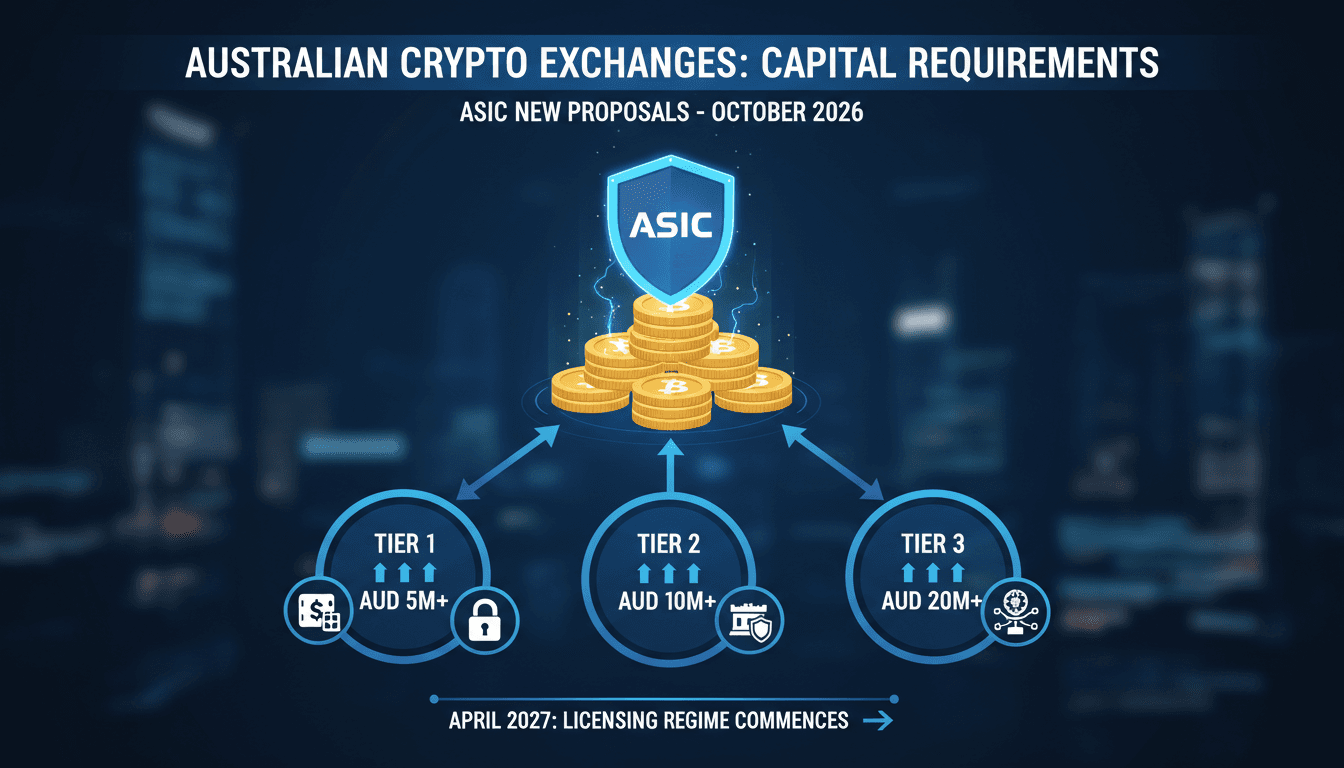
The core of ASIC's proposal revolves around three capital requirement models. The most stringent model requires operators holding client assets directly to maintain AU$14 million in net tangible assets. This is a substantial increase aimed at ensuring that exchanges have sufficient financial backing to protect customer assets. For those using qualified third-party custodians, the minimum requirement can be as low as AU$200,000, which provides a pathway for smaller operators to remain competitive while still adhering to safety standards.
The implications of these proposals are profound. By mandating the separation and safeguarding of customer assets, ASIC is addressing one of the critical vulnerabilities that led to the FTX collapse. The new standards also emphasize trading transparency, aiming to prevent market manipulation and conflicts of interest. This is crucial for building trust among consumers who have been wary of the crypto market due to past failures.
Moreover, the consultation period allows industry stakeholders to voice their opinions, which could lead to adjustments in the final regulations. The deadline for submissions is November 27, 2026, and the final guidance is expected in March 2027, just ahead of the framework's official commencement on April 8, 2027. This timeline is critical for existing operators, as they must apply for or vary licenses by October 7, 2027, to continue their activities legally.
The broader market reaction has been cautiously optimistic. Industry participants, including the Digital Economy Council of Australia and OKX Australia, have noted that these proposals align with global standards and could lead to market consolidation. While no immediate market shifts have been reported, the emphasis on consumer protection is likely to reshape the competitive landscape, favoring compliant operators.
Who feels it first (and how)
- Crypto exchanges: They will need to reassess their financial structures to meet new capital requirements.
- Consumers: Increased protections could enhance trust and security in trading digital assets.
- Investors: Those investing in Australian crypto platforms may see changes in the operational stability of exchanges.
- Regulatory bodies: Other countries may look to Australia's framework as a model for their own regulations.
What to watch next
- Final guidance release in March 2027: This will clarify the exact requirements and could influence market behavior.
- Industry responses during the consultation period: Feedback from stakeholders may lead to adjustments in the proposed standards.
- Compliance rates post-implementation: Monitoring how many exchanges meet the new requirements will indicate the framework's effectiveness.
The consultation period is open until November 27, 2026.
Increased market consolidation as smaller operators may struggle to meet new capital requirements.
The full impact on consumer behavior and trust in crypto exchanges post-regulation.
Frequently Asked Questions
- Why it matters?
- The proposed standards aim to enhance consumer protection and market integrity in the rapidly evolving digital asset landscape.
- What happened (in 30 seconds)?
- On October 15, 2026, ASIC launched a public consultation on stricter operational standards for cryptocurrency exchanges. The proposals include new capital requirements, with a maximum of AU$14 million in net tangible assets for operators holding client assets directly. Consultation submissions are open until November 27, 2026, with final guidance expected in March 2027.
- What's really happening?
- The Australian Securities and Investments Commission (ASIC) is taking significant steps to regulate the cryptocurrency sector more effectively. The release of Consultation Paper 392 marks a pivotal moment in the evolution of digital asset regulation in Australia. The proposed standards are not just about compliance; they reflect a broader shift towards integrating digital assets into the existing financial services framework, which has been largely unregulated until now. The core of ASIC's prop
- Who feels it first (and how)?
- Crypto exchanges: They will need to reassess their financial structures to meet new capital requirements. Consumers: Increased protections could enhance trust and security in trading digital assets. Investors: Those investing in Australian crypto platforms may see changes in the operational stability of exchanges. Regulatory bodies: Other countries may look to Australia's framework as a model for their own regulations.
- What to watch next?
- Final guidance release in March 2027: This will clarify the exact requirements and could influence market behavior. Industry responses during the consultation period: Feedback from stakeholders may lead to adjustments in the proposed standards. Compliance rates post-implementation: Monitoring how many exchanges meet the new requirements will indicate the framework's effectiveness.
Covers blockchain, cryptocurrency news, project analysis, and market insights.
"CoinDesk is a well-established cryptocurrency and blockchain news provider, offering comprehensive insights, market data, and industry research."
— A47 Editor
Australia’s financial watchdog seeks stiffer rules for crypto exchanges ahead of licensing deadline
Australia's financial regulator, the Australian Securities and Investments Commission (ASIC), has proposed stricter regulations for cryptocurrency exchanges to enhance user protection and ensure financial stability ahead of a licensing deadline. This...
Real-time updates, analysis, and reports on the blockchain and cryptocurrency sectors.
"Crypto News delivers real-time updates, analysis, and reports on the blockchain and cryptocurrency sectors."
— A47 Editor
Australia proposes new crypto exchange rules for 2027
Australia has proposed new regulations for cryptocurrency exchanges, which will cover licensing, trading practices, customer fund management, and capital requirements, with public feedback due by November 27, 2026, ahead of a planned rollout in 2027.
Covers blockchain, cryptocurrency news, project analysis, and market insights.
"Cointelegraph is a leading crypto-focused media outlet known for timely news, analysis, and educational content related to blockchain and digital assets."
— A47 Editor
Australia seeks feedback on crypto platform rules ahead of 2027 rollout
Australia is seeking public feedback on proposed regulations for cryptocurrency platforms ahead of a planned rollout in 2027, following the passage of digital asset legislation by Parliament in April. The Australian securities regulator is now outlin...