
Microsoft and Alphabet Lead Objections Against Tokenized Share Trading on OKXICE
Why it matters
This development signals significant hesitance from major corporations regarding the adoption of blockchain technology in traditional equity markets.
What happened (in 30 seconds)
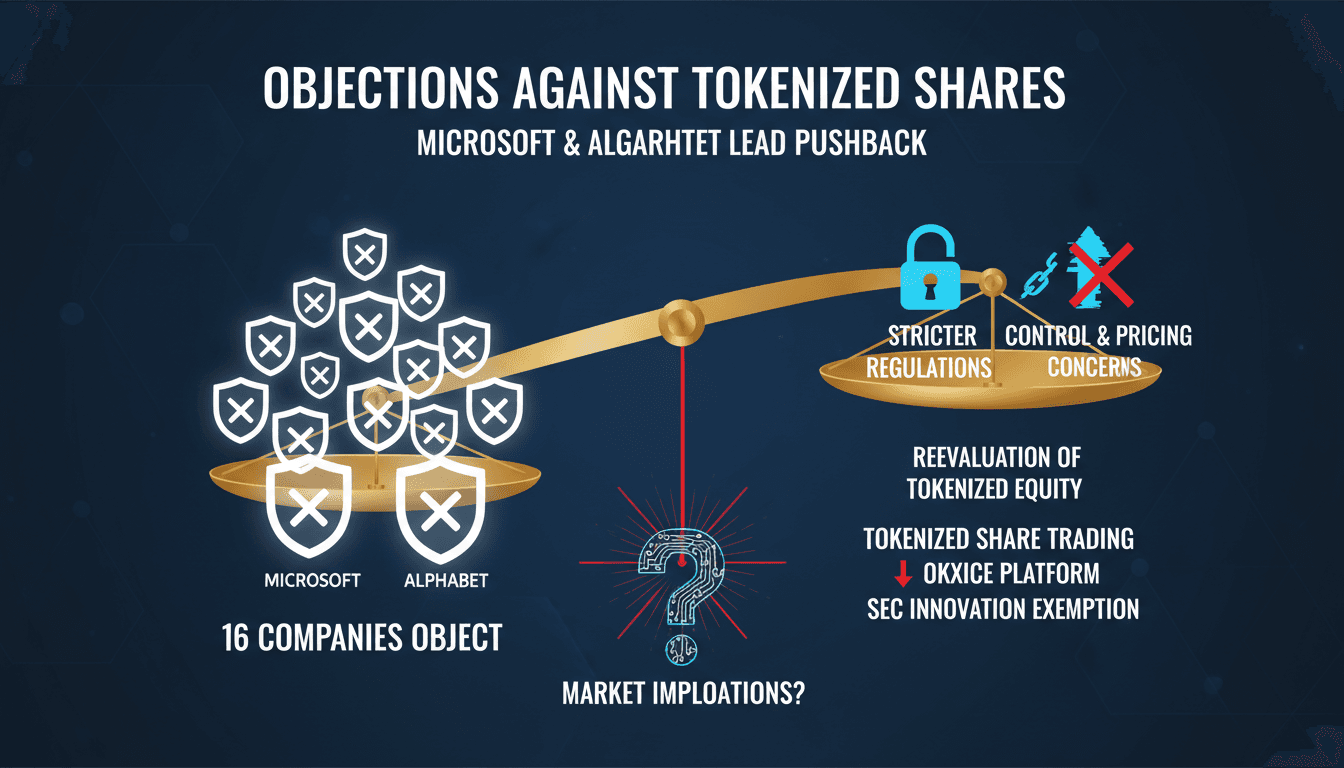
- Microsoft and Alphabet joined 14 other companies in objecting to the trading of tokenized versions of their shares on the OKXICE platform.
- The U.S. SEC's framework allows issuers to opt-out of tokenized trading, which has now removed 17 stock symbols from the planned offering.
- Concerns raised include control over pricing mechanisms and the implications of off-exchange trading in a new regulatory environment.
The context you actually need
- Tokenized securities are digital representations of traditional stocks, designed to enhance liquidity and accessibility.
- OKXICE, a joint venture between cryptocurrency exchange OKX and Intercontinental Exchange (ICE), aims to operate a 24/7 trading platform for these assets.
- The SEC's Innovation Exemption allows for tokenized trading without full exchange registration, but it also gives issuers the power to object, as seen in this case.
What's really happening
The objections from Microsoft, Alphabet, and 14 other companies reflect a broader concern among major issuers about the implications of tokenized trading. This move comes in the wake of the SEC's September 2026 announcement of a five-year Innovation Exemption, which permits qualified venues to trade tokenized U.S. stocks without the stringent requirements typically associated with traditional exchanges.
The OKXICE platform, which proposed to offer 63 tickers from 62 companies, was designed to leverage blockchain technology to create a permissioned automated market maker environment. However, the objections submitted by these companies highlight a critical tension between innovation and control. Issuers are wary of losing influence over their stock's pricing and trading mechanisms, especially in a nascent regulatory framework that lacks established norms.
The objections effectively remove 17 symbols from the planned offering, which could significantly impact the liquidity and trading volume of these stocks in the tokenized market. Major players like Nvidia, Tesla, and Apple have not objected, indicating a potential divide in how different companies perceive the risks and benefits of tokenization.
This situation underscores the challenges that come with integrating blockchain technology into established financial systems. While tokenization promises increased accessibility and efficiency, it also raises questions about market integrity, issuer control, and investor protection. The objections serve as a reminder that the transition to a more digitized trading environment will not be seamless and will require careful navigation of regulatory and market dynamics.
As the market evolves, the pushback from these companies may lead to a reevaluation of how tokenized securities are structured and traded. The SEC's framework is still in its early stages, and the objections could prompt further regulatory scrutiny or adjustments to the rules governing tokenized trading.
Who feels it first (and how)
- Investors in tech stocks: May face limited access to tokenized versions of popular stocks.
- Blockchain and fintech companies: Could see a slowdown in adoption and innovation due to issuer concerns.
- Regulators: Will need to address the pushback from issuers to ensure a balanced approach to innovation and control.
What to watch next
- Future objections: Keep an eye on whether more companies will follow suit and object to tokenized trading.
- Regulatory responses: Watch for any changes or clarifications from the SEC regarding the Innovation Exemption framework.
- Market reactions: Observe how the removal of these stocks from the tokenized offering affects trading volumes and liquidity in the broader market.
16 companies have formally objected to tokenized trading on OKXICE.
More companies may express concerns as the market evolves.
The long-term impact on the adoption of tokenized securities remains uncertain.
Frequently Asked Questions
- Why it matters?
- This development signals significant hesitance from major corporations regarding the adoption of blockchain technology in traditional equity markets.
- What happened (in 30 seconds)?
- Microsoft and Alphabet joined 14 other companies in objecting to the trading of tokenized versions of their shares on the OKXICE platform. The U.S. SEC's framework allows issuers to opt-out of tokenized trading, which has now removed 17 stock symbols from the planned offering. Concerns raised include control over pricing mechanisms and the implications of off-exchange trading in a new regulatory environment.
- What's really happening?
- The objections from Microsoft, Alphabet, and 14 other companies reflect a broader concern among major issuers about the implications of tokenized trading. This move comes in the wake of the SEC's September 2026 announcement of a five-year Innovation Exemption, which permits qualified venues to trade tokenized U.S. stocks without the stringent requirements typically associated with traditional exchanges. The OKXICE platform, which proposed to offer 63 tickers from 62 companies, was designed to
- Who feels it first (and how)?
- Investors in tech stocks: May face limited access to tokenized versions of popular stocks. Blockchain and fintech companies: Could see a slowdown in adoption and innovation due to issuer concerns. Regulators: Will need to address the pushback from issuers to ensure a balanced approach to innovation and control.
- What to watch next?
- Future objections: Keep an eye on whether more companies will follow suit and object to tokenized trading. Regulatory responses: Watch for any changes or clarifications from the SEC regarding the Innovation Exemption framework. Market reactions: Observe how the removal of these stocks from the tokenized offering affects trading volumes and liquidity in the broader market.
Curated tech headlines including AI stories.
"Influential aggregator surfacing the day’s top tech/AI links."
— A47 Editor
Microsoft and Alphabet join 14 other companies objecting to a plan by OKXICE, a venture of OKX and ICE, to trade blockchain-based versions of their shares (Camila Grigera Naón/Fortune)
Microsoft and Alphabet have joined 14 other companies in opposing a plan by OKXICE, a collaboration between OKX and ICE, to trade blockchain-based versions of their shares. This growing resistance highlights concerns among major corporations regardin...
Corporate leadership, finance, technology, and market trends.
"Fortune covers financial trends, leadership, and innovation with a pragmatic editorial approach."
— A47 Editor
Microsoft and Alphabet opt out of tokenized stocks—the latest blow to an ambitious plan to shake up trading
Microsoft and Alphabet have opted out of trading tokenized versions of their shares on the OKXICE platform, a decision made by sixteen companies opposing this initiative backed by former New York Governor Andrew Cuomo. This move represents a signific...
Covers blockchain, cryptocurrency news, project analysis, and market insights.
"Cointelegraph is a leading crypto-focused media outlet known for timely news, analysis, and educational content related to blockchain and digital assets."
— A47 Editor
Alphabet, Microsoft add objections to OKX-ICE proposed tokenized stock platform
Alphabet and Microsoft have raised objections to OKX and ICE's proposed tokenized stock platform, with approximately 25% of U.S.-listed companies involved seeking to opt-out of the initiative. This pushback highlights significant concerns regarding t...
Covers blockchain, cryptocurrency news, project analysis, and market insights.
"CoinDesk is a well-established cryptocurrency and blockchain news provider, offering comprehensive insights, market data, and industry research."
— A47 Editor
Microsoft, Alphabet and Goldman Sachs join objections to OKX-ICE tokenized stock trading
Microsoft, Alphabet, and Goldman Sachs have joined a growing list of companies objecting to the proposed tokenized stock trading platform by OKX and ICE, with the total number of objections now reaching 16. This pushback reflects significant concerns...