
Zcash Developer Proposes One-Time Viewing Keys to Enhance Privacy Against Quantum Risks
Why it matters
The proposal addresses potential vulnerabilities in cryptocurrency privacy as quantum computing evolves, impacting users engaged in shielded transactions.
What happened (in 30 seconds)
- On October 19, 2026, Zcash developer Zakura proposed a wallet-level privacy enhancement using one-time incoming viewing keys.
- This measure aims to mitigate risks associated with quantum computing that could link transaction histories through exposed shielded addresses.
- The proposal requires no network upgrade and preserves existing spending keys, enhancing usability for wallets and hardware devices.
The context you actually need
- Zcash employs shielded transactions based on zk-SNARKs, providing privacy but exposing refund addresses on public blockchains during cross-chain swaps.
- Recent swap activity has surged, with over $19 million processed in September 2026, highlighting the urgency of addressing potential quantum vulnerabilities.
- Parallel efforts in Zcash include the NU7 upgrade and research into post-quantum signatures, indicating a broader commitment to enhancing privacy and security.
What's really happening
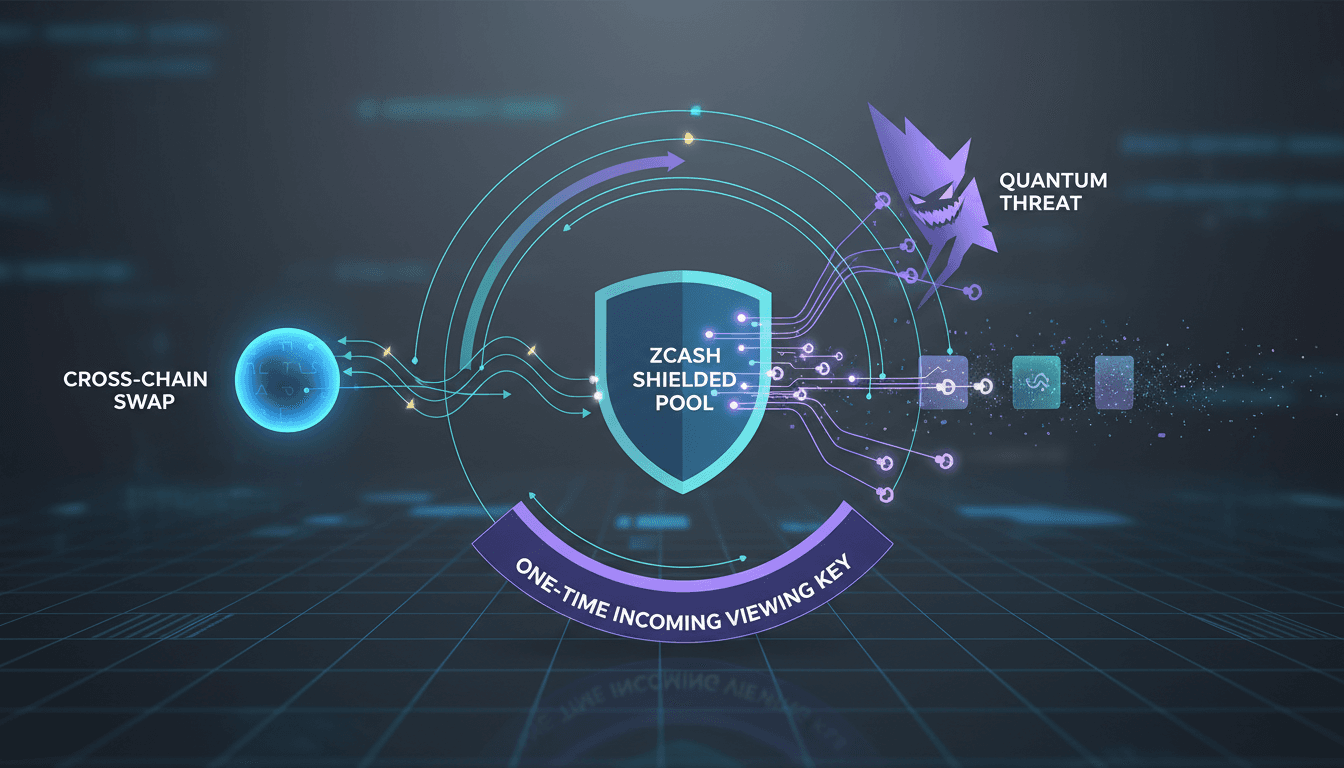
On October 18, 2026, Zakura engineer Adam Tucker detailed a proposal for one-time viewing keys designed to enhance privacy during ZEC swaps routed through the Near Intents protocol. This innovative approach generates a unique incoming viewing key for each swap, which allows users to maintain their spending authority while limiting exposure to quantum attacks. The underlying concern is that as quantum computing technology advances, it could leverage Shor's algorithm to recover viewing keys from publicly exposed shielded addresses, thereby linking multiple payments and compromising user privacy.
The proposed solution utilizes private information retrieval (PIR) techniques, enabling efficient wallet recovery without revealing the specifics of the queries made. This means that even if a quantum computer were to access a shielded address, it would only be able to link that specific swap rather than the entire transaction history of the account. This targeted approach avoids the usability issues associated with creating separate accounts for each swap, which could complicate user experience.
The integration of this proposal into compatible software wallets is expected to occur within weeks, with hardware wallet support to follow. This timeline is crucial as it aligns with the increasing volume of cross-chain swaps into Zcash's shielded pool, which has seen significant activity recently. The proposal is particularly relevant given that over 1,700 transactions were processed in September 2026 alone, amounting to more than $19 million in ZEC-denominated swaps.
As the cryptocurrency landscape evolves, the need for robust privacy measures becomes more pressing. The Zcash community is actively preparing for a future where quantum computing could pose significant risks to transaction privacy. This proposal is part of a broader initiative to enhance Zcash's quantum resistance, with milestones targeted for 2027. However, as of now, the proposal remains in the design stage, pending implementation and wallet integration.
Who feels it first (and how)
- Cryptocurrency users: Individuals engaging in Zcash transactions will benefit from enhanced privacy protections.
- Developers: Those working on wallet software will need to adapt to integrate the new viewing key system.
- Investors: Stakeholders in the Zcash ecosystem may see increased confidence in the platform's security measures.
What to watch next
- Implementation timeline: Monitor the speed at which wallet integration occurs, as this will indicate the proposal's effectiveness in real-world applications.
- Market response: Watch for any shifts in Zcash's market price or trading volume following the proposal's announcement and subsequent developments.
- Regulatory reactions: Keep an eye on how regulators respond to advancements in cryptocurrency privacy, particularly in relation to quantum computing threats.
The proposal aims to enhance privacy for Zcash users against potential quantum computing threats.
Wallet integration will occur within weeks, leading to increased adoption of the one-time viewing key system.
The extent of regulatory responses to these advancements in privacy technology remains uncertain.
Frequently Asked Questions
- Why it matters?
- The proposal addresses potential vulnerabilities in cryptocurrency privacy as quantum computing evolves, impacting users engaged in shielded transactions.
- What happened (in 30 seconds)?
- On October 19, 2026, Zcash developer Zakura proposed a wallet-level privacy enhancement using one-time incoming viewing keys. This measure aims to mitigate risks associated with quantum computing that could link transaction histories through exposed shielded addresses. The proposal requires no network upgrade and preserves existing spending keys, enhancing usability for wallets and hardware devices.
- What's really happening?
- On October 18, 2026, Zakura engineer Adam Tucker detailed a proposal for one-time viewing keys designed to enhance privacy during ZEC swaps routed through the Near Intents protocol. This innovative approach generates a unique incoming viewing key for each swap, which allows users to maintain their spending authority while limiting exposure to quantum attacks. The underlying concern is that as quantum computing technology advances, it could leverage Shor's algorithm to recover viewing keys from p
- Who feels it first (and how)?
- Cryptocurrency users: Individuals engaging in Zcash transactions will benefit from enhanced privacy protections. Developers: Those working on wallet software will need to adapt to integrate the new viewing key system. Investors: Stakeholders in the Zcash ecosystem may see increased confidence in the platform's security measures.
- What to watch next?
- Implementation timeline: Monitor the speed at which wallet integration occurs, as this will indicate the proposal's effectiveness in real-world applications. Market response: Watch for any shifts in Zcash's market price or trading volume following the proposal's announcement and subsequent developments. Regulatory reactions: Keep an eye on how regulators respond to advancements in cryptocurrency privacy, particularly in relation to quantum computing threats.
Covers Bitcoin plus altcoin news, market updates, and educational resources.
"Bitcoin.com provides news, market data, and guides focused on Bitcoin and the wider crypto industry."
— A47 Editor
Zcash Proposes New Privacy Layer to Guard Swaps From Quantum Risks
Zcash has proposed a new privacy layer aimed at protecting ZEC swaps from potential quantum computing threats. This initiative is part of a broader strategy to enhance transaction security and maintain user privacy in the face of evolving technologic...
Real-time updates, analysis, and reports on the blockchain and cryptocurrency sectors.
"Crypto News delivers real-time updates, analysis, and reports on the blockchain and cryptocurrency sectors."
— A47 Editor
Zcash developer proposes quantum privacy fix for NEAR Intents swaps
Zcash developer Zakura has proposed a new security feature for ZEC swaps through NEAR Intents, which would assign a unique viewing key to each transaction. This initiative aims to safeguard users' transaction histories from potential quantum computin...
Covers blockchain, cryptocurrency news, project analysis, and market insights.
"CoinDesk is a well-established cryptocurrency and blockchain news provider, offering comprehensive insights, market data, and industry research."
— A47 Editor
Zcash developers plan a fix to keep ZEC swaps private from future quantum computers
Zcash developers are planning a fix to enhance the privacy of ZEC swaps by ensuring that each transaction through NEAR Intents generates its own unique key. This approach aims to prevent the exposure of users' payment histories through refund address...