
Ethereum Delays Glamsterdam Testnet Upgrade Due to Gas Accounting Vulnerabilities
Why it matters
The postponement of the Glamsterdam upgrade raises concerns about the stability and security of Ethereum's evolving ecosystem.
What happened (in 30 seconds)
- Ethereum developers postponed the Glamsterdam upgrade activation on the Hoodi testnet due to identified risks in smart contracts.
- Chainsecurity flagged 13 deployed contracts that could face vulnerabilities under new gas accounting rules.
- No action is required from mainnet users, but the timeline for the mainnet upgrade is now uncertain.
The context you actually need
- Glamsterdam is a significant upgrade aimed at improving Ethereum's transaction processing capacity and efficiency.
- EIP-8037 and EIP-8038 propose changes to gas cost calculations to better reflect long-term storage costs.
- Previous testing on the Sepolia testnet showed promising results, with blocks operating near a 200 million gas limit.
What's really happening
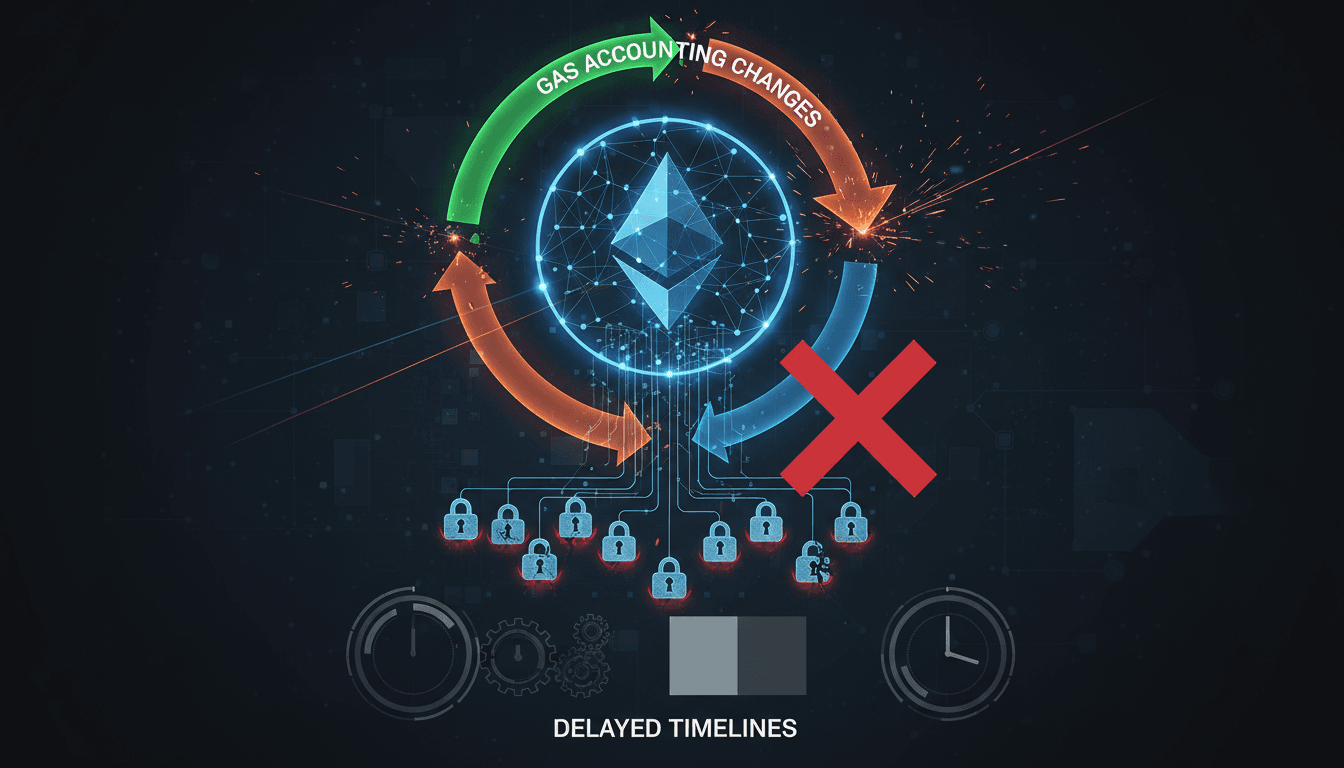
On October 22, 2026, Ethereum developers made the critical decision to postpone the Glamsterdam upgrade activation on the Hoodi testnet. This decision came after Chainsecurity published an analysis revealing vulnerabilities in 13 deployed smart contracts. These vulnerabilities stem from proposed changes to Ethereum's gas accounting rules outlined in EIP-8037 and EIP-8038. The changes could potentially alter how gas refunds and repricing behaviors function, leading to irreversible failures in certain contract executions.
The implications of these findings are significant. If the proposed gas changes were implemented without addressing these vulnerabilities, previously reversible failures could become permanent. This would disable retry mechanisms and complicate fund claims for users, ultimately undermining trust in the Ethereum network. The Ethereum Foundation has since updated the Hoodi configuration files to remove the activation schedule, indicating a cautious approach to ensure that performance enhancements can coexist safely with existing contract assumptions.
The postponement not only affects the immediate activation timeline but also casts uncertainty over the planned December mainnet upgrade. Developers are now tasked with a thorough investigation to assess compatibility with existing contracts, which could lead to further delays. This careful scrutiny reflects a broader trend within the blockchain community to prioritize security and stability over rapid deployment of new features.
As Ethereum continues to evolve, the balance between innovation and security remains a critical focus. The decision to delay the Glamsterdam upgrade underscores the importance of responsible development practices in the blockchain space. Developers are engaging in responsible disclosure with affected projects while evaluating revised testing timelines, ensuring that the network's integrity is maintained.
Who feels it first (and how)
- Smart contract developers: They may need to adjust their timelines and strategies based on the upgrade's delay.
- Investors in Ethereum projects: Uncertainty around the upgrade could affect market confidence and investment decisions.
- Users of decentralized applications (dApps): They might experience disruptions or changes in service as developers reassess contract compatibility.
What to watch next
- Developer communications: Keep an eye on updates from Ethereum developers regarding revised timelines and testing outcomes, as these will indicate the path forward for the upgrade.
- Market reactions: Monitor how the postponement affects Ethereum's market performance and investor sentiment, which could signal broader trends in blockchain adoption.
- Security audits: Watch for results from ongoing security assessments of the affected contracts, as these will determine the feasibility of the proposed gas changes.
The Glamsterdam upgrade has been postponed due to identified vulnerabilities in smart contracts.
Further delays may occur as developers assess compatibility and security.
The exact timeline for the mainnet upgrade remains uncertain.
Frequently Asked Questions
- Why it matters?
- The postponement of the Glamsterdam upgrade raises concerns about the stability and security of Ethereum's evolving ecosystem.
- What happened (in 30 seconds)?
- Ethereum developers postponed the Glamsterdam upgrade activation on the Hoodi testnet due to identified risks in smart contracts. Chainsecurity flagged 13 deployed contracts that could face vulnerabilities under new gas accounting rules. No action is required from mainnet users, but the timeline for the mainnet upgrade is now uncertain.
- What's really happening?
- On October 22, 2026, Ethereum developers made the critical decision to postpone the Glamsterdam upgrade activation on the Hoodi testnet. This decision came after Chainsecurity published an analysis revealing vulnerabilities in 13 deployed smart contracts. These vulnerabilities stem from proposed changes to Ethereum's gas accounting rules outlined in EIP-8037 and EIP-8038. The changes could potentially alter how gas refunds and repricing behaviors function, leading to irreversible failures in cer
- Who feels it first (and how)?
- Smart contract developers: They may need to adjust their timelines and strategies based on the upgrade's delay. Investors in Ethereum projects: Uncertainty around the upgrade could affect market confidence and investment decisions. Users of decentralized applications (dApps): They might experience disruptions or changes in service as developers reassess contract compatibility.
- What to watch next?
- Developer communications: Keep an eye on updates from Ethereum developers regarding revised timelines and testing outcomes, as these will indicate the path forward for the upgrade. Market reactions: Monitor how the postponement affects Ethereum's market performance and investor sentiment, which could signal broader trends in blockchain adoption. Security audits: Watch for results from ongoing security assessments of the affected contracts, as these will determine the feasibility of the proposed
Covers Bitcoin plus altcoin news, market updates, and educational resources.
"Bitcoin.com provides news, market data, and guides focused on Bitcoin and the wider crypto industry."
— A47 Editor
Ethereum Delays Glamsterdam Testing After 13 Contracts Trigger Concerns
Ethereum has postponed the testing of its Glamsterdam upgrade after concerns arose regarding 13 smart contracts that may be impacted by changes in gas pricing. This decision comes as part of a broader effort to ensure the security and stability of th...
Real-time updates, analysis, and reports on the blockchain and cryptocurrency sectors.
"Crypto News delivers real-time updates, analysis, and reports on the blockchain and cryptocurrency sectors."
— A47 Editor
Glamsterdam is off Hoodi’s October calendar as Ethereum checks contract risks
Ethereum has canceled the planned Hoodi test scheduled for October 26, which included a 200 million gas limit, as developers assess a repricing proposal due to identified risks in existing contracts on the mainnet. This decision follows concerns rais...
Covers blockchain, cryptocurrency news, project analysis, and market insights.
"Cointelegraph is a leading crypto-focused media outlet known for timely news, analysis, and educational content related to blockchain and digital assets."
— A47 Editor
Ethereum delays Glamsterdam Hoodi testnet launch over security risks
Ethereum has postponed the launch of its Glamsterdam Hoodi testnet due to identified security risks, specifically concerning 13 smart contracts that could be affected by changes in gas pricing. ChainSecurity is coordinating a responsible disclosure w...
Real-time updates, analysis, and reports on the blockchain and cryptocurrency sectors.
"Crypto News delivers real-time updates, analysis, and reports on the blockchain and cryptocurrency sectors."
— A47 Editor
Ethereum postpones Glamsterdam after EIP-8037 raises security concerns
Ethereum has postponed the Glamsterdam upgrade's Hoodi testnet launch, originally scheduled for October 26, due to security concerns related to EIP-8037 compatibility. This decision follows the identification of risks affecting 13 smart contracts tha...