
UK to Implement 'No Gain, No Loss' Tax Policy for Crypto Transactions in 2027
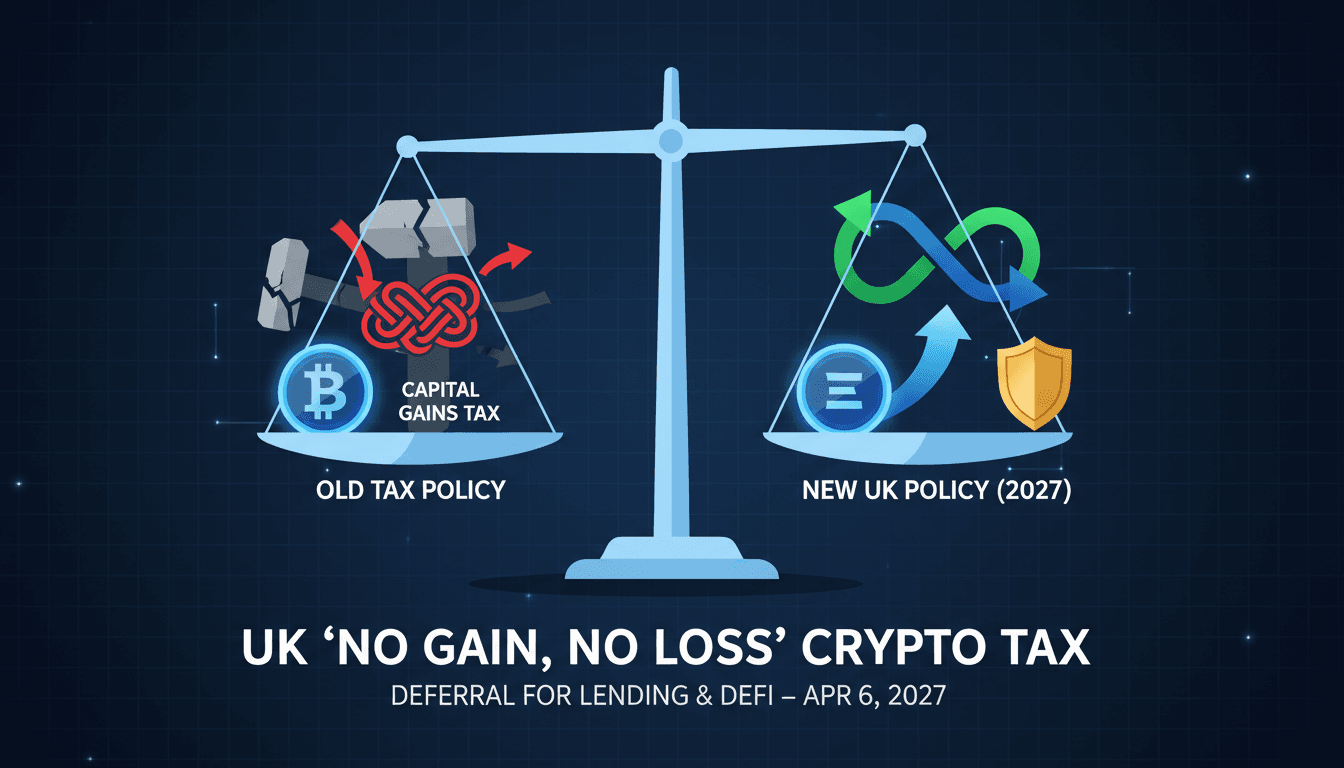
Here's what it means for you.
The UK government's new tax policy will defer capital gains tax on specific cryptocurrency transactions, particularly those involving lending and liquidity pools. This initiative is expected to impact around 700,000 individuals, clarifying tax obligations for users of decentralized finance platforms. By recognizing that lending digital assets does not always indicate a change in ownership, the policy aims to foster greater participation in DeFi activities. This 'no gain, no loss' approach could significantly reduce the immediate tax burden on users, potentially encouraging innovation and investment in the digital asset space.
What happened
The UK government has announced a new tax policy that will take effect on April 6, 2027, deferring capital gains tax on certain cryptocurrency transactions. This policy specifically targets transactions related to lending and liquidity pools, which are integral to decentralized finance (DeFi) platforms. The initiative is designed to clarify tax obligations for users engaged in these activities.
By implementing this 'no gain, no loss' tax treatment, the UK aims to address the unique nature of DeFi transactions, where lending does not necessarily equate to a change in ownership. This move is expected to benefit approximately 700,000 individuals involved in crypto lending and liquidity pools.
The Context
This policy reflects a broader trend among major economies to adapt their tax frameworks to the evolving cryptocurrency landscape. As decentralized finance continues to grow, the need for clear tax guidelines becomes increasingly important. The UK is positioning itself as a leader in this area, being among the first major economies to formally recognize the complexities of DeFi transactions in tax law.
The introduction of this tax policy is significant not only for its immediate impact on users but also for its potential to influence how other countries approach cryptocurrency taxation. By setting a precedent, the UK may encourage a more favorable regulatory environment for digital assets globally.
Takeaway
As the UK implements this new tax policy, it may reshape the global landscape of cryptocurrency taxation. Observers should monitor how other countries respond to this framework and whether similar policies emerge elsewhere. Additionally, it will be important to watch for changes in user behavior within the DeFi space as individuals adapt to the new tax treatment.
The long-term implications of this policy could lead to increased participation in DeFi activities, fostering innovation and investment in the digital asset sector.
Global business headlines with AI angles.
"General business outlet that frequently covers AI."
— A47 Editor
Britain Is Changing How It Taxes Crypto. DeFi Users Will No Longer Face Immediate Capital Gains Bills.
The United Kingdom is reforming its taxation approach for cryptocurrency transactions, particularly in decentralized finance (DeFi), by eliminating immediate capital gains tax liabilities for users engaged in lending digital assets and liquidity pool...
Covers blockchain, cryptocurrency news, project analysis, and market insights.
"Cointelegraph is a leading crypto-focused media outlet known for timely news, analysis, and educational content related to blockchain and digital assets."
— A47 Editor
UK government defers capital gains on certain crypto with ‘no gain, no loss’ approach
The UK government has introduced a new tax policy that defers capital gains on certain cryptocurrency transactions, adopting a ‘no gain, no loss’ approach. This change is expected to impact approximately 700,000 individuals involved in crypto lending...
News, analysis, and thought leadership focusing exclusively on Bitcoin.
"Bitcoin Magazine is one of the original publications devoted to Bitcoin, offering in-depth news, analysis, and commentary."
— A47 Editor
UK Adopts ‘No Gain, No Loss’ Tax Treatment for Crypto Lending and Liquidity Pools
The UK government has announced a new 'no gain, no loss' tax treatment for qualifying crypto lending and DeFi liquidity pool transactions, set to take effect on April 6, 2027. This policy will defer Capital Gains Tax until users make an economic disp...