
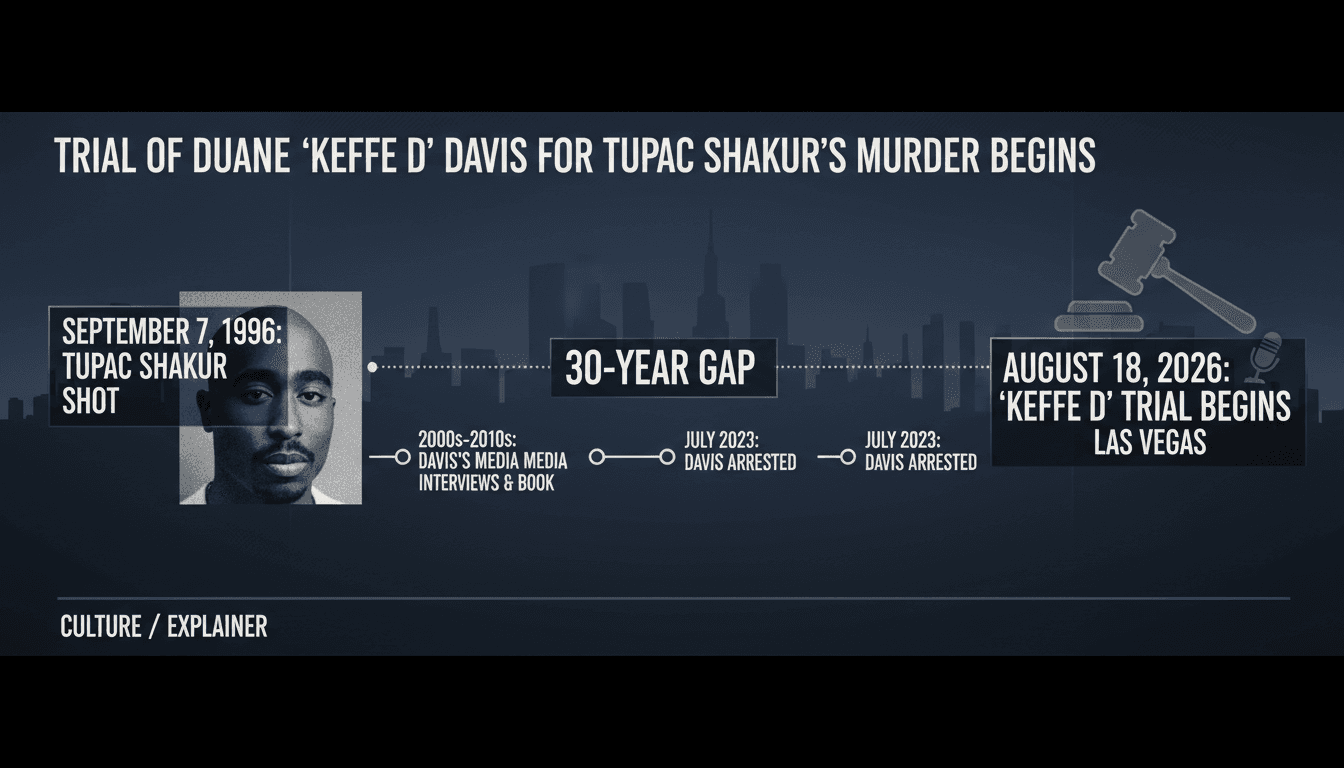
Trial of Duane 'Keffe D' Davis for Tupac Shakur's Murder Begins in Las Vegas
Why it matters
This trial represents a significant moment in the ongoing struggle for accountability in cases of violence linked to gang culture and celebrity.
What happened (in 30 seconds)
- Prosecutors opened the trial against Duane 'Keffe D' Davis, alleging he orchestrated the 1996 murder of rapper Tupac Shakur.
- Davis faces one count of murder with a deadly weapon and has pleaded not guilty, with the trial expected to last up to six weeks.
- The case was revived by Davis's own admissions in interviews and his memoir, marking the first criminal prosecution in this long-unsolved case.
The context you actually need
- The murder occurred during a notorious East Coast-West Coast rap rivalry, intensifying tensions between rival gangs.
- Davis allegedly directed the shooters in a drive-by shooting that left Shakur dead six days after the attack.
- The trial is the first in over 30 years since the murder, highlighting systemic issues in addressing gang-related violence.
What's really happening
The trial of Duane 'Keffe D' Davis is not just a legal proceeding; it is a cultural flashpoint that underscores the complexities of justice in cases involving celebrity and gang violence. The prosecution's case hinges on Davis's own admissions, which they argue serve as self-incriminating evidence. In his memoir, "Compton Street Legend," Davis details his involvement in the events leading up to Shakur's murder, including the altercation at the MGM Grand casino that escalated tensions.
The backdrop of the East Coast-West Coast rap rivalry adds layers to the narrative, as it reflects broader societal issues related to race, violence, and the music industry. The prosecution aims to portray Davis as a "shot caller" who orchestrated the attack, while the defense counters that the lack of corroborating physical evidence after three decades undermines the prosecution's claims. This dynamic raises questions about the reliability of witness testimony and the impact of media narratives on public perception.
As the trial unfolds, it could influence how similar cases are prosecuted in the future, particularly those involving gang affiliations and celebrity status. The potential testimony from figures like Marion 'Suge' Knight, a former Death Row Records executive, could further complicate the narrative and impact the jury's perception. The trial's outcome may also affect public trust in the justice system, especially in cases that have remained unresolved for decades.
Moreover, the trial's implications extend beyond the courtroom. It serves as a reminder of the cultural legacy of Tupac Shakur, whose influence continues to resonate in music and social justice movements. The proceedings may reignite discussions about the intersection of art, violence, and accountability, prompting a reevaluation of how society addresses issues of gang violence and celebrity culture.
Who feels it first (and how)
- Legal professionals: Attorneys and prosecutors will closely monitor the trial's proceedings and outcomes for implications on future cases.
- Entertainment industry: Artists and executives may reassess their narratives and public personas in light of the trial's revelations.
- Community activists: Those advocating for justice reform will analyze the trial's impact on public perceptions of gang violence and accountability.
What to watch next
- Potential witness testimonies: The involvement of figures like Suge Knight could significantly influence the trial's direction and public interest.
- Public reactions: Monitor how different communities respond to the trial's developments, particularly in relation to gang culture and celebrity.
- Legal precedents: The outcome may set new standards for prosecuting similar cases, impacting future gang-related violence cases.
The trial is the first criminal prosecution in the Tupac Shakur murder case after 30 years.
The trial will reignite discussions about gang violence and accountability in the entertainment industry.
The long-term impact of the trial on public trust in the justice system remains to be seen.
Frequently Asked Questions
- Why it matters?
- This trial represents a significant moment in the ongoing struggle for accountability in cases of violence linked to gang culture and celebrity.
- What happened (in 30 seconds)?
- Prosecutors opened the trial against Duane 'Keffe D' Davis, alleging he orchestrated the 1996 murder of rapper Tupac Shakur. Davis faces one count of murder with a deadly weapon and has pleaded not guilty, with the trial expected to last up to six weeks. The case was revived by Davis's own admissions in interviews and his memoir, marking the first criminal prosecution in this long-unsolved case.
- What's really happening?
- The trial of Duane 'Keffe D' Davis is not just a legal proceeding; it is a cultural flashpoint that underscores the complexities of justice in cases involving celebrity and gang violence. The prosecution's case hinges on Davis's own admissions, which they argue serve as self-incriminating evidence. In his memoir, "Compton Street Legend," Davis details his involvement in the events leading up to Shakur's murder, including the altercation at the MGM Grand casino that escalated tensions. The backd
- Who feels it first (and how)?
- Legal professionals: Attorneys and prosecutors will closely monitor the trial's proceedings and outcomes for implications on future cases. Entertainment industry: Artists and executives may reassess their narratives and public personas in light of the trial's revelations. Community activists: Those advocating for justice reform will analyze the trial's impact on public perceptions of gang violence and accountability.
- What to watch next?
- Potential witness testimonies: The involvement of figures like Suge Knight could significantly influence the trial's direction and public interest. Public reactions: Monitor how different communities respond to the trial's developments, particularly in relation to gang culture and celebrity. Legal precedents: The outcome may set new standards for prosecuting similar cases, impacting future gang-related violence cases.
News across North, Central, and South America including politics and economics.
"France 24 is viewed as a globally focused outlet with balanced coverage and a European perspective."
— A47 Editor
Gang leader masterminded Tupac's killing, prosecutor tells jury
The trial of Duane 'Keffe D' Davis, a former gang leader, has commenced in Las Vegas, where he is accused of orchestrating the 1996 murder of rapper Tupac Shakur. Prosecutors allege that the killing was a calculated act of gang revenge, with Davis re...
International coverage of politics, culture, and current affairs.
"BBC News is widely regarded as a reputable international news organization, known for its impartial tone and public service mandate."
— A47 Editor
Watch: What we learned from opening statements in Tupac murder trial
The trial of Duane 'Keffe D' Davis, a former gang leader, has commenced in Las Vegas, where he faces charges related to the 1996 murder of rapper Tupac Shakur. Opening statements have highlighted key arguments from both the prosecution and defense, m...
International coverage of politics, culture, and current affairs.
"BBC News is widely regarded as a reputable international news organization, known for its impartial tone and public service mandate."
— A47 Editor
'I want my brother back' - Tupac’s brother tells BBC murder trial won’t bring justice
Mopreme Shakur, brother of the late rapper Tupac Shakur, expressed his belief that the upcoming murder trial of Duane 'Keffe D' Davis, accused of orchestrating Tupac's 1996 killing, will not bring justice. In an interview with the BBC, he emphasized ...