
New research reveals British Crown emblem used to brand enslaved Africans by South Sea Company in 1714
Why it matters
This revelation highlights the deep-rooted connections between historical institutions and modern societal structures, influencing ongoing reparations debates.
What happened (in 30 seconds)
- New research published on 14 September 2026 confirms the British Crown emblem was used to brand enslaved Africans by the South Sea Company in 1714.
- Archival evidence shows branding instructions were issued to agents in the Spanish Americas, marking enslaved individuals to assert ownership.
- Buckingham Palace acknowledges the findings, with King Charles expressing a commitment to understanding slavery's legacy and addressing historic wrongs.
The context you actually need
- The transatlantic slave trade was sanctioned by British royal charters, with companies like the South Sea Company profiting from the trafficking of approximately three million Africans.
- Branding practices were employed to distinguish company-owned enslaved people from others, reflecting the commodification of human lives during this period.
- The Register of British Slave Traders project documents 13,000 investors in the slave trade, revealing extensive institutional involvement, including the monarchy.
What's really happening
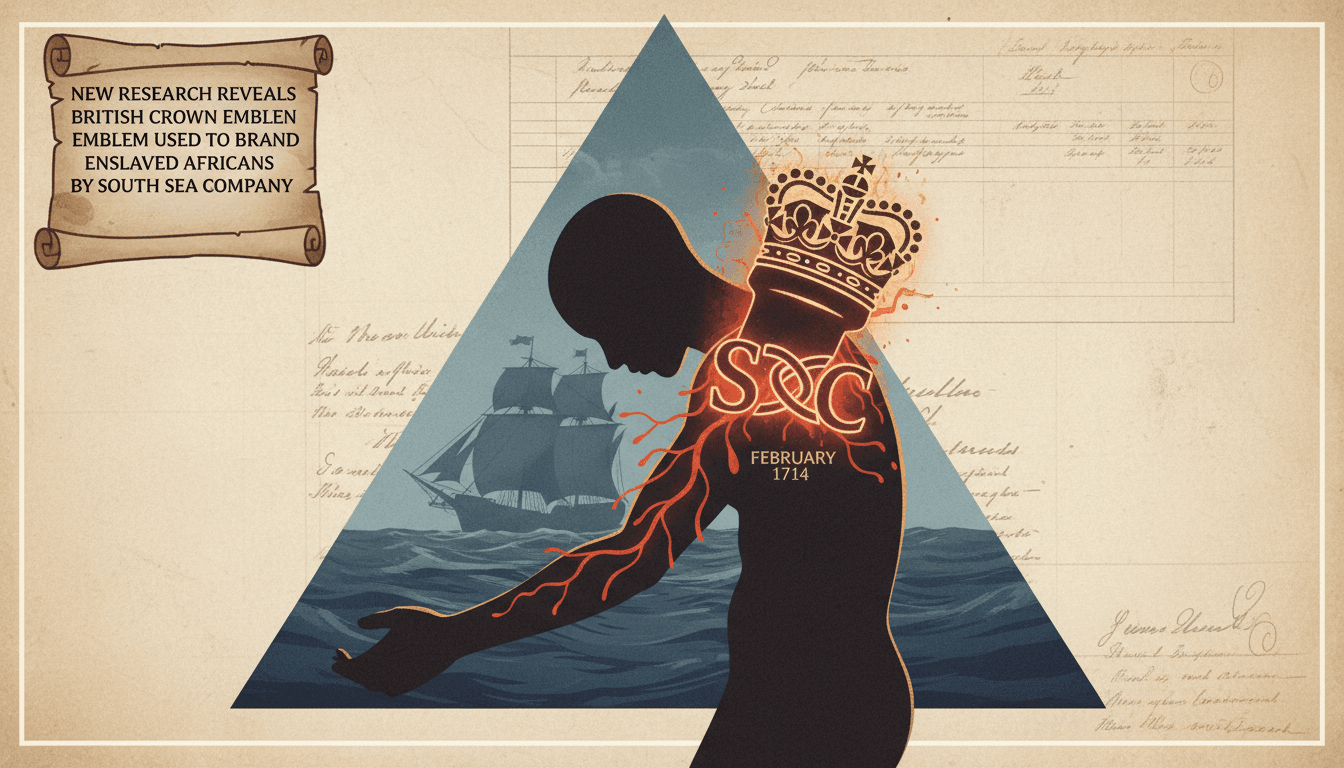
The recent findings from the Register of British Slave Traders project, led by Prof William Pettigrew, have unveiled a disturbing aspect of the transatlantic slave trade: the branding of enslaved Africans with the British Crown emblem. This practice, documented in a February 1714 letter, involved detailed instructions for applying silver marks to the left shoulder of enslaved individuals. The branding served a dual purpose: it asserted ownership by the South Sea Company and differentiated their enslaved people from those owned by other traders.
This branding practice is not merely a historical footnote; it reflects the systemic commodification of human lives that was prevalent during the transatlantic slave trade. The South Sea Company, established in 1711, held a monopoly on the trade of enslaved Africans to the Spanish Americas, operating under a royal charter that allowed it to profit from this inhumane practice. The involvement of the British monarchy in these enterprises underscores the institutional complicity in the slave trade, as monarchs invested in and profited from these operations.
The implications of this research extend beyond historical interest. The acknowledgment of such practices by institutions like Buckingham Palace signals a potential shift in how historical injustices are addressed today. King Charles's commitment to understanding slavery's legacy and the ongoing discussions about reparations highlight a growing recognition of the need to confront the past. Jamaica's plans to petition the King for reparations further illustrate the contemporary ramifications of these historical practices.
As the findings gain traction, they may influence public discourse around reparations and corporate accountability. The acknowledgment of the branding practice not only sheds light on the brutal realities of the slave trade but also raises questions about the responsibilities of modern institutions that have historical ties to these injustices. The ongoing discussions about reparations, particularly in the UK, may gain momentum as more individuals and institutions recognize their historical complicity in the slave trade.
Who feels it first (and how)
- Historians and researchers: Increased interest in archival research and historical documentation of slavery.
- Activists and advocacy groups: Heightened discussions around reparations and historical accountability.
- Government officials: Pressure to address historical injustices and consider reparations policies.
- Educational institutions: Potential curriculum changes to include this aspect of history in discussions about colonialism and slavery.
What to watch next
- Reparations discussions: Monitor developments in Jamaica's petition to the King and how it influences other nations' reparations movements.
- Public sentiment: Watch for shifts in public opinion regarding the monarchy's role in historical injustices and the demand for accountability.
- Documentary series: The upcoming BBC documentary series scheduled for broadcast on 21 September 2026 may further educate the public and spark conversations about the legacy of slavery.
The British Crown emblem was used to brand enslaved Africans by the South Sea Company.
Ongoing discussions about reparations will gain momentum as more historical evidence emerges.
The long-term impact of these findings on public policy and institutional accountability remains to be seen.
Frequently Asked Questions
- Why it matters?
- This revelation highlights the deep-rooted connections between historical institutions and modern societal structures, influencing ongoing reparations debates.
- What happened (in 30 seconds)?
- New research published on 14 September 2026 confirms the British Crown emblem was used to brand enslaved Africans by the South Sea Company in 1714. Archival evidence shows branding instructions were issued to agents in the Spanish Americas, marking enslaved individuals to assert ownership. Buckingham Palace acknowledges the findings, with King Charles expressing a commitment to understanding slavery's legacy and addressing historic wrongs.
- What's really happening?
- The recent findings from the Register of British Slave Traders project, led by Prof William Pettigrew, have unveiled a disturbing aspect of the transatlantic slave trade: the branding of enslaved Africans with the British Crown emblem. This practice, documented in a February 1714 letter, involved detailed instructions for applying silver marks to the left shoulder of enslaved individuals. The branding served a dual purpose: it asserted ownership by the South Sea Company and differentiated their
- Who feels it first (and how)?
- Historians and researchers: Increased interest in archival research and historical documentation of slavery. Activists and advocacy groups: Heightened discussions around reparations and historical accountability. Government officials: Pressure to address historical injustices and consider reparations policies. Educational institutions: Potential curriculum changes to include this aspect of history in discussions about colonialism and slavery.
- What to watch next?
- Reparations discussions: Monitor developments in Jamaica's petition to the King and how it influences other nations' reparations movements. Public sentiment: Watch for shifts in public opinion regarding the monarchy's role in historical injustices and the demand for accountability. Documentary series: The upcoming BBC documentary series scheduled for broadcast on 21 September 2026 may further educate the public and spark conversations about the legacy of slavery.
United Kingdom-focused news including local politics, business, and social issues.
"BBC News is widely regarded as a reputable international news organization, known for its impartial tone and public service mandate."
— A47 Editor
British Crown symbol was branded on enslaved Africans, research finds
Research has revealed that the British Crown symbol was branded on enslaved Africans, highlighting the brutal practices associated with the British involvement in the slave trade from the 16th to the 19th centuries. This finding is part of a broader ...
Top international stories selected by The Guardian editors.
"The Guardian is known for its progressive editorial stance and in-depth analysis."
— A47 Editor
How Britain's kings and queens powered the slave trade – video
Recent research has revealed the extensive involvement of Britain's monarchy in the slave trade, particularly after the restoration of the monarchy in 1660, with enslaved Africans branded with the royal crown. This research is part of a broader effor...
Top international stories selected by The Guardian editors.
"The Guardian is known for its progressive editorial stance and in-depth analysis."
— A47 Editor
The royal crown branded on enslaved Africans: Britain’s monarchy and the slave trade
Recent research reveals that Britain's monarchy, from Elizabeth I to contemporary monarchs, played a significant role in the slave trade, with enslaved Africans branded with the royal crown. This historical involvement underscores the monarchy's long...