
Turkey Discovers World's Oldest Shipwreck Near Kekova Island
Why it matters
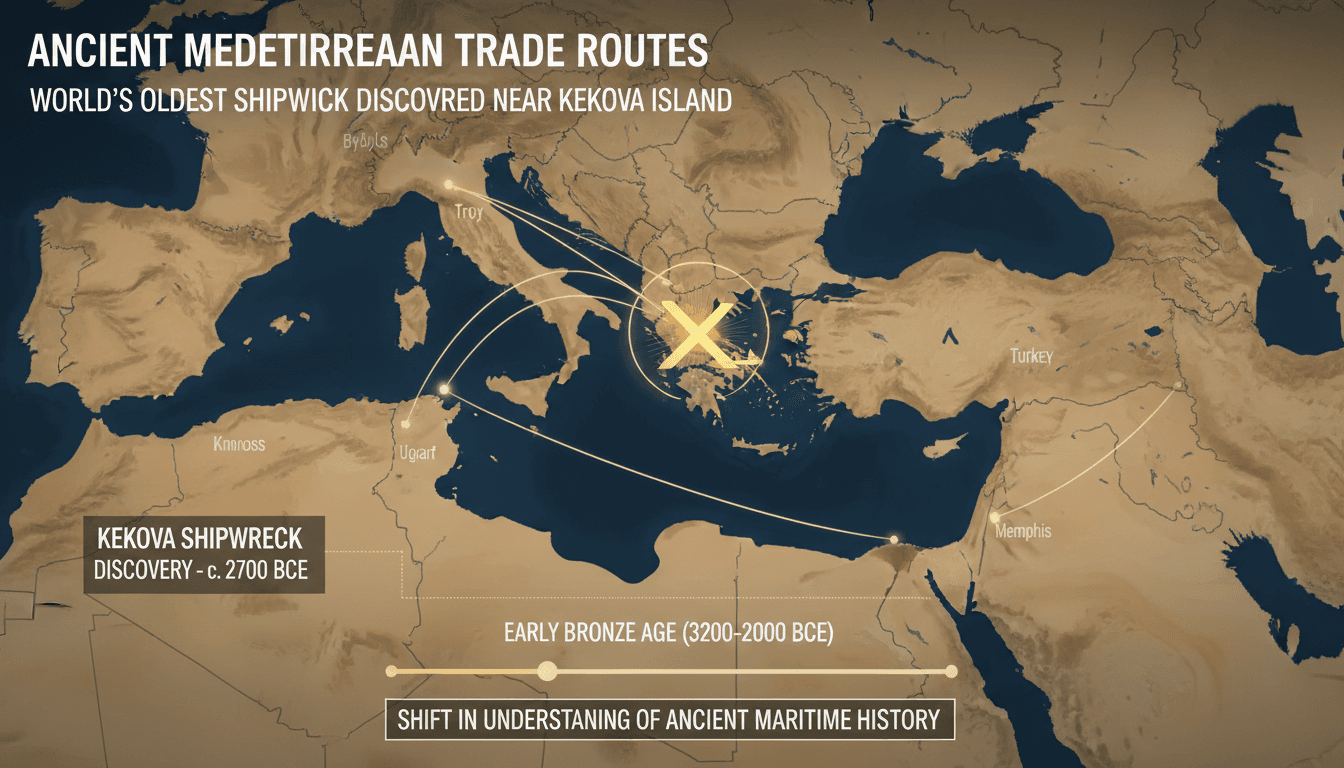
The find sheds light on early maritime trade networks, influencing archaeological research and tourism in the Mediterranean region.
What happened (in 30 seconds)
- Discovery announced: On October 14, 2026, Turkish authorities revealed the world's oldest shipwreck near Kekova Island.
- Artifacts recovered: Over 30 ceramic storage jars and three stone anchors were excavated from a vessel dated to 4,400 to 4,700 years ago.
- Historical significance: The shipwreck predates the previous record holder, the Dokos wreck in Greece, by approximately 500 years.
The context you actually need
- Ongoing surveys: The discovery is part of Turkey's broader efforts to document and preserve its underwater cultural heritage.
- Initial misidentification: Early assessments in 2022 misdated the artifacts, which were later confirmed as Early Bronze Age through comparative analysis.
- Trade implications: The ship likely transported goods such as olive oil or wine, highlighting the interconnectedness of ancient Mediterranean economies.
What's really happening
The recent discovery of the shipwreck off Kekova Island is a significant archaeological milestone, marking a pivotal moment in understanding ancient maritime trade. The excavation, led by Professor Hakan Öniz and supported by the Turkish Ministry of Culture and Tourism, revealed artifacts that date back approximately 4,700 years, positioning this site as the oldest known shipwreck in the world.
Initial surveys in 2022 identified the site, but it was not until further analysis in 2024-2025 that the true age of the artifacts was recognized. This re-evaluation was crucial, as it matched the ceramic storage jars to Early Bronze Age pottery found in the Levant and Egypt, prompting targeted excavations in 2026. The recovery of over 30 amphorae and three stone anchors from a vessel believed to have been around 10 meters long provides invaluable insights into the maritime practices of the time.
The wooden hull of the ship did not survive, leaving only the cargo scattered on the seabed. This loss underscores the challenges faced by underwater archaeology, where organic materials often decompose, leaving behind only the more durable artifacts. The significance of this find extends beyond mere historical interest; it illuminates the complexities of trade routes that existed thousands of years ago, connecting various cultures across the Mediterranean.
The Turkish Culture Minister, Mehmet Nuri Ersoy, emphasized the importance of this discovery in understanding Anatolian maritime history and pledged to preserve underwater heritage. While the immediate impact on markets or international relations remains limited, the academic interest surrounding the find is likely to grow, leading to further research and potential tourism opportunities in the region.
As the artifacts undergo conservation and analysis, the implications for understanding ancient trade networks will continue to unfold. This discovery not only enriches our knowledge of the past but also serves as a reminder of the interconnectedness of ancient civilizations, which can inspire contemporary discussions about trade and cultural exchange.
Who feels it first (and how)
- Archaeologists: Increased research opportunities and funding for further excavations.
- Tourism sector: Potential growth in cultural tourism as interest in ancient maritime history rises.
- Academics: Enhanced resources for studies in ancient trade networks and Mediterranean history.
- Local communities: Possible economic benefits from increased tourism and educational initiatives.
What to watch next
- Peer-reviewed publications: The release of detailed studies confirming the dating and significance of the shipwreck will be crucial for academic validation.
- Tourism initiatives: Watch for new tourism campaigns in Turkey that leverage this discovery to attract visitors interested in history and archaeology.
- International collaborations: Potential partnerships between Turkish institutions and global universities for further research on ancient maritime trade.
The shipwreck is dated to approximately 4,700 years ago, making it the oldest known shipwreck.
Increased academic interest and potential tourism growth in the Antalya region as a result of the discovery.
The long-term impact on local economies and how this discovery will influence future archaeological policies in Turkey.
Frequently Asked Questions
- Why it matters?
- The find sheds light on early maritime trade networks, influencing archaeological research and tourism in the Mediterranean region.
- What happened (in 30 seconds)?
- Discovery announced: On October 14, 2026, Turkish authorities revealed the world's oldest shipwreck near Kekova Island. Artifacts recovered: Over 30 ceramic storage jars and three stone anchors were excavated from a vessel dated to 4,400 to 4,700 years ago. Historical significance: The shipwreck predates the previous record holder, the Dokos wreck in Greece, by approximately 500 years.
- What's really happening?
- The recent discovery of the shipwreck off Kekova Island is a significant archaeological milestone, marking a pivotal moment in understanding ancient maritime trade. The excavation, led by Professor Hakan Öniz and supported by the Turkish Ministry of Culture and Tourism, revealed artifacts that date back approximately 4,700 years, positioning this site as the oldest known shipwreck in the world. Initial surveys in 2022 identified the site, but it was not until further analysis in 2024-2025 that
- Who feels it first (and how)?
- Archaeologists: Increased research opportunities and funding for further excavations. Tourism sector: Potential growth in cultural tourism as interest in ancient maritime history rises. Academics: Enhanced resources for studies in ancient trade networks and Mediterranean history. Local communities: Possible economic benefits from increased tourism and educational initiatives.
- What to watch next?
- Peer-reviewed publications: The release of detailed studies confirming the dating and significance of the shipwreck will be crucial for academic validation. Tourism initiatives: Watch for new tourism campaigns in Turkey that leverage this discovery to attract visitors interested in history and archaeology. International collaborations: Potential partnerships between Turkish institutions and global universities for further research on ancient maritime trade.
Global news coverage with extensive reporting on Middle Eastern conflicts and geopolitics.
"Al Jazeera is a Qatar-based broadcaster known for wide regional coverage and alternative perspectives."
— A47 Editor
World’s oldest shipwreck found off coast of Turkiye
The world's oldest shipwreck has been discovered off the coast of Turkiye, with clay analysis revealing that the recovered storage jars trace back to early history workshops operating in the Jordan Valley. This significant find sheds light on ancient...
Comprehensive coverage of Middle Eastern and global issues.
"Al Jazeera is a prominent voice from the Global South, especially the Middle East, with an emphasis on underreported stories."
— A47 Editor
World’s oldest shipwreck found off coast of Turkiye
The world's oldest shipwreck has been discovered off the coast of Turkiye, with clay analysis revealing that the recovered storage jars trace back to early history workshops operating in the Jordan Valley. This significant find sheds light on ancient...
UAE-based English-language newspaper covering regional politics, economics, and global affairs.
"The National reflects Emirati policy perspectives while maintaining international editorial standards."
— A47 Editor
'World’s oldest known shipwreck' lost more than 4,000 years ago found off Turkey
The world's oldest known shipwreck, dating back over 4,000 years, has been discovered off the coast of Turkey, providing significant insights into ancient maritime history. This remarkable find sheds light on the shipbuilding techniques and trade pra...
Tech industry news, innovation, gadgets, and startups from a UK broadcaster.
"Sky News is often seen as a center-right outlet in the UK, known for its rolling coverage and breaking stories."
— A47 Editor
World's oldest shipwreck found off Turkish coast
The world's oldest shipwreck has been discovered off the coast of Turkey, as reported by archaeologists. This significant find highlights the rich maritime history of the region and offers insights into ancient seafaring practices. Pic: Hakan Oniz
Reports on climate change, environmental science, sustainability, and nature.
"BBC News is widely regarded as a reputable international news organization, known for its impartial tone and public service mandate."
— A47 Editor
World's oldest shipwreck found off coast of Turkey
Archaeologists have discovered the world's oldest shipwreck off the coast of Turkey, dating back approximately 4,700 years to the Early Bronze Age. This significant find sheds light on ancient maritime practices and trade routes of the time.
International coverage of politics, culture, and current affairs.
"BBC News is widely regarded as a reputable international news organization, known for its impartial tone and public service mandate."
— A47 Editor
World's oldest shipwreck found off coast of Turkey
Archaeologists have discovered the world's oldest shipwreck off the coast of Turkey, dating back approximately 4,700 years to the Early Bronze Age. This significant find sheds light on ancient maritime practices and trade routes of the time.