
GCC Condemns Iranian Attacks on Kuwait, Bahrain, and Jordan
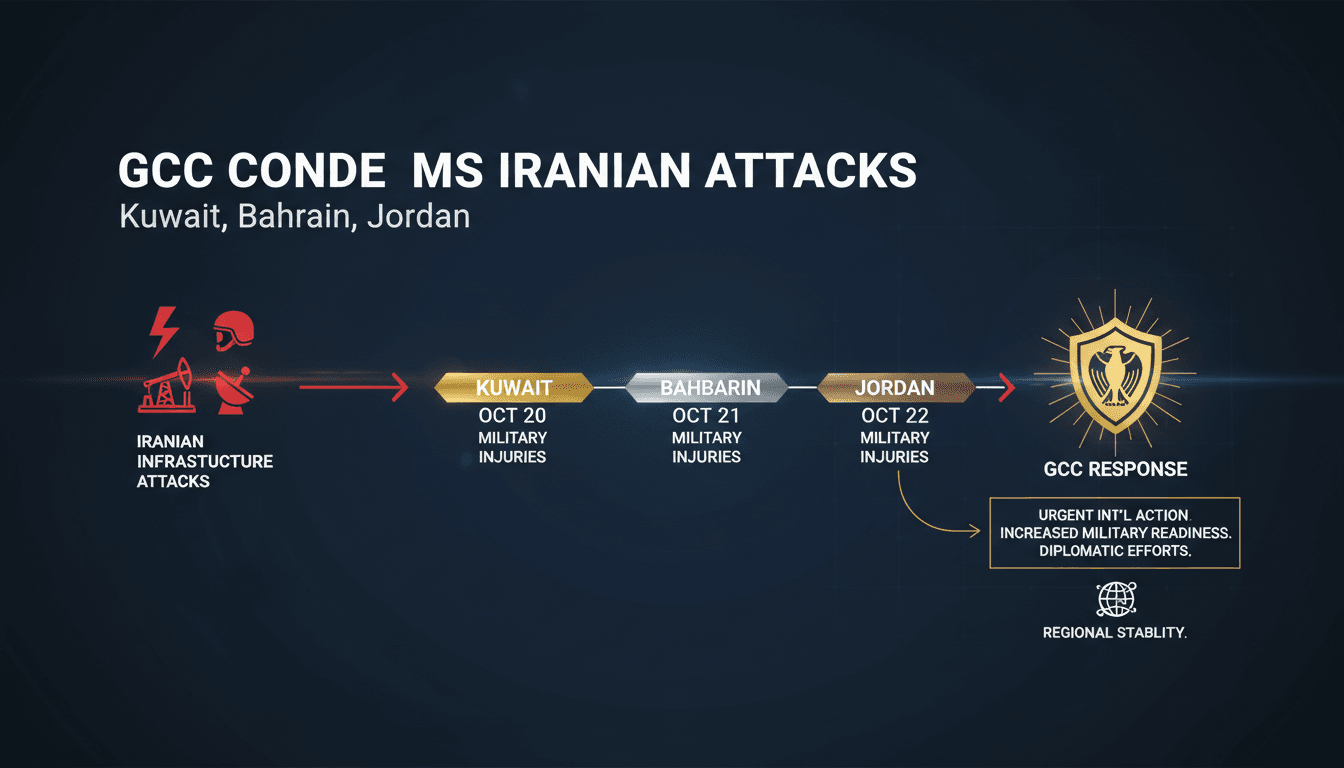
Here's what it means for you.
The recent Iranian attacks on Gulf nations have significant implications for regional security and international relations. The Gulf Cooperation Council (GCC) is likely to enhance military readiness and diplomatic efforts in response to these aggressions. This escalation may lead to a more unified stance among GCC member states, impacting both regional stability and global energy markets. As tensions rise, stakeholders in the region must prepare for potential shifts in policy and military strategy. The GCC's call for urgent international action underscores the need for collective security measures against Iranian threats.
What happened
Iranian attacks have targeted critical infrastructure in Kuwait, Bahrain, and Jordan, resulting in injuries to military personnel. These incidents mark a significant escalation in Iranian aggression within the region. The GCC Secretary-General, Jassim Mohammed Al-Budaiwi, condemned these actions and called for urgent international intervention to address the situation.
The attacks occurred shortly after previous incidents involving Iranian aggression, including assaults on UAE oil tankers. These developments highlight the ongoing tensions and the human cost associated with regional conflicts, as evidenced by casualties from earlier attacks.
The Context
The GCC's condemnation reflects a growing concern over Iranian actions that threaten regional stability and security. The Secretary-General emphasized the need for international accountability, signaling solidarity with the affected countries. This situation arises against a backdrop of previous incidents that have strained relations between Iran and its Gulf neighbors.
The timing of these attacks is critical, as they coincide with heightened military readiness among GCC states. The implications of these events extend beyond immediate security concerns, potentially influencing diplomatic relations and international policy regarding Iran.
Takeaway
The GCC's strong condemnation of Iranian aggression indicates a potential shift towards more coordinated regional responses. As member states assess their military preparedness, international diplomatic efforts may also intensify to address Iranian actions. Observers should watch for developments in military readiness and potential collaborative initiatives among GCC nations.
In the coming weeks, the focus will likely be on how the GCC navigates these challenges and the broader implications for regional security and international relations.
Arabic-language political and world news coverage for UAE readers.
"Emarat Al Youm world coverage usually presents international developments through a UAE and Arab audience lens."
— A47 Editor
أمين عام مجلس التعاون يدين الهجمات الإيرانية على الكويت والبحرين والأردن أمين عام مجلس التعاون يدين الهجمات الإيرانية على الكويت والبحرين والأردن
The Secretary-General of the Gulf Cooperation Council, Jassim Mohammed Al-Budaiwi, condemned in the strongest terms the aggressive Iranian attacks on Kuwait, Bahrain, and Jordan. This statement highlights the ongoing tensions in the region and the GC...
Arabic-language coverage of political affairs and current events.
"Okaz political coverage typically follows mainstream Saudi framing on national and regional affairs."
— A47 Editor
«التعاون الخليجي» يُدين الهجمات الإيرانية ويطالب بتحرّك دولي عاجل
The Secretary-General of the Gulf Cooperation Council, Jassim Mohammed Al-Budaiwi, strongly condemned the Iranian attacks targeting Bahrain, Kuwait, and Jordan, which resulted in injuries to military personnel in Kuwait. He described these actions as...
Arabic-language reporting focused on domestic developments in Saudi Arabia.
"Okaz is a mainstream Saudi newspaper that often reflects domestic priorities and official-facing coverage."
— A47 Editor
مجلس التعاون: استهداف إيران لناقلتي النفط الإماراتيتين عمل عدائي وانتهاك صارخ
The Secretary-General of the Gulf Cooperation Council, Jassim Al-Budaiwi, condemned the Iranian attack on two Emirati oil tankers, 'Mombasa' and 'Al-Bahya,' which resulted in the death of one crew member and injuries to several others. He described t...