
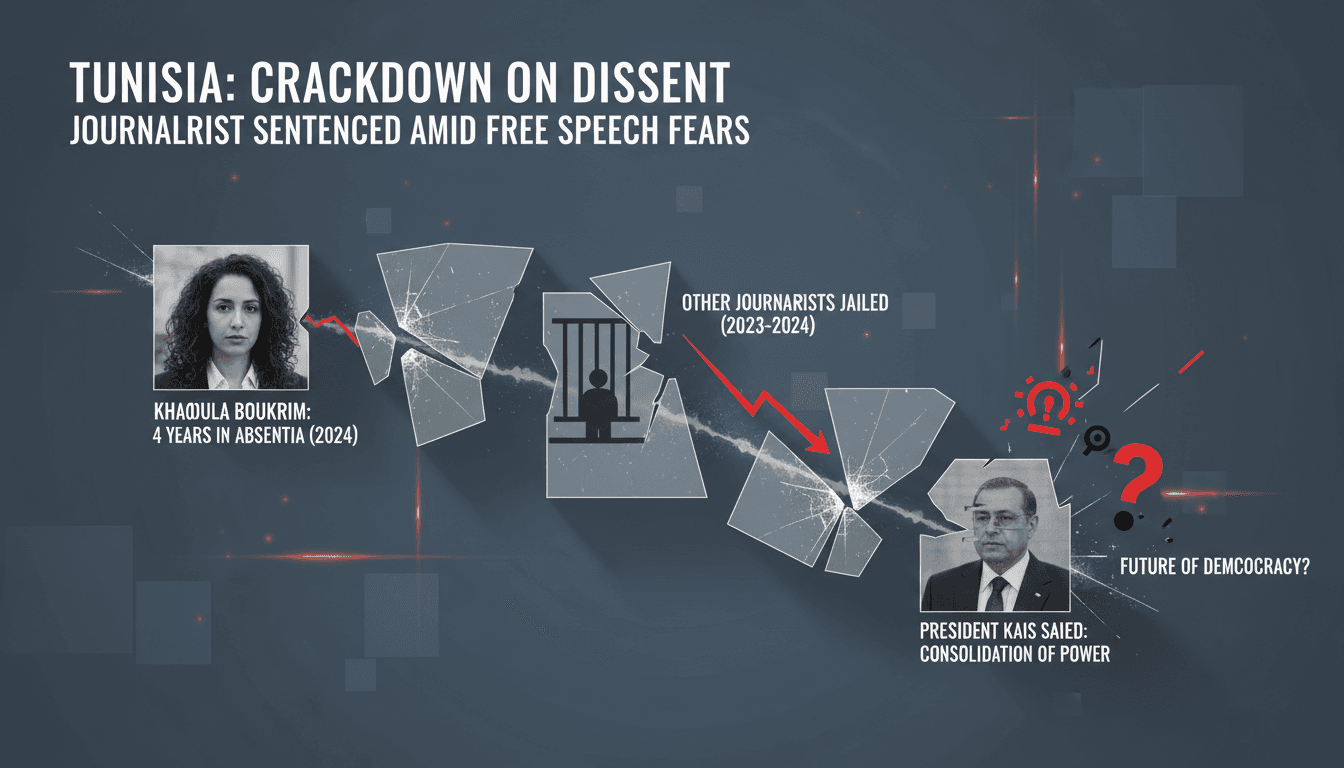
Tunisian journalist Khaoula Boukrim sentenced to four years in prison in absentia
Here's what it means for you.
The sentencing of Khaoula Boukrim underscores the escalating risks faced by journalists in Tunisia, particularly under the current administration of President Kais Saied. This ruling not only reflects a broader crackdown on dissent but also raises significant concerns about the future of press freedom and civil liberties in the country. As the government continues to suppress critical voices, the implications for democracy and free expression are increasingly dire. The international community will likely scrutinize Tunisia's treatment of journalists, which could lead to diplomatic repercussions. The ongoing repression may also galvanize local and global advocacy efforts aimed at protecting media independence.
What happened
Khaoula Boukrim, a prominent Tunisian journalist and director of the Tunisia Media website, has been sentenced to four years in prison in absentia by a Tunisian court. This ruling was announced on June 9, 2026, and has drawn widespread condemnation from media and human rights organizations. Boukrim's sentencing is part of a troubling trend, following the earlier jailing of several other journalists in Tunisia.
The court's decision is seen as a direct attack on free speech and a clear indication of the risks faced by those who criticize the government. Critics argue that the ruling exemplifies the increasing use of electronic crime laws to suppress dissenting voices in the media landscape.
The Context
Khaoula Boukrim is known for her outspoken criticism of President Kais Saied, making her a target in the current political climate. The recent sentencing is part of a broader pattern of repression against journalists in Tunisia, where several have already been jailed this year. Rights organizations have condemned these actions, highlighting the alarming trend of using legal mechanisms to stifle free expression.
The timing of Boukrim's sentencing coincides with a significant deterioration of press freedom in Tunisia, raising questions about the future of democracy in the country. As the government intensifies its crackdown on dissent, the implications for civil liberties and journalism remain concerning.
Takeaway
The situation for press freedom in Tunisia is precarious, and the sentencing of Khaoula Boukrim signals a troubling trajectory for the country's democratic institutions. Observers should monitor potential international responses to Tunisia's treatment of journalists, as well as further developments in the cases of other jailed media figures. The ongoing repression of dissenting voices suggests that the challenges to free expression will likely continue.
As the government maintains its stance against critical journalism, the implications for media independence and civil liberties in Tunisia are increasingly alarming.
Pan-Arab political news and analysis.
"Al-Quds Al-Arabi is a London-based Arabic newspaper known for political coverage."
— A47 Editor
حقوقيون تونسيون وعرب ينددون بسجن الصحافية خولة بوكريم
Tunisian and Arab rights organizations have condemned the prison sentence issued against journalist Khawla Boukrim, director of Tunisia Media, urging an end to the use of Decree 54 concerning cyber crimes to restrict freedom of expression and silence...
Pan-Arab news coverage spanning politics, business, sports, and regional affairs.
"Asharq Al-Awsat reflects a broad Arab editorial perspective with strong attention to regional geopolitics."
— A47 Editor
القضاء التونسي يحكم بسجن صحافية 4 سنوات غيابياً
A Tunisian court has sentenced journalist Khawla Boukrim to four years in absentia, marking a significant development in the ongoing tensions between the media and the government under President Kais Saied. Boukrim, known for her strong criticism of ...
Regional coverage and analysis focused on politics, diplomacy, and business across the Middle East.
"Al-Monitor is known for analytical reporting on Middle East politics and policy developments."
— A47 Editor
Tunisian court sentences prominent journalist Boukrim in absentia to four years
A Tunisian court has sentenced prominent journalist Khaoula Boukrim to four years in prison in absentia, a ruling that critics argue underscores the increasing repression of dissenting voices and free speech under President Kais Saied. This decision ...