
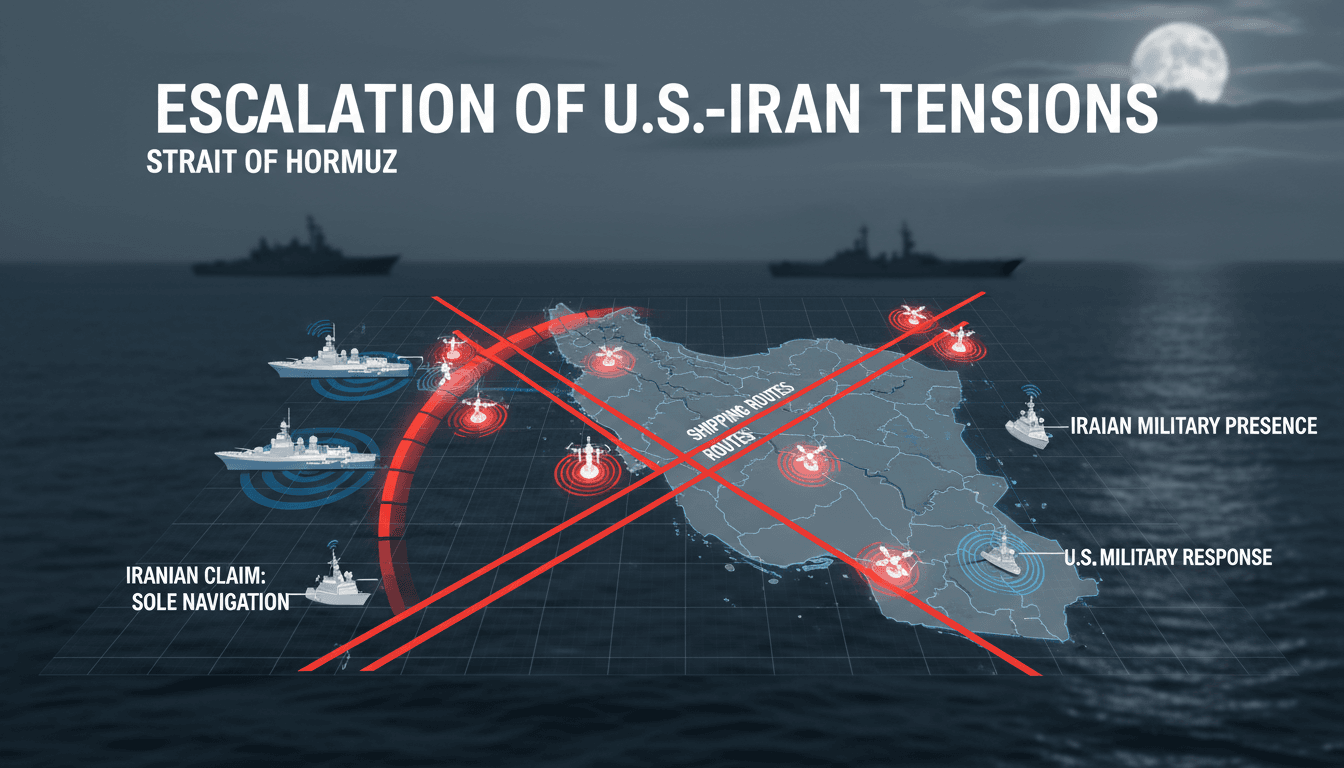
Escalation of U.S.-Iran tensions in the Strait of Hormuz
Here's what it means for you.
The recent escalation of tensions in the Strait of Hormuz signals a critical moment for global maritime security and energy markets. Stakeholders in the shipping and oil industries should prepare for potential disruptions as military actions unfold. Policymakers must consider the implications of these developments on diplomatic relations and regional stability. The situation underscores the fragility of international shipping routes, which are vital for global trade. As both nations exchange threats, the risk of broader military engagement increases, necessitating close monitoring of diplomatic efforts.
What happened
Iran has significantly increased its military presence in the Strait of Hormuz, asserting its exclusive right to manage maritime navigation. This escalation follows reports of Iranian drone attacks on U.S. vessels, which have prompted military responses from the United States. The U.S. has confirmed that at least four Iranian drones targeted ships in the area, causing damage and raising alarms about the security of maritime operations.
Iranian officials have warned Gulf nations against siding with the U.S., further complicating the already tense situation. The exchange of threats and military actions between the two nations highlights the precarious nature of the conflict in this strategic maritime corridor.
The Context
The Strait of Hormuz is a critical chokepoint for global oil shipments, making it a focal point for U.S.-Iran tensions. Iran's Foreign Minister has stated that any external intervention would complicate the return to normal shipping operations, indicating the high stakes involved. U.S. President Trump has reported on the drone attacks, emphasizing the need for a robust military response to protect American interests in the region.
As both nations engage in military posturing, the potential for miscalculation increases. The situation is further complicated by the involvement of Gulf nations, which may face pressure to align with either the U.S. or Iran amid rising tensions.
Takeaway
The ongoing conflict in the Strait of Hormuz suggests a potential for further military escalation unless diplomatic solutions are pursued. Stakeholders should closely monitor developments in U.S.-Iran negotiations regarding maritime security, as these discussions could significantly impact the region's stability. Additionally, responses from Gulf nations regarding their stance on U.S. involvement will be crucial in shaping the future dynamics of the conflict.
As military actions continue, the international community must remain vigilant to prevent a broader conflict that could disrupt global trade and energy supplies.
Arabic-language coverage of political affairs and current events.
"Okaz political coverage typically follows mainstream Saudi framing on national and regional affairs."
— A47 Editor
طهران تُصعِّد وتزعم: مسؤولون وحدنا عن إعادة الملاحة في هرمز
Tehran continues to escalate tensions in the Strait of Hormuz, with Foreign Minister Abbas Araghchi claiming that Iran alone is responsible for restoring navigation in the international corridor to pre-war levels. He stated that operations would retu...
Arabic-language coverage of Saudi, regional, and international affairs.
"Al Bilad offers mainstream Saudi newspaper coverage across domestic and broader Arab topics."
— A47 Editor
الرئيس الأمريكي: طائرات مسيّرة إيرانية استهدفت سفنًا في مضيق هرمز
U.S. President Donald Trump announced that Iran launched at least four one-way attack drones targeting ships passing through the Strait of Hormuz. One of the drones reportedly struck the upper deck of a cargo ship, causing damage, although the vessel...
Arabic-language coverage of international news and geopolitics.
"RT Arabic is a Russian state-funded outlet often criticized for promoting Kremlin-aligned narratives."
— A47 Editor
إيران تتمسك بحقها في إدارة الملاحة بمضيق هرمز
Iran has reiterated its right to control navigation in the Strait of Hormuz, warning Gulf countries against aligning with the United States following an attack on a ship near Oman, which has heightened tensions in the region.