
U.S. and Iran agree to continue indirect negotiations in Doha
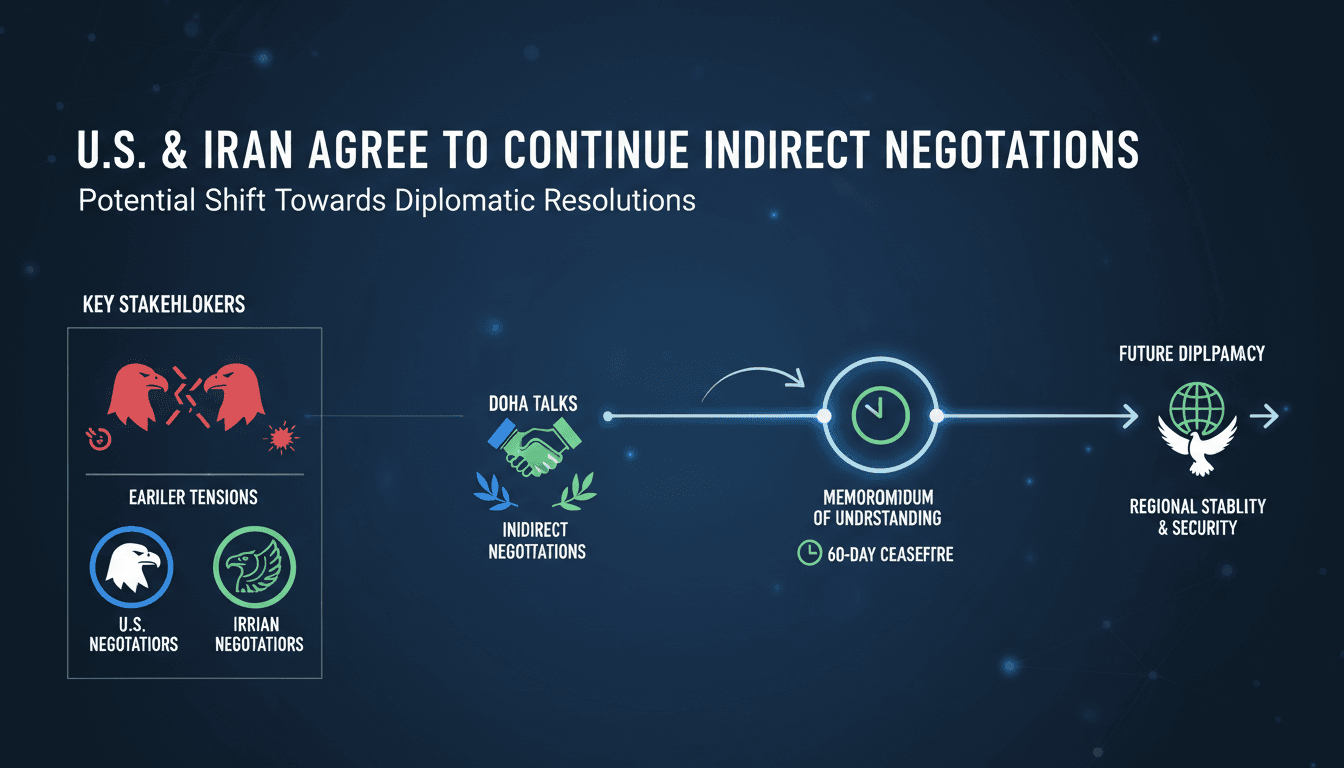
Here's what it means for you.
The recent agreement between the U.S. and Iran to continue indirect negotiations signals a potential thaw in relations that could impact regional stability and security. A 60-day ceasefire is a crucial step towards reducing hostilities and may pave the way for further diplomatic engagements. Stakeholders in global energy markets should monitor developments closely, particularly regarding the reopening of the Strait of Hormuz, a vital shipping route.
What happened
U.S. and Iranian negotiators recently held indirect talks in Doha, resulting in an agreement to continue discussions. These negotiations were mediated by Qatar and Pakistan and were prompted by ongoing military tensions between the two nations. A memorandum of understanding was established, which includes a 60-day ceasefire and provisions for the reopening of the Strait of Hormuz.
The next meeting is scheduled to take place after the funeral of Iran's former Supreme Leader, Ali Khamenei. This timeline indicates a strategic pause that may allow both sides to reassess their positions and prepare for future discussions.
The Context
The indirect talks in Doha are part of broader efforts to lower tensions following recent military exchanges between the U.S. and Iran. The involvement of Qatari and Pakistani mediators highlights the international dimension of these negotiations, as both nations seek to stabilize the region amidst rising tensions. The discussions have not included direct talks, focusing instead on issues such as frozen Iranian assets and regional security.
The 60-day ceasefire is significant, as it aims to create a framework for further negotiations and reduce hostilities. The geopolitical landscape surrounding these talks is complex, with implications for both regional and global security.
Takeaway
As the situation evolves, attention will be on the outcomes of the next meeting scheduled after Khamenei's funeral. The reopening of the Strait of Hormuz and its implications for global energy markets will also be critical to monitor. The ongoing discussions indicate a potential shift towards more diplomatic resolutions in U.S.-Iran relations, which could have far-reaching effects on regional stability.
Future developments will likely shape the trajectory of U.S.-Iran relations, particularly in light of the current geopolitical climate and economic considerations.
Regional coverage and analysis focused on politics, diplomacy, and business across the Middle East.
"Al-Monitor is known for analytical reporting on Middle East politics and policy developments."
— A47 Editor
Where do US, Iran talks stand after Doha negotiations: What we know
Iran and the United States have concluded a round of indirect talks in Doha, mediated by Qatar and Pakistan, aimed at reducing tensions following recent military exchanges. The discussions included a memorandum of understanding that established a 60-...
Global news coverage with extensive reporting on Middle Eastern conflicts and geopolitics.
"Al Jazeera is a Qatar-based broadcaster known for wide regional coverage and alternative perspectives."
— A47 Editor
US-Iran talks in Doha: What were the outcomes and what’s next?
Recent talks between U.S. envoys and Qatari mediators in Doha focused on negotiations with Iran, with Qatar announcing that the next meeting will occur after the funeral of Iran's former Supreme Leader, Ali Khamenei. The discussions have been charact...
Comprehensive coverage of Middle Eastern and global issues.
"Al Jazeera is a prominent voice from the Global South, especially the Middle East, with an emphasis on underreported stories."
— A47 Editor
US-Iran talks in Doha: What were the outcomes and what’s next?
Recent talks between U.S. envoys and Qatari mediators in Doha focused on negotiations with Iran, with Qatar announcing that the next meeting will occur after the funeral of Iran's former Supreme Leader, Ali Khamenei. The discussions have been charact...
Regional and international reporting focused on Middle Eastern politics, diplomacy, and economics.
"Asharq Al-Awsat is a Saudi-owned international newspaper reflecting mainstream Gulf political perspectives."
— A47 Editor
Qatar: 'Positive Progress' in US-Iran Indirect Talks in Doha
Indirect talks between the United States and Iran in Doha have shown positive progress, with both nations agreeing to establish a communication channel to address violations of their memorandum of understanding. This development follows a series of m...
International stories from NPR’s global desk.
"NPR is an American public media organization known for thoughtful reporting and a slightly left-leaning editorial tone."
— A47 Editor
U.S. and Iran hold separate meetings in Qatar and agree to continue discussions
U.S. and Iranian negotiators met separately in Qatar on July 1, 2026, with Qatari and Pakistani mediators, achieving what host Qatar described as 'positive progress' and agreeing to continue discussions. This meeting follows heightened tensions in th...
English-language reporting on Saudi politics, policy, and society.
"Saudi Gazette reflects mainstream Saudi institutional perspectives."
— A47 Editor
Qatar reports 'positive progress' in indirect US-Iran talks in Doha
Indirect meetings between US and Iranian delegations in Doha have concluded with 'positive progress' on issues related to a recent memorandum of understanding, according to Qatar's Foreign Ministry. The discussions involved separate meetings with Qat...