
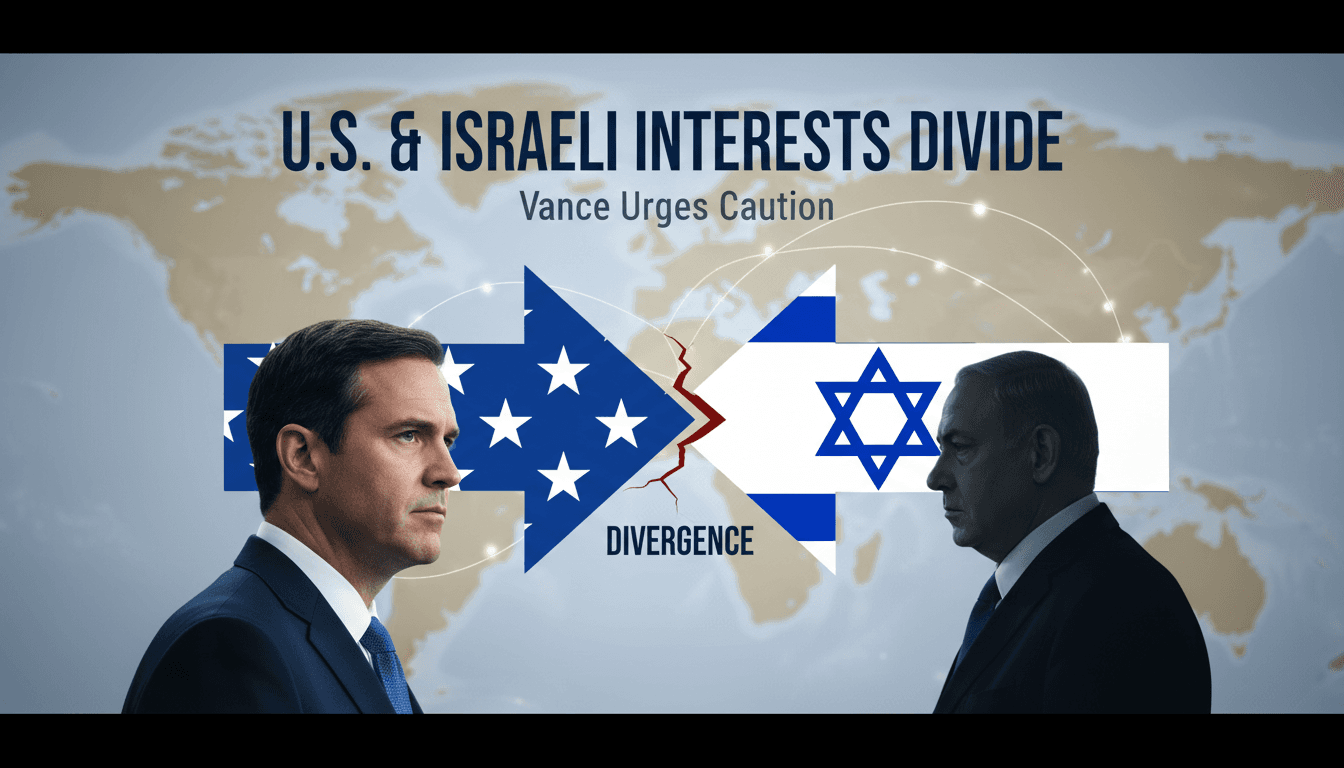
Vice President Vance Highlights Divergence of U.S. and Israeli Interests
Here's what it means for you.
Vice President J.D. Vance's recent comments signal a potential shift in U.S. foreign policy, particularly regarding its relationship with Israel. By emphasizing that American interests do not always align with those of Israel, Vance calls for a reevaluation of how foreign influences shape U.S. governance. This perspective may lead to increased scrutiny of diplomatic engagements and foreign lobbying efforts in American politics. As discussions around foreign influence intensify, stakeholders in both U.S. and Israeli politics will need to navigate these complexities carefully. The implications of Vance's remarks could resonate across various sectors, impacting everything from policy-making to public opinion.
What happened
On June 19, 2026, Vice President J.D. Vance articulated that American interests do not always align with those of Israel during a talk show appearance. He highlighted the political influence that Israel seeks to exert on U.S. policy, urging American leaders to prioritize domestic interests over foreign agendas. Vance's comments come amid ongoing debates about the role of foreign nations in shaping American politics.
He acknowledged that Israel, like other countries, aims to influence U.S. policy, which raises questions about the nature of such influences. Vance also referenced past disagreements between former President Trump and Israeli Prime Minister Netanyahu, illustrating the complexities of U.S.-Israel relations.
The Context
The backdrop of Vance's remarks is a growing concern over foreign influence in American politics, particularly regarding Israel's lobbying efforts. As the political landscape evolves, the relationship between the U.S. and Israel faces increased scrutiny, especially in light of Vance's emphasis on prioritizing American interests. This shift may reflect broader sentiments among American voters who are increasingly aware of foreign influences on domestic policy.
Vance's comments come at a time when discussions about anti-Semitism and its political exploitation are also gaining traction. The Vice President's perspective may resonate with constituents who are wary of foreign entanglements and seek a more independent U.S. foreign policy.
Takeaway
The evolving dynamics of U.S.-Israel relations could lead to more pronounced debates on foreign influence in American politics. Observers should watch for potential shifts in U.S. foreign policy towards Israel, as well as responses from Israeli officials regarding Vance's statements. These developments may shape future diplomatic engagements and influence how American leaders approach foreign relations.
As the conversation around foreign influence continues, the implications of Vance's remarks will likely reverberate through political discourse, prompting a reevaluation of long-standing alliances and partnerships.
Pan-Arab political news and analysis.
"Al-Quds Al-Arabi is a London-based Arabic newspaper known for political coverage."
— A47 Editor
فانس: إسرائيل تسعى للتأثير على السياسة الأمريكية
J.D. Vance has stated that Israel is actively seeking to influence American politics, highlighting the ongoing interplay between foreign interests and domestic policy in the United States. This assertion reflects concerns about the extent to which ex...
Jordanian news and regional updates.
"Roya News is a Jordanian outlet focused on breaking news and local affairs."
— A47 Editor
فانس: مصالح أميركا لا تتطابق دائماً مع إسرائيل ولدى ترمب خلافات مع نتنياهو
U.S. Vice President J.D. Vance stated that American interests do not always align with those of Israel, highlighting existing disagreements between former President Trump and Israeli Prime Minister Netanyahu.
Arabic-language political and world news coverage for UAE readers.
"Emarat Al Youm world coverage usually presents international developments through a UAE and Arab audience lens."
— A47 Editor
فانس: مصالحنا لا تتطابق دائماً مع إسرائيل وتهمة "معاداة السامية" تُستغل سياسياً فانس: مصالحنا لا تتطابق دائماً مع إسرائيل وتهمة "معاداة السامية" تُستغل سياسياً
U.S. Vice President Vance stated that American interests do not always align with those of Israel, highlighting a realistic approach to U.S. foreign policy. He also noted that the accusation of anti-Semitism is often politically exploited.