
Netanyahu escalates military actions against Hezbollah amid domestic political pressure
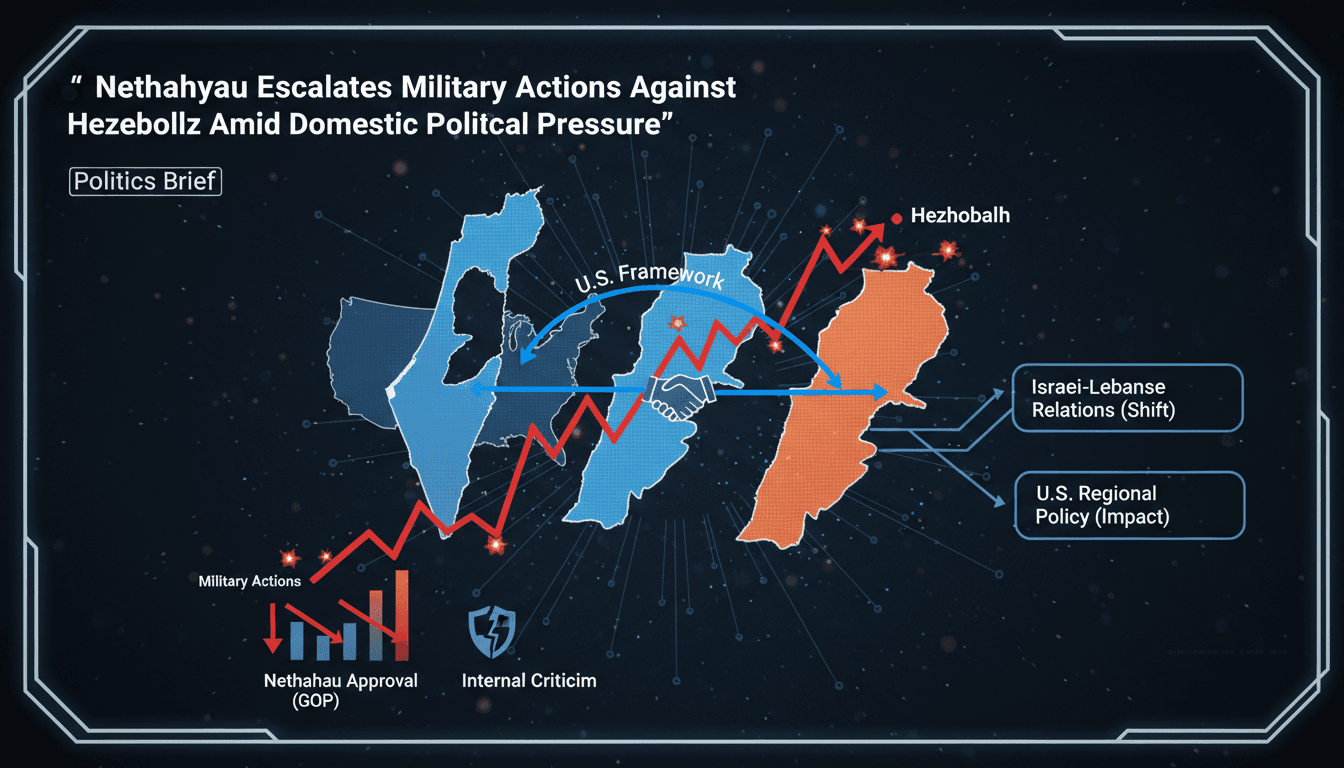
Here's what it means for you.
The recent military escalation by Israeli Prime Minister Benjamin Netanyahu against Hezbollah signals a critical juncture in Israeli-Lebanese relations. As Netanyahu faces declining support domestically and from U.S. Republicans, the implications of these actions could reverberate through regional stability and U.S. foreign policy. Stakeholders should closely monitor the evolving dynamics, particularly the impact on Hezbollah's influence and the response from the U.S. government.
What happened
Israeli Prime Minister Benjamin Netanyahu has ordered military strikes against Hezbollah in Lebanon shortly after a U.S.-brokered framework agreement aimed at reducing tensions. This agreement, which Netanyahu described as a historic achievement, is intended to establish security zones for the disarmament of Hezbollah. However, the timing of the military actions raises questions about the effectiveness of the diplomatic efforts.
The strikes against Hezbollah infrastructure were announced just one day after the agreement was signed, indicating a swift shift from diplomacy to military action. This escalation comes amid growing internal criticism of Netanyahu's leadership and declining support from the Republican Party in the United States. The situation is further complicated by rising tensions between Netanyahu and the Trump administration regarding the ongoing Gaza conflict and Iran.
The Context
Netanyahu's popularity has been waning, particularly among younger Republicans, as ongoing conflicts continue to challenge his leadership. The recent U.S.-brokered agreement with Lebanon is viewed as a significant diplomatic achievement for Israel, yet the military strikes against Hezbollah suggest a reluctance to fully embrace this diplomatic path. The backdrop of these events includes a complex relationship with the Trump administration, which has expressed concerns over how Netanyahu is handling regional conflicts.
The establishment of two security zones for the initial phase of disarming Hezbollah marks a critical step in the peace process. However, the military escalation complicates the diplomatic landscape and raises questions about the long-term viability of the agreement. As tensions rise, the future of Israeli-Lebanese relations hangs in the balance, with potential implications for broader regional stability.
Takeaway
As the situation unfolds, it is essential to monitor reactions from the U.S. Republican Party regarding Israel's military actions. Observing the implementation of the agreement with Lebanon will also be crucial in assessing its impact on Hezbollah's influence in the region. The evolving dynamics between Israel and Lebanon could reshape not only regional stability but also U.S.-Israel relations moving forward.
The implications of Netanyahu's actions may lead to a reevaluation of U.S. foreign policy in the Middle East. Stakeholders should remain vigilant as the political landscape continues to shift, particularly in light of the ongoing military actions and their potential fallout.
Arabic-language coverage of political affairs and current events.
"Okaz political coverage typically follows mainstream Saudi framing on national and regional affairs."
— A47 Editor
نتنياهو بين نار لبنان وبرود واشنطن.. ويخسر الجمهوريين
Israeli Prime Minister Benjamin Netanyahu is intensifying military actions against southern Lebanon, targeting infrastructure linked to Hezbollah, despite efforts from Washington to establish a ceasefire agreement between Lebanon and Israel. This esc...
Pan-Arab news coverage spanning politics, business, sports, and regional affairs.
"Asharq Al-Awsat reflects a broad Arab editorial perspective with strong attention to regional geopolitics."
— A47 Editor
نتنياهو يصف الاتفاق مع لبنان بـ«التاريخي»... وبن غفير يعدّه «خطأً كبيراً»
Israeli Prime Minister Benjamin Netanyahu praised the agreement reached with Lebanon under U.S. sponsorship, calling it a 'historic' achievement that dealt a blow to Iran and Hezbollah. This agreement marks a significant diplomatic milestone in the r...
Arabic-language coverage of international news and geopolitics.
"RT Arabic is a Russian state-funded outlet often criticized for promoting Kremlin-aligned narratives."
— A47 Editor
بعد "الاتفاق الإطاري" مع لبنان.. نتنياهو يعرض المناطق التي ستبدأ فيها المرحلة التجريبية (صورة)
Israeli Prime Minister Benjamin Netanyahu held a press conference on Saturday evening, discussing the trilateral framework agreement signed on Friday, June 26, 2026, with Lebanon under U.S. sponsorship. During the conference, he presented the areas w...
Arabic-language political and world news coverage for UAE readers.
"Emarat Al Youm world coverage usually presents international developments through a UAE and Arab audience lens."
— A47 Editor
نتنياهو: الاتفاق مع لبنان "تاريخي" ووجّه ضربة إلى إيران وحزب الله نتنياهو: الاتفاق مع لبنان "تاريخي" ووجّه ضربة إلى إيران وحزب الله
Israeli Prime Minister Benjamin Netanyahu praised the recently reached agreement with Lebanon, facilitated by the United States, calling it a 'historic' deal. This agreement is viewed as a significant diplomatic achievement in the region, potentially...
Jordanian news and regional updates.
"Roya News is a Jordanian outlet focused on breaking news and local affairs."
— A47 Editor
نتنياهو: اتفقنا مع لبنان على منطقتين تجريبيتين لنزع سلاح حزب الله
Israeli Prime Minister Benjamin Netanyahu announced an agreement with Lebanon to establish two security zones aimed at disarming Hezbollah. This development marks a significant step in addressing regional security concerns and potential conflicts bet...