
IRGC Establishes Covert Cells in Iraq for Drone Attacks on Gulf Nations
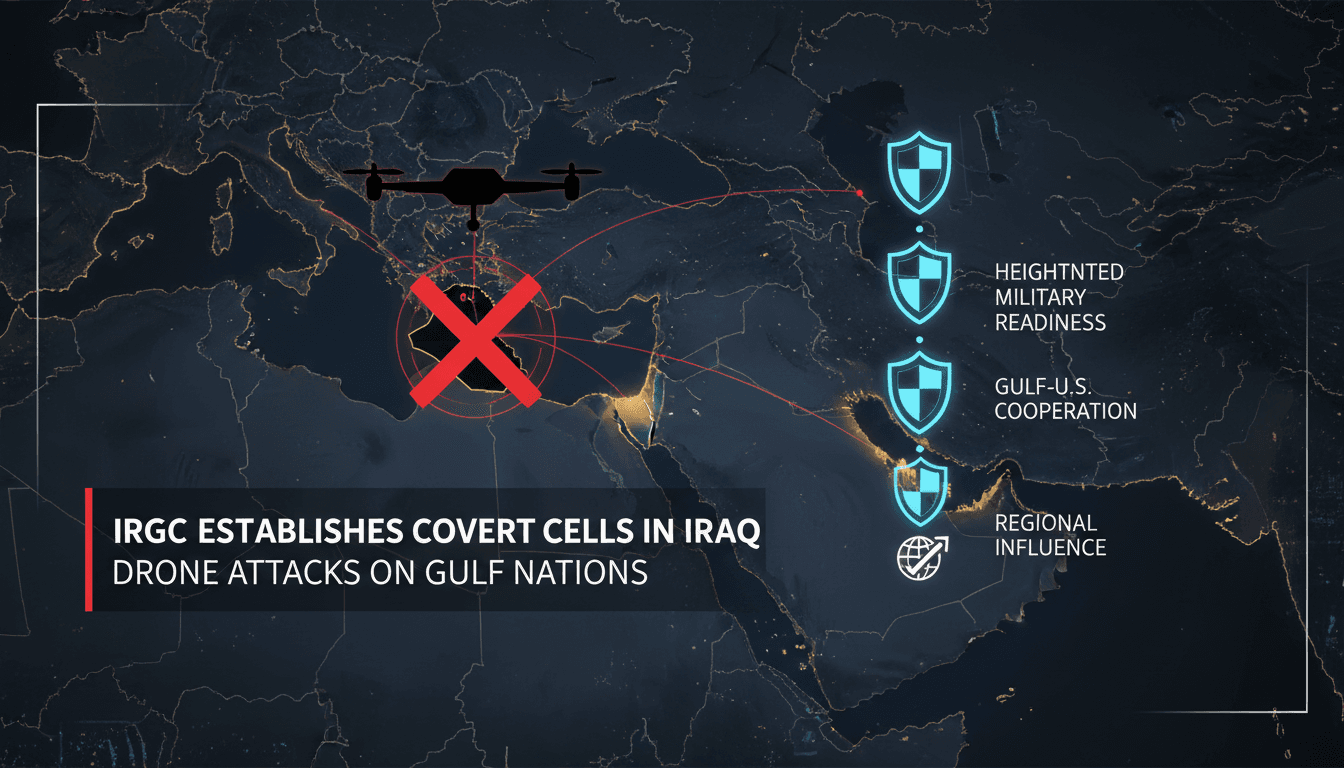
Here's what it means for you.
The establishment of covert cells by Iran's Islamic Revolutionary Guard Corps (IRGC) in Iraq signals a significant shift in regional military dynamics. This development may lead to increased tensions in the Gulf, prompting affected nations to bolster their military readiness. The potential for coordinated responses among Gulf states and the U.S. could reshape security strategies in the region. As these covert operations unfold, stakeholders must remain vigilant to the evolving threat landscape. The implications for international relations and regional stability are profound, necessitating a reevaluation of existing defense postures.
What happened
Iran's Islamic Revolutionary Guard Corps has reportedly set up secretive cells in Iraq aimed at conducting drone attacks on Gulf nations, particularly those hosting American forces. These cells consist of elite Iraqi Shi'ite fighters and have already launched at least seven drone attacks between April 20 and May 17. The targeted countries include Kuwait, Saudi Arabia, and the UAE, highlighting a clear intent to project power across the region.
The attacks were strategically launched from desert locations near Basra and Samawa, allowing the IRGC to operate with a degree of anonymity. This tactical shift underscores Iran's desire to enhance its regional influence while circumventing established militia networks to avoid detection.
The Context
The formation of these covert cells marks a significant escalation in Iran's military strategy, allowing for discreet power projection across the Gulf region. The IRGC's approach aims to undermine the security of Gulf nations while simultaneously challenging U.S. influence in the area. The timing of these operations coincides with heightened geopolitical tensions, making the situation particularly volatile.
The cells reportedly consist of about ten fighters each, indicating a well-organized effort to conduct operations with precision. The implications of these actions extend beyond immediate military concerns, as they may provoke a reevaluation of defense strategies among Gulf states and their allies.
Takeaway
As tensions rise, Gulf states may enhance their military readiness and seek closer cooperation with the U.S. to counter potential threats from Iran's covert operations. The possibility of military responses from affected nations is a critical factor to monitor in the coming weeks. Increased surveillance and intelligence operations by the U.S. in the region could also be anticipated as a countermeasure to these developments.
The establishment of these cells may escalate tensions further, prompting a more robust response from Gulf nations. Stakeholders should remain alert to the evolving dynamics and prepare for potential shifts in regional security strategies.
Pan-Arab news coverage spanning politics, business, sports, and regional affairs.
"Asharq Al-Awsat reflects a broad Arab editorial perspective with strong attention to regional geopolitics."
— A47 Editor
مصادر: «الحرس الثوري» الإيراني شكّل خلايا سرية بالعراق لمهاجمة دول خليجية
Eight Iraqi sources reported to Reuters that the Iranian Revolutionary Guard has established new secret cells in Iraq aimed at carrying out attacks on Gulf countries. This development raises concerns about regional security and the potential for incr...
Global coverage of politics, crises, and international affairs.
"HuffPost provides progressive-oriented reporting on international developments, often focusing on humanitarian and social justice issues."
— A47 Editor
Iran's Revolutionary Guards Set Up Covert Iraqi Cells To Attack Gulf Neighbors: Report
Iran's Revolutionary Guards have reportedly established covert cells in Iraq aimed at conducting attacks against Gulf neighbors, indicating a strategic shift in their operational tactics to enhance Tehran's regional influence.
Regional coverage and analysis focused on politics, diplomacy, and business across the Middle East.
"Al-Monitor is known for analytical reporting on Middle East politics and policy developments."
— A47 Editor
Exclusive-Iran's Revolutionary Guards set up covert Iraqi cells to attack Gulf neighbors, sources say
Iran's Islamic Revolutionary Guard Corps (IRGC) has established covert cells in Iraq to conduct attacks on Gulf nations hosting American forces, according to eight Iraqi sources. These cells, comprising elite Iraqi Shi'ite fighters, have reportedly l...