
France asserts veto power in UN negotiations over Iran's nuclear program
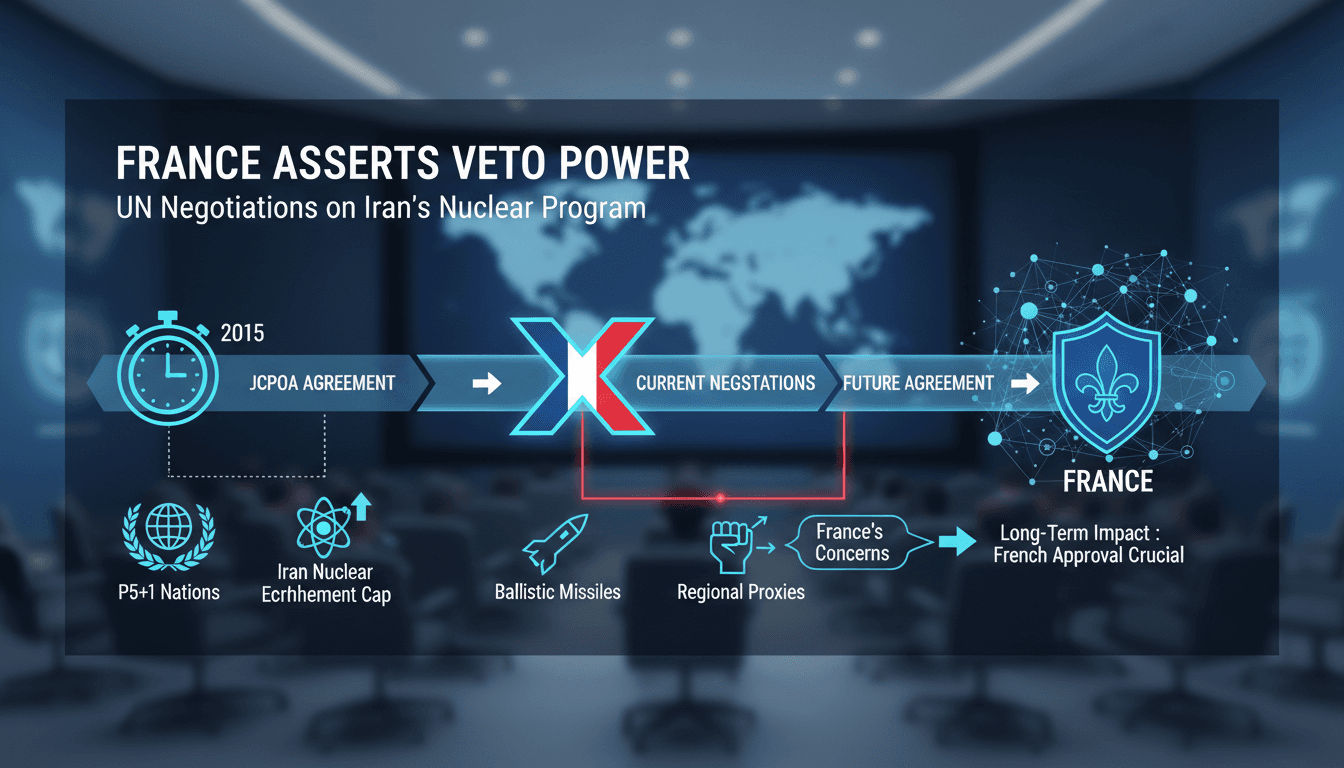
Here's what it means for you.
France's firm stance on Iran's nuclear negotiations signals a pivotal shift in international diplomacy. The insistence on addressing Iran's ballistic missile program and regional activities may reshape future agreements and influence global security dynamics. Stakeholders in the energy and defense sectors should closely monitor these developments, as they could impact market stability and geopolitical relations.
What happened
France has asserted its position as a key player in the negotiations regarding Iran's nuclear program, emphasizing that it will not support the lifting of UN sanctions without satisfactory terms. French Foreign Minister Jean-Noel Barrot has highlighted the necessity of addressing Iran's ballistic missile program and regional proxy support in any agreement. This declaration includes a threat to use France's veto power in the UN Security Council against any unsatisfactory US-Iran agreement.
The negotiations are set to unfold over the next 60 days, with a final accord expected soon. France's involvement underscores its historical role in these discussions and its influence as a permanent member of the UN Security Council. The outcome of these negotiations will significantly depend on France's approval and its demands for a comprehensive agreement.
The Context
The current negotiations are taking place against a backdrop of heightened tensions regarding Iran's nuclear ambitions. The US is actively negotiating with Iran, aiming for a final accord that addresses various concerns, including Iran's missile capabilities. European powers, particularly France, Britain, and Germany, are wary of the US's negotiating strategy and its potential inadequacies, which could lead to a less robust agreement.
France's insistence on stringent conditions reflects its commitment to regional stability and security. The dynamics between the US and France will be crucial in shaping the future of Iran's nuclear program and the broader geopolitical landscape. As a permanent member of the UN Security Council, France holds significant influence over sanctions and international responses to Iran's actions.
Takeaway
As negotiations progress, the focus will be on potential shifts in the US negotiating strategy and Iran's responses to the conditions set by France. The next 60 days will be critical in determining whether a satisfactory agreement can be reached that addresses France's concerns. The outcome will likely influence not only Iran's nuclear capabilities but also the broader stability of the region.
Stakeholders should remain vigilant as developments unfold, as France's approval will be essential for any future agreements. The interplay between the US and France will be a key factor in the negotiations, potentially reshaping international relations regarding Iran.
Pan-Arab news coverage spanning politics, business, sports, and regional affairs.
"Asharq Al-Awsat reflects a broad Arab editorial perspective with strong attention to regional geopolitics."
— A47 Editor
فرنسا تهدد باستخدام «الفيتو» في مجلس الأمن ضد اتفاق أميركي - إيراني «غير مُرضٍ»
France has threatened to use its veto power in the United Nations Security Council against a U.S.-Iran agreement that it deems unsatisfactory. Jean-Noël Barrot emphasized that France's approval is essential for lifting sanctions on Iran, echoing a si...
International news coverage curated for readers in the UAE and Gulf region.
"Emirates 24|7 world coverage presents global developments through a UAE-facing and Gulf-relevant editorial lens."
— A47 Editor
No UN sanctions lifting on Iran without French approval, Foreign Minister Barrot says
France's Foreign Minister Jean-Noel Barrot announced that the country will not support the lifting of UN sanctions on Iran unless the terms of a final nuclear agreement are satisfactory. He emphasized that regional stability is contingent upon addres...
Regional coverage and analysis focused on politics, diplomacy, and business across the Middle East.
"Al-Monitor is known for analytical reporting on Middle East politics and policy developments."
— A47 Editor
No UN sanctions lifting on Iran without France's approval, foreign minister says
France's Foreign Minister Jean-Noel Barrot stated that the country will not approve the lifting of UN sanctions on Iran without satisfactory terms in a final nuclear accord. He emphasized that stability in the region hinges on addressing Iran's balli...