
Arab League Condemns Iranian Attacks on Gulf States
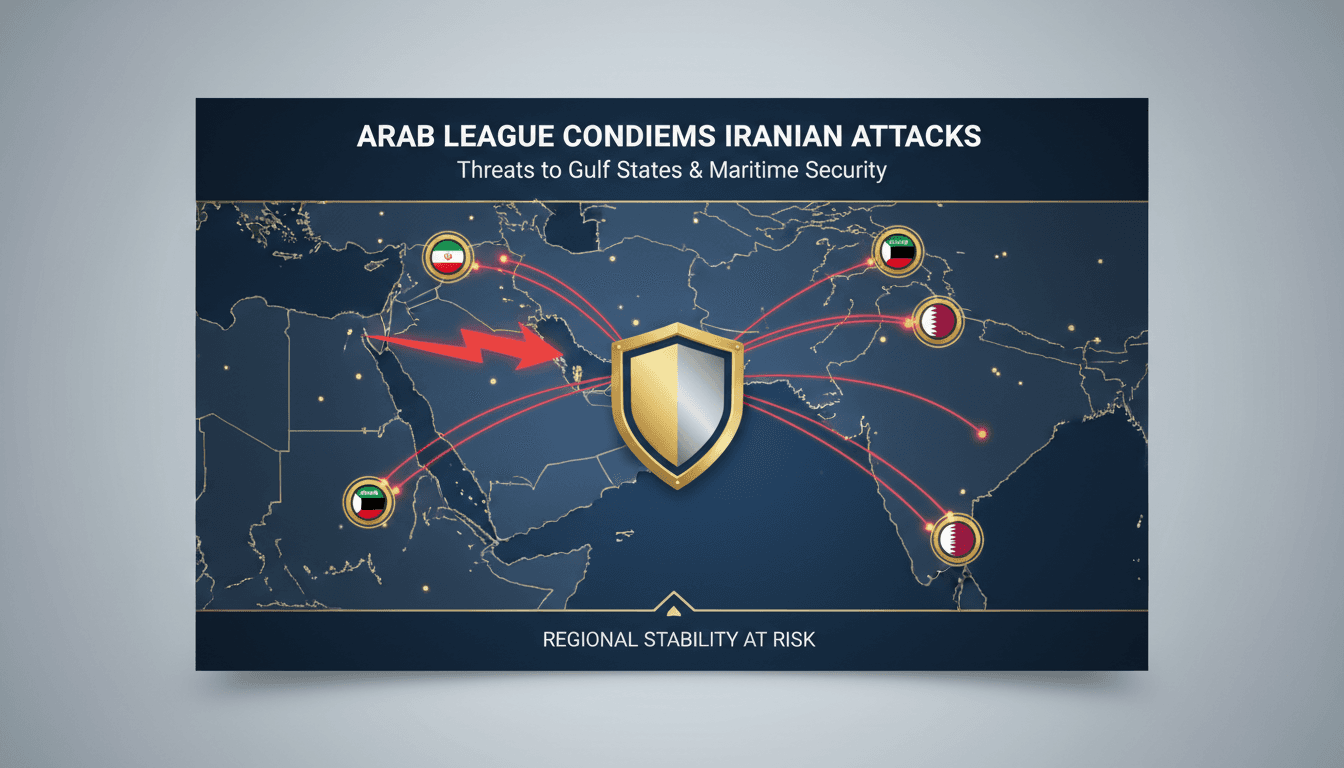
Here's what it means for you.
The Arab League's condemnation of Iranian aggression highlights the precarious state of regional security in the Gulf. This unified stance among member nations underscores the importance of solidarity in the face of external threats. As tensions escalate, the potential for conflict could disrupt vital maritime routes, impacting international trade and energy supplies. The situation calls for a coordinated response from Gulf states to ensure stability and protect their interests. The implications of these developments extend beyond the region, affecting global markets and diplomatic relations.
What happened
The Arab League has officially condemned recent Iranian attacks targeting Gulf states, specifically Saudi Arabia, Qatar, Kuwait, and Bahrain. This condemnation was articulated by Secretary-General Nabil Fahmy, who emphasized the need for regional stability and solidarity among member nations. The attacks included strikes on a Saudi tanker and a Qatari LNG tanker, raising alarms about maritime security.
Fahmy's statements reflect a growing concern that such aggression threatens ongoing de-escalation efforts and could lead to wider conflict. The Arab League's response signals a collective commitment to safeguarding the security of the Arabian Gulf, which is integral to Arab national security.
The Context
The backdrop of this condemnation is a series of Iranian attacks that have heightened tensions in the region. The Gulf states, particularly Saudi Arabia and Qatar, are critical players in the geopolitical landscape, and their security is paramount for regional stability. The Arab League's solidarity with these nations is crucial as they navigate the complexities of external aggression.
Nabil Fahmy's warnings about the importance of protecting maritime routes underscore the potential risks to both regional and international security. As the situation evolves, the Arab League's ability to maintain unity and respond effectively will be essential in preventing further escalation.
Takeaway
Looking ahead, the focus will be on potential responses from Gulf states to Iranian aggression and the international community's reaction to the Arab League's condemnation. The fragility of regional security is evident, and any failure in diplomatic efforts could lead to significant consequences.
The Arab League's commitment to solidarity and stability will be tested as tensions rise, making it imperative for member states to work together to safeguard their interests and ensure maritime security.
International news coverage curated for readers in the UAE and Gulf region.
"Emirates 24|7 world coverage presents global developments through a UAE-facing and Gulf-relevant editorial lens."
— A47 Editor
Arab League condemns attacks on Gulf states, warns against regional escalation
The Secretary-General of the League of Arab States, Nabil Fahmy, condemned recent Iranian missile attacks on Gulf states, specifically targeting the Saudi tanker Wedyan and the Qatari LNG tanker Al Rekayyat. He highlighted the increasing frequency of...
Arabic-language political and world news coverage for UAE readers.
"Emarat Al Youm world coverage usually presents international developments through a UAE and Arab audience lens."
— A47 Editor
الجامعة العربية تجدد رفضها الهجمات الإيرانية العدوانية على مصالح وأراضي دول عربية خليجية الجامعة العربية تجدد رفضها الهجمات الإيرانية العدوانية على مصالح وأراضي دول عربية خليجية
The Secretary-General of the Arab League, Nabil Fahmy, has reiterated the organization's strong condemnation of Iranian aggressive attacks targeting the interests and territories of Gulf Arab states. This statement reflects ongoing tensions in the re...
Pan-Arab news coverage spanning politics, business, sports, and regional affairs.
"Asharq Al-Awsat reflects a broad Arab editorial perspective with strong attention to regional geopolitics."
— A47 Editor
الجامعة العربية تدين الاعتداءات الإيرانية وتحذر من «مواجهة مفتوحة»
The Arab League has condemned Iranian attacks and warned of a potential 'open confrontation,' reaffirming its full solidarity with Saudi Arabia, Qatar, Kuwait, and Bahrain. This statement reflects growing tensions in the region and highlights the Lea...