
Trump Faces Deadline on Housing Bill That Could Block CBDC Until 2030
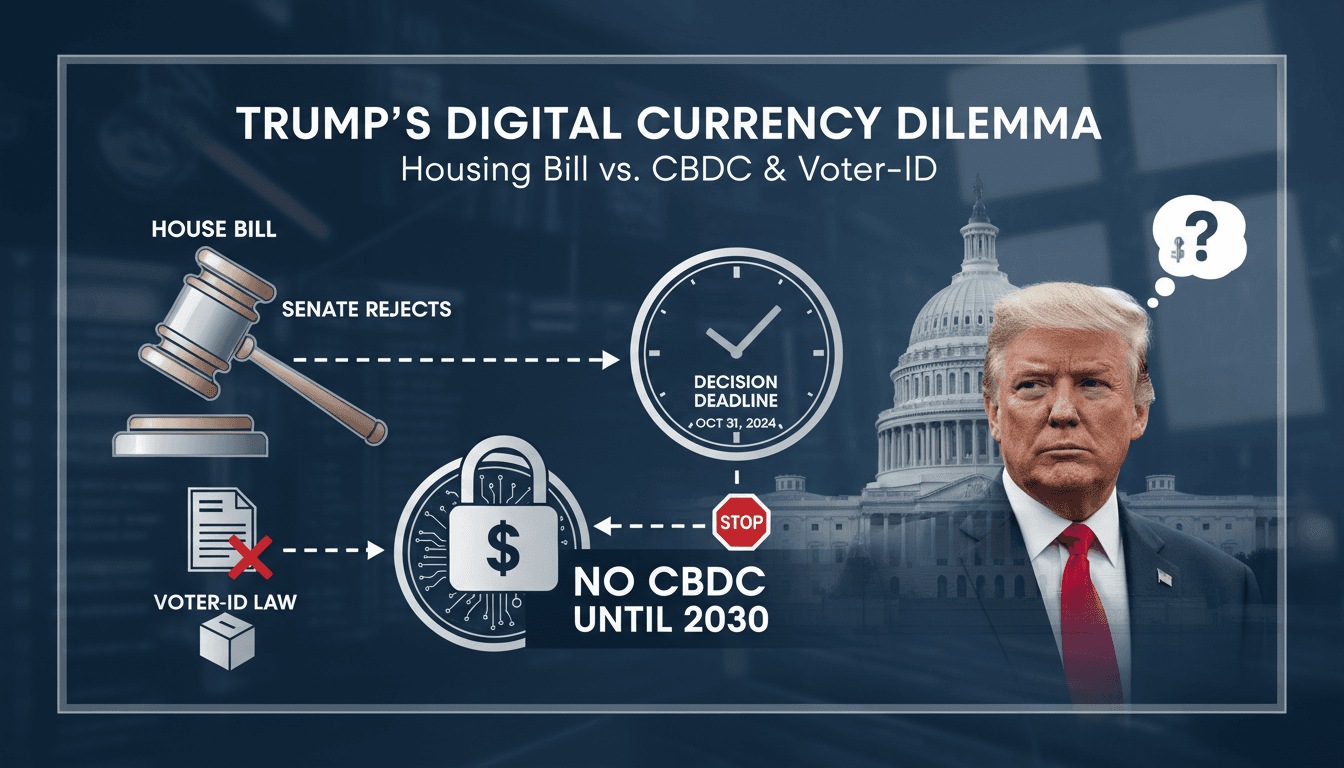
Here's what it means for you.
The ongoing legislative standoff over the housing bill could have far-reaching implications for both digital currency regulation and electoral laws in the United States. President Trump's decision to link the prohibition of a central bank digital currency (CBDC) to a voter-ID law complicates the political landscape. As the deadline approaches, stakeholders in the financial and political sectors will be closely monitoring the outcome. The implications of this decision could shape the future of digital currencies and voting rights, impacting how these issues are navigated in the U.S. for years to come.
What happened
President Trump is currently evaluating a bipartisan housing bill that includes a provision to prohibit the Federal Reserve from issuing a central bank digital currency until 2030. This decision comes with a 10-day deadline, as the bill was transmitted to him by House Speaker Mike Johnson on June 29, 2026. Trump's signature on the bill is contingent upon the inclusion of a voter-ID law, which has already faced rejection in the Senate.
The proposed ban on the issuance of a CBDC is significant, as it sets a clear timeline until 2030 for the Federal Reserve. The legislative standoff highlights the complexities of merging digital currency regulation with electoral laws, as Trump's insistence on the voter-ID law complicates the process.
The Context
The housing bill's introduction marks a critical moment in the ongoing debate over digital currency regulation in the U.S. The provision to block the Federal Reserve from issuing a CBDC until 2030 reflects growing concerns about the implications of digital currencies on the economy. Trump's demand for a voter-ID law adds another layer of complexity, as this proposal has already been rejected by the Senate, indicating a contentious political environment.
As the deadline for Trump's decision approaches, the dynamics between the executive branch and Congress will be closely scrutinized. The outcome of this legislative standoff could set important precedents for how digital currencies and voting laws are regulated in the future.
Takeaway
As the July 9, 2026 deadline looms, the political maneuvering surrounding the housing bill and the voter-ID law will be pivotal. Observers should watch for potential reactions from Congress regarding the voter-ID law, as this could influence Trump's final decision on the housing bill. The implications of this situation extend beyond immediate legislative outcomes, potentially shaping the future landscape of digital currency policy and electoral legislation in the U.S.
The resolution of this standoff will likely have lasting effects on how digital currencies are regulated and how voting laws are structured, making it a critical moment for both sectors.
Real-time updates, analysis, and reports on the blockchain and cryptocurrency sectors.
"Crypto News delivers real-time updates, analysis, and reports on the blockchain and cryptocurrency sectors."
— A47 Editor
CBDC ban rides housing bill into Trump’s 10-day deadline
Former President Donald Trump has a 10-day deadline to act on a bipartisan housing bill that includes a ban on the Federal Reserve's ability to issue Central Bank Digital Currencies (CBDCs) until 2030. This legislation has passed both the House and S...
Covers blockchain, cryptocurrency news, project analysis, and market insights.
"Cointelegraph is a leading crypto-focused media outlet known for timely news, analysis, and educational content related to blockchain and digital assets."
— A47 Editor
Donald Trump has 10 days to decide on housing bill with CBDC ban
House Speaker Mike Johnson has sent a housing bill to former President Donald Trump, which includes a provision that prohibits the U.S. Federal Reserve from issuing Central Bank Digital Currencies (CBDCs) until 2030. Trump has 10 days to make a decis...
Covers Bitcoin plus altcoin news, market updates, and educational resources.
"Bitcoin.com provides news, market data, and guides focused on Bitcoin and the wider crypto industry."
— A47 Editor
Trump Holds Up CBDC Ban Through 2030 as He Demands a Voter-ID Law
Former President Donald Trump has delayed signing a bipartisan housing bill that includes a ban on the Federal Reserve's ability to issue Central Bank Digital Currencies (CBDCs) until 2030, while also demanding a voter-ID law. This legislative move r...