
Trump urges Israel to accept ceasefire with Hezbollah amid escalating violence
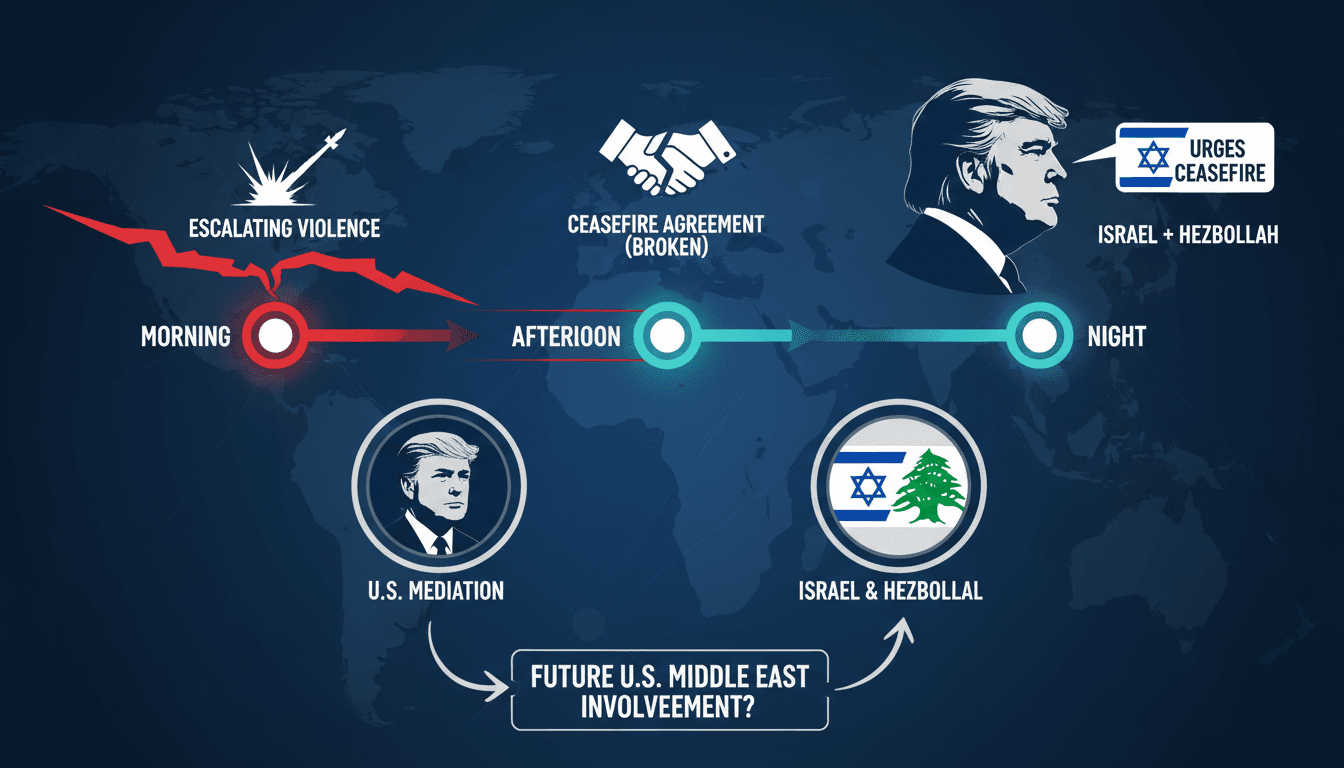
Here's what it means for you.
President Donald Trump's call for a ceasefire between Israel and Hezbollah highlights the delicate balance of power in the Middle East. The outcome of this diplomatic intervention could shape future U.S. foreign policy and its role in regional conflicts. As tensions escalate, the effectiveness of this ceasefire will be closely monitored by international stakeholders. The situation underscores the complexities of Middle Eastern diplomacy, where a single agreement can have far-reaching implications. Observers will be watching closely to see how both parties respond to this latest development.
What happened
On June 19, 2026, President Donald Trump urged Israel to agree to a ceasefire with Hezbollah amid ongoing violence. This request came on the same day that both parties had reached a ceasefire agreement following intense fighting. The escalation of hostilities had resulted in dozens of casualties due to Israeli airstrikes in southern Lebanon.
Trump's intervention marks a significant moment in U.S. foreign policy, as it seeks to stabilize a volatile situation. The request reflects the urgency of addressing the conflict and the potential consequences for regional stability.
The Context
The recent escalation between Israel and Hezbollah has created a challenging environment for U.S. diplomacy. Intense fighting had occurred prior to the ceasefire agreement, raising concerns about the humanitarian impact and the broader implications for Middle Eastern geopolitics. Trump's request for a ceasefire is seen as a critical test of his administration's approach to foreign policy in the region.
The timing of this intervention is crucial, as it coincides with a period of heightened tensions. Both Israeli and Hezbollah leadership will be pivotal in determining the success of the ceasefire and the potential for lasting peace.
Takeaway
The effectiveness of Trump's diplomatic efforts will be closely scrutinized in the coming days. Observers should monitor the implementation of the ceasefire agreement and the reactions from both Israeli and Hezbollah leadership. The commitment of both parties to uphold the ceasefire will be essential for any future U.S. involvement in Middle Eastern conflicts.
As the situation remains fluid, the international community will be watching for signs of stability or further escalation. The outcome of this ceasefire could set a precedent for future diplomatic interventions in the region.
Arabic-language reporting on global and regional news.
"BBC Arabic is part of the BBC, generally regarded for editorial standards and broad international coverage."
— A47 Editor
عشرات القتلى في غارات شنتها إسرائيل على جنوب لبنان، وترامب يقول إنه طلب من إسرائيل الموافقة على وقف إطلاق النار
Israel conducted airstrikes in southern Lebanon, resulting in dozens of casualties, amidst a backdrop of intense hostilities. Earlier on Friday, both Israel and Hezbollah had agreed to a ceasefire following a day of escalating violence.
Pan-Arab news coverage spanning politics, business, sports, and regional affairs.
"Asharq Al-Awsat reflects a broad Arab editorial perspective with strong attention to regional geopolitics."
— A47 Editor
ترمب طلب من إسرائيل الموافقة على وقف النار مع «حزب الله»
U.S. President Donald Trump stated that he spoke with Israel on Friday and requested their agreement to a ceasefire with the Lebanese group Hezbollah. This communication highlights ongoing tensions in the region and the U.S. role in mediating conflic...
Arabic-language coverage of international news and geopolitics.
"RT Arabic is a Russian state-funded outlet often criticized for promoting Kremlin-aligned narratives."
— A47 Editor
هدنة حزب الله وإسرائيل.. اختبار لترامب
A ceasefire has been announced between Israel and Hezbollah, marking a significant moment in the ongoing tensions in the region. This development raises questions about the effectiveness of diplomatic efforts and the role of international actors in m...