
UK public sentiment shifts towards rejoining EU a decade after Brexit referendum
Here's what it means for you.
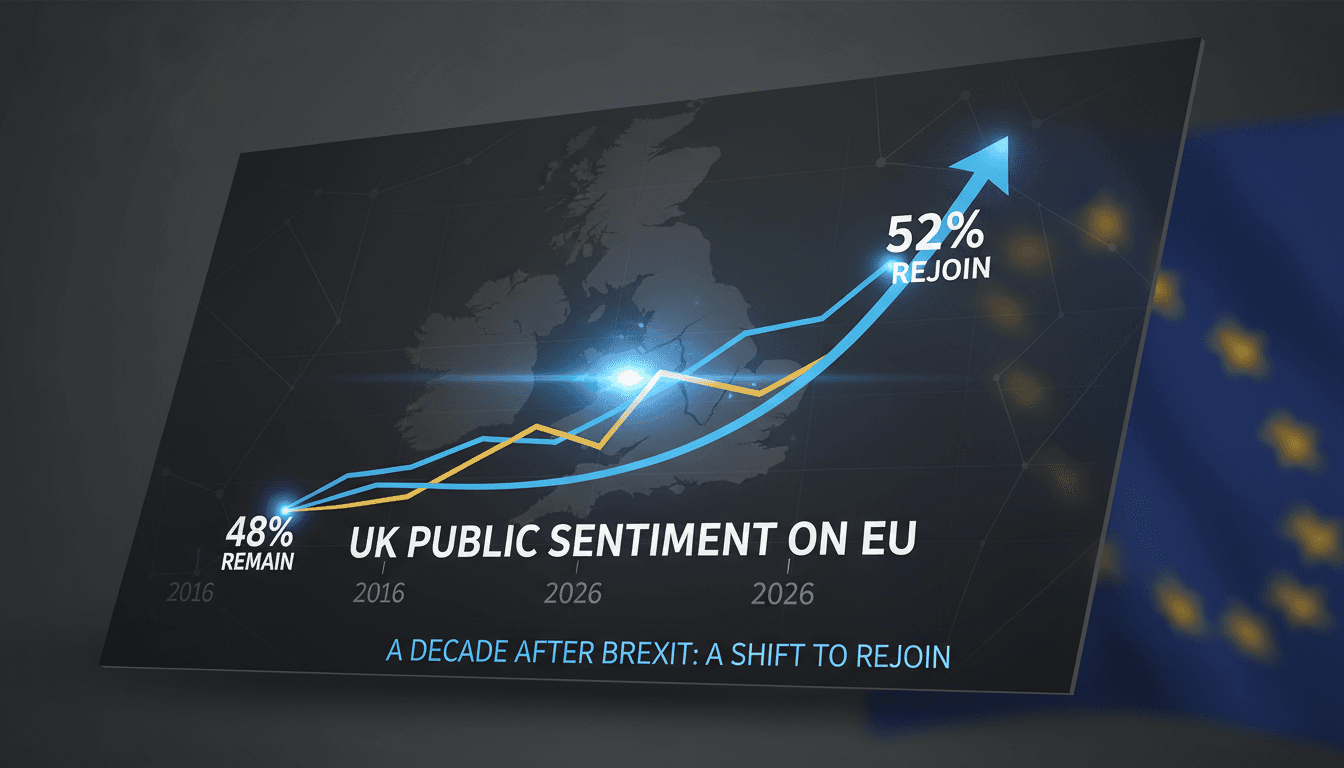
The recent shift in public sentiment towards rejoining the EU signals a potential turning point in UK politics. With 52% of Britons now supporting this move, political parties may need to reassess their positions on EU relations. This evolving landscape could lead to significant policy discussions and influence future elections. As dissatisfaction with Brexit's outcomes grows, stakeholders across various sectors should prepare for potential changes in trade, immigration, and economic policies. The implications of this shift could reverberate through the UK economy and its international relationships.
What happened
On June 23, 2016, the UK voted to leave the EU, marking a pivotal moment in British politics. A decade later, public opinion has shifted significantly, with 52% of Britons now expressing support for rejoining the EU. This change reflects a growing dissatisfaction with the political and economic consequences of Brexit, which has left the UK economy smaller than it would have been within the EU.
The formal withdrawal process took nearly five years to complete, and the anticipated benefits of Brexit have not materialized as expected. As a result, many Britons are now questioning the decision to leave the EU, leading to renewed discussions about the UK's relationship with the union.
The Context
Brexit was initially driven by frustrations over EU policies and the aftermath of the 2008 financial crisis. However, the UK economy is now estimated to be 4% to 8% smaller than it would have been had it remained in the EU. This economic reality has contributed to a shift in public sentiment, with increasing calls for a re-evaluation of the UK's status.
As the political landscape evolves, parties may face renewed pressure to reconsider their positions on EU membership. The upcoming EU summit could serve as a critical juncture for the UK, potentially leading to measures aimed at improving trade relations and addressing public concerns.
Takeaway
The future of UK-EU relations remains uncertain as public sentiment continues to evolve. Political parties will need to navigate this shifting landscape carefully, as dissatisfaction with Brexit grows. The next decade may see significant policy discussions and potential shifts in public opinion regarding EU membership.
As the UK grapples with its post-Brexit identity, stakeholders should remain vigilant for developments that could impact trade, immigration, and economic policies. The ongoing discourse reflects a nation still grappling with the consequences of its choice, and the political ramifications could be profound.
Political developments, policy debates, elections, and government affairs in the UK.
"BBC News is widely regarded as a reputable international news organization, known for its impartial tone and public service mandate."
— A47 Editor
A decade on from Brexit, the new PM has big calls to make on Europe
A decade after the Brexit referendum, the new Prime Minister faces significant decisions regarding the UK's relationship with the European Union, which has remained more cohesive than anticipated despite internal pressures.
International news coverage curated for readers in the UAE and Gulf region.
"Emirates 24|7 world coverage presents global developments through a UAE-facing and Gulf-relevant editorial lens."
— A47 Editor
Brexit at 10: A nation still divided and economy under strain
Ten years after the United Kingdom voted to leave the European Union, the nation remains divided, with ongoing economic strains that have not met the expectations of Brexit supporters. The referendum, held on June 23, 2016, resulted in a narrow 52% m...
Top international stories selected by The Guardian editors.
"The Guardian is known for its progressive editorial stance and in-depth analysis."
— A47 Editor
Ten years on, has the Brexit vote helped or hindered the EU?
On June 23, 2016, the United Kingdom voted to leave the European Union, a decision that has since sparked intense political debate and scrutiny over its implications for both Britain and the EU. Despite predictions that Brexit would weaken the EU, ma...