
U.S. SEC Proposes Optional Semi-Annual Financial Reporting for Public Companies
Why it matters
This regulatory shift could redefine the landscape of public company reporting, impacting transparency and investment decisions.
What happened (in 30 seconds)
- On May 5, 2026, the U.S. SEC proposed allowing public companies to file semi-annual reports instead of mandatory quarterly ones.
- Chairman Paul S. Atkins emphasized the need for flexibility while maintaining material disclosures.
- The proposal is currently open for a 60-day public comment period, inviting feedback from stakeholders.
The context you actually need
- Quarterly reporting has been mandatory for over 50 years, creating a significant compliance burden for public companies.
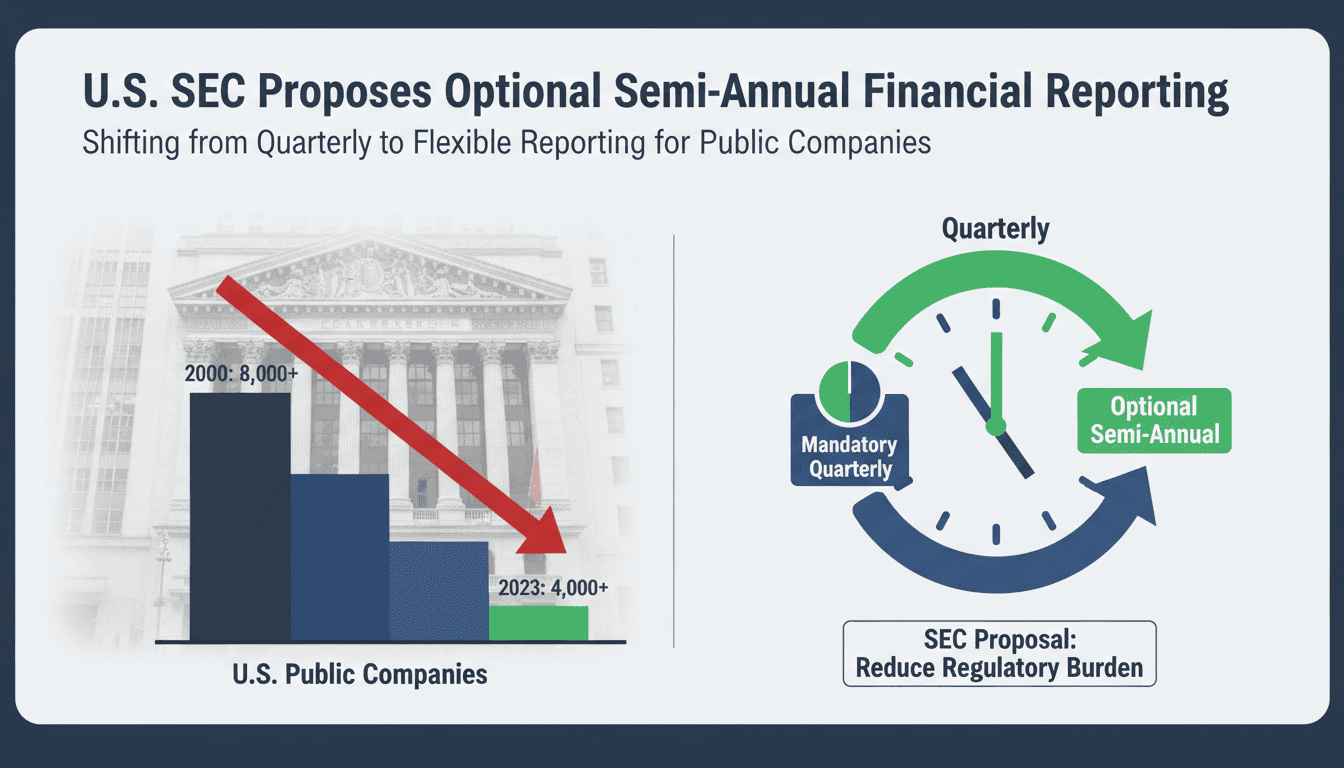
- The number of publicly traded U.S. companies has declined from approximately 8,800 in 1997 to 3,952 by the end of 2024, raising concerns about short-termism.
- Previous attempts to reform reporting requirements have included petitions from the Long-Term Stock Exchange and reviews of Regulation S-K.
What's really happening
The SEC's proposal to allow optional semi-annual financial reporting marks a significant shift in the regulatory landscape for public companies. For over five decades, U.S. public companies have been required to file quarterly reports, a mandate that many argue has contributed to a culture of short-termism. This culture prioritizes immediate financial performance over long-term growth, often at the expense of strategic planning and innovation.
Chairman Paul S. Atkins, who has been vocal about the need for reform, believes that the current reporting requirements impose unnecessary burdens on companies, particularly smaller firms that may struggle with compliance costs. By introducing the option for semi-annual reporting through a new Form 10-S, the SEC aims to provide companies with greater flexibility in how they communicate their financial health. This could potentially stimulate initial public offerings (IPOs) by making the public company status less daunting.
However, the proposal has sparked polarized reactions. Proponents argue that reducing the frequency of reporting will allow companies to focus on long-term strategies rather than short-term earnings, thereby fostering a healthier investment environment. Critics, on the other hand, warn that less frequent reporting could lead to diminished transparency, making it harder for investors to make informed decisions. The balance between flexibility and accountability is at the heart of this debate.
The SEC's move also comes at a time when the number of publicly traded companies in the U.S. is on the decline. With only 3,952 companies listed by the end of 2024, down from nearly 8,800 in 1997, the SEC is under pressure to make public markets more attractive. The optional semi-annual reporting could be a part of a broader strategy to revitalize the IPO market and encourage more companies to go public.
As the proposal enters a 60-day public comment period, stakeholders from various sectors will weigh in on the potential impacts. The SEC is likely to consider feedback on the framework, costs, and protections before finalizing any changes. This process will be crucial in determining how the new reporting structure will be implemented and what safeguards will be put in place to protect investors.
Who feels it first (and how)
- Public Companies: They will have the option to reduce compliance burdens, potentially leading to cost savings.
- Investors: They may face challenges in assessing company performance due to less frequent updates.
- Regulatory Bodies: The SEC will need to navigate feedback and concerns from various stakeholders during the comment period.
What to watch next
- Public Feedback: The responses during the 60-day comment period will shape the final proposal and its implementation.
- Market Reactions: Watch for any shifts in IPO activity as companies assess the new reporting options.
- Investor Sentiment: Monitor how investors react to the potential decrease in reporting frequency and its impact on transparency.
The SEC has proposed optional semi-annual reporting for public companies.
The proposal will undergo revisions based on public feedback before any final implementation.
The long-term impact on investor behavior and market dynamics remains to be seen.
Frequently Asked Questions
- Why it matters?
- This regulatory shift could redefine the landscape of public company reporting, impacting transparency and investment decisions.
- What happened (in 30 seconds)?
- On May 5, 2026, the U.S. SEC proposed allowing public companies to file semi-annual reports instead of mandatory quarterly ones. Chairman Paul S. Atkins emphasized the need for flexibility while maintaining material disclosures. The proposal is currently open for a 60-day public comment period, inviting feedback from stakeholders.
- What's really happening?
- The SEC's proposal to allow optional semi-annual financial reporting marks a significant shift in the regulatory landscape for public companies. For over five decades, U.S. public companies have been required to file quarterly reports, a mandate that many argue has contributed to a culture of short-termism. This culture prioritizes immediate financial performance over long-term growth, often at the expense of strategic planning and innovation. Chairman Paul S. Atkins, who has been vocal about t
- Who feels it first (and how)?
- Public Companies: They will have the option to reduce compliance burdens, potentially leading to cost savings. Investors: They may face challenges in assessing company performance due to less frequent updates. Regulatory Bodies: The SEC will need to navigate feedback and concerns from various stakeholders during the comment period.
- What to watch next?
- Public Feedback: The responses during the 60-day comment period will shape the final proposal and its implementation. Market Reactions: Watch for any shifts in IPO activity as companies assess the new reporting options. Investor Sentiment: Monitor how investors react to the potential decrease in reporting frequency and its impact on transparency.
Global markets, investing, and macroeconomics from a premier financial newsroom.
"Bloomberg is respected for in-depth financial reporting and data-driven analysis."
— A47 Editor
End Quarterly Earnings Reports? Here’s the Debate
The U.S. Securities and Exchange Commission (SEC) has proposed a significant change to the reporting requirements for public companies, allowing them to file financial disclosures semiannually instead of the traditional quarterly basis. This proposal...
Editor-curated FT homepage stories spanning markets, business, world, and opinion.
"The Financial Times is a globally respected business publication with a centrist/center-left tone and strong markets focus."
— A47 Editor
SEC moves to scrap quarterly reporting requirement
The U.S. Securities and Exchange Commission (SEC) has proposed to eliminate the requirement for public companies to file quarterly reports, suggesting a shift to semi-annual reporting instead. This move aims to reduce the regulatory burden on compani...
Business, investment, entrepreneurship, leadership, and innovation.
"Forbes is known for its coverage of business leaders, market trends, and entrepreneurial ventures with a pro-business editorial stance."
— A47 Editor
Trump’s SEC Proposes Major Change To Earnings Report Schedule—Could End Quarterly Requirement
The U.S. Securities and Exchange Commission (SEC) has proposed a significant change to the earnings report schedule, allowing companies the option to report earnings semiannually instead of quarterly. This proposal aims to alleviate the reporting bur...
Markets desk coverage, trading insights, and investor updates.
"WSJ’s markets reporting provides in-depth analysis and context for investors."
— A47 Editor
SEC Proposes to Eliminate Quarterly Reporting Requirement for Public Companies
The U.S. Securities and Exchange Commission (SEC) has proposed amendments that would allow public companies to file reports semiannually instead of quarterly. This significant change aims to reduce the regulatory burden on these companies, potentiall...
Business and tech news excluding paywalled content.
"High-volume business/tech outlet with frequent AI coverage."
— A47 Editor
The SEC just took a big step toward letting companies report earnings twice a year
The SEC has proposed a new rule that would allow public companies to reduce their mandatory earnings reports from four times a year to just two. This significant shift aims to ease the reporting burden on companies, as announced in a recent statement...
Business and tech news excluding paywalled content.
"High-volume business/tech outlet with frequent AI coverage."
— A47 Editor
How a quarterly earnings shake-up could disrupt a sprawling white-collar ecosystem
A proposed change in the frequency of quarterly earnings reports could lead to significant savings for publicly traded companies, potentially amounting to millions of dollars. This shift may also impact the white-collar job market, as companies reass...