
Lebanon condemns Israeli airstrikes amid ongoing ceasefire violations
What happened
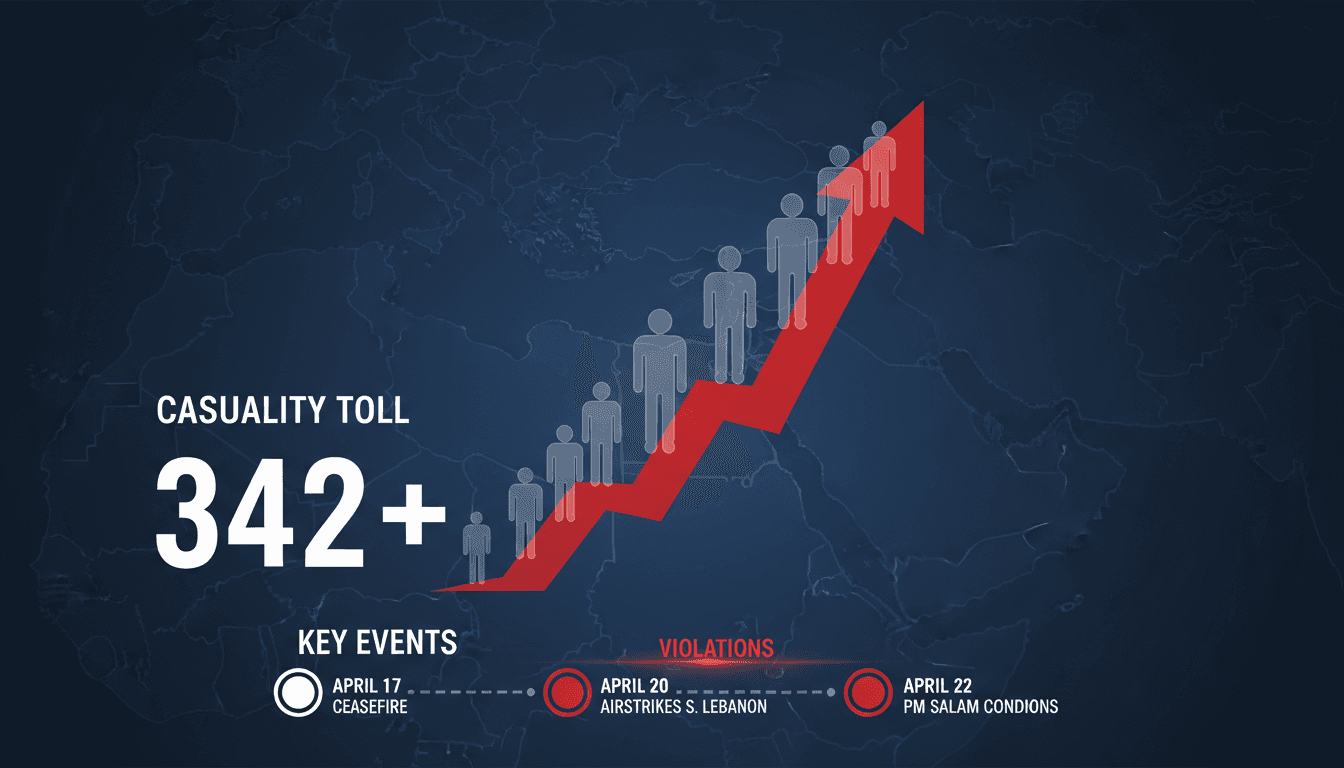
Israel has conducted fresh airstrikes in southern Lebanon, leading to strong condemnation from Lebanese Prime Minister Nawaf Salam. He described the Israeli actions as a "scorched-earth policy" and called for an immediate ceasefire. This escalation follows a ceasefire that was supposed to take effect on April 17 but has been repeatedly violated by both parties.
The conflict has resulted in significant casualties, with Lebanon's health ministry reporting over 3,371 deaths due to Israeli attacks since March 2. The ongoing violence raises serious concerns about the humanitarian situation in the region, as both sides engage in a cycle of retaliation.
The Context
The ceasefire between Israel and Hezbollah, which officially took effect on April 17, has not been respected, with both sides accusing each other of violations. Israeli Prime Minister Benjamin Netanyahu has announced military advancements into Lebanon, further complicating the situation. The humanitarian impact is severe, with thousands of casualties reported, highlighting the dire conditions faced by civilians.
Lebanon's leadership is under pressure to respond to the ongoing violence, while Hezbollah has launched multiple attacks targeting northern Israel in retaliation. The cycle of violence threatens to destabilize the region further, drawing in international attention and potential intervention.
Takeaway
The ongoing conflict raises significant concerns about further regional instability and humanitarian crises. As military actions continue, the potential for US-brokered negotiations between Israel and Lebanon remains uncertain. Observers should watch for any developments in diplomatic efforts that could lead to a resolution or further escalation of hostilities.
The humanitarian situation in Lebanon is likely to worsen if the violence persists without a clear path to peace. Stakeholders must remain vigilant as the conflict evolves, with implications that extend beyond the immediate region.
English-language reporting on Saudi politics, policy, and society.
"Saudi Gazette reflects mainstream Saudi institutional perspectives."
— A47 Editor
Lebanese PM denounces Israel’s ‘scorched-earth policy’ as more airstrikes hit south
BEIRUT — Lebanese Prime Minister Nawaf Salam has denounced what he called a “dangerous and unprecedented” escalation in south Lebanon, as Israel carried out fresh airstrikes and issued evacuation warnings for more than a dozen locations. In a televis...
Regional coverage and analysis focused on politics, diplomacy, and business across the Middle East.
"Al-Monitor is known for analytical reporting on Middle East politics and policy developments."
— A47 Editor
Lebanon PM denounces Israeli campaign as fresh strikes hit south
Lebanon's Prime Minister Nawaf Salam condemned Israel's military actions in southern Lebanon, describing them as a 'scorched-earth policy' and calling for an immediate ceasefire as Israeli airstrikes intensified and evacuation warnings were issued fo...
European coverage of Middle East politics and security issues.
"France 24 offers international reporting with a European editorial perspective."
— A47 Editor
Lebanon PM condemns Israel's 'scorched-earth policy' as fresh strikes hit south
Lebanon's Prime Minister Nawaf Salam accused Israel in a televised address on Saturday of pursuing a “scorched-earth policy” following new Israeli strikes in the south of the country. A ceasefire between Israel and Tehran-backed Hezbollah officially ...
Coverage of current events and conflicts in the Middle East.
"France 24 is viewed as a globally focused outlet with balanced coverage and a European perspective."
— A47 Editor
Lebanon PM condemns Israel's 'scorched-earth policy' as fresh strikes hit south
Lebanon's Prime Minister Nawaf Salam accused Israel in a televised address on Saturday of pursuing a “scorched-earth policy” following new Israeli strikes in the south of the country. A ceasefire between Israel and Tehran-backed Hezbollah officially ...